Tag Archives: congress

From Materials Research to Medical Manufacturing

congress_Visitors

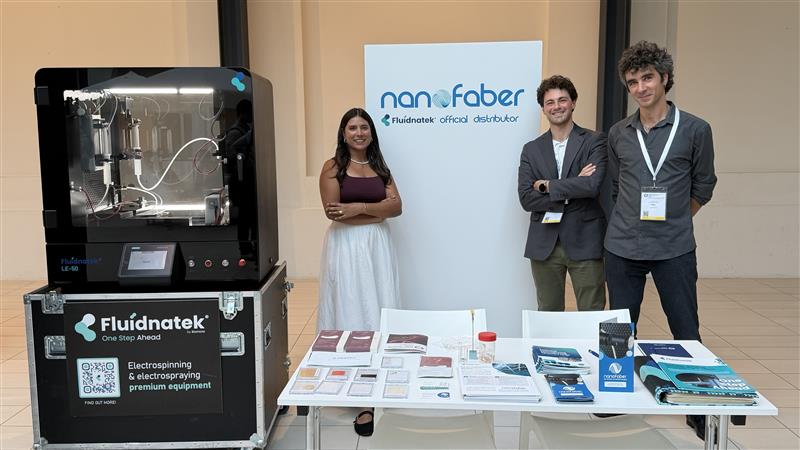
Innovation in electrospinning does not happen within a single discipline. It emerges through collaboration between materials scientists, biomedical researchers, medical device developers, and industrial manufacturers. Reflecting this multidisciplinary landscape, Fluidnatek will participate in five major European conferences throughout September, contributing to discussions that span the entire innovation journey—from materials research and process development to biomaterials, medical technologies, and industrial manufacturing

Dates and conferences:

  • Sept 1–4, 2026 — ELECTROSPIN (Padova, Italy)
    A specialist conference focused on electrospinning techniques, materials and applications. Ideal for researchers optimizing processes and for companies needing reproducible scaling and turnkey systems.
  • Sept 7–11, 2026 — 34th Annual Conference of the European Society for Biomaterials (Antwerp, Belgium)

A multidisciplinary biomaterials meeting covering preclinical testing to regulation and commercialization. A platform to engage with clinical groups and industry partners interested in implants and controlled drug delivery.

  • Sept 14–17, 2026 — XVIII Spanish Conference of Specialized Group on Polymers (GEP) (Valencia, Spain)

 Technical forum on polymers and applications, emphasizing innovation and tech transfer in Spain. An opportunity to showcase polymer formulations processable by electrospinning and discuss scaling with local R&D teams.

  • Sept 23–24, 2026 — MEDICAL TECHNOLOGY IRELAND (Galway, Ireland) Medical-technology event focused on industry–clinic collaboration and device supply chains. Perfect to present functional prototypes and manufacturing routes under regulatory constraints.
  • Sept 24–26, 2026 — GERMAN SOCIETY OF BIOMATERIALS (Aachen, Germany)

A rigorous biomaterials meeting with a strong orientation to clinical application and European standards. A key venue to validate electrospinning solutions with preclinical evaluators and manufacturing partners.

What we’ll showcase

  • Scalable, reproducible electrospinning equipment and processes, with performance data and traceability for regulated environments.
  • Live demonstrations of the Fluidnatek LE-50 Gen2 in operation, plus real collaboration case studies: from scaffolds for regeneration to drug-delivery patches and rapid prototyping tailored for industry needs.

We look forward to meeting researchers, manufacturers, and healthcare innovators throughout September to discuss their next electrospinning challenge. Whether the goal is process development, technology transfer, or industrial scale-up, our team will be available to explore practical solutions that help transform promising concepts into robust, reproducible manufacturing processes.

From Biomaterials to Medical Devices: Key Takeaways from Medical Technology Germany 2026

MedTechGermany_Fluidnatek

As medical technologies become increasingly sophisticated, manufacturing processes are evolving just as rapidly. Medical Technology Germany 2026 reflected this transformation, bringing together engineers, manufacturers, researchers, and regulatory specialists to discuss the technologies shaping the next generation of healthcare products.

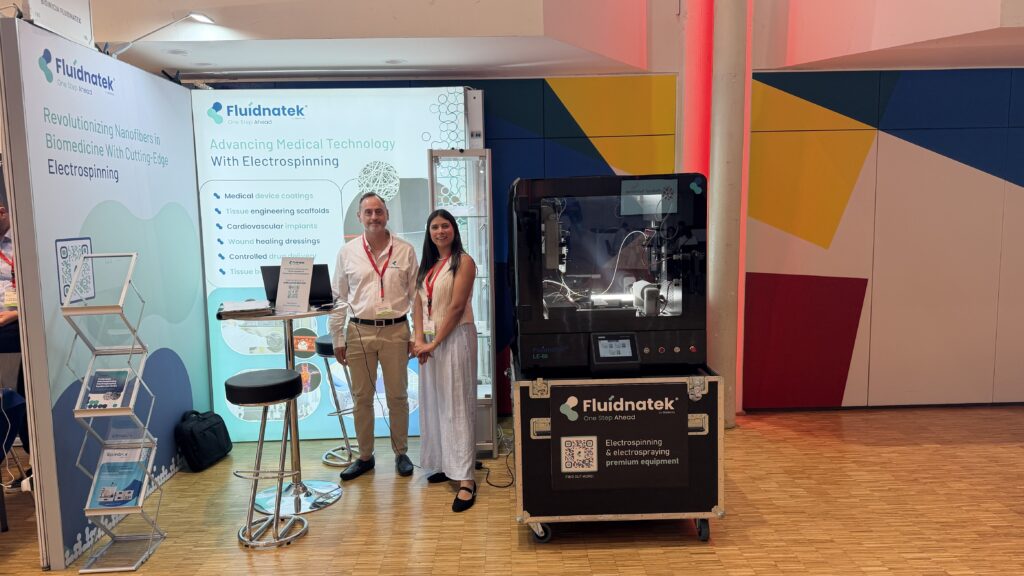
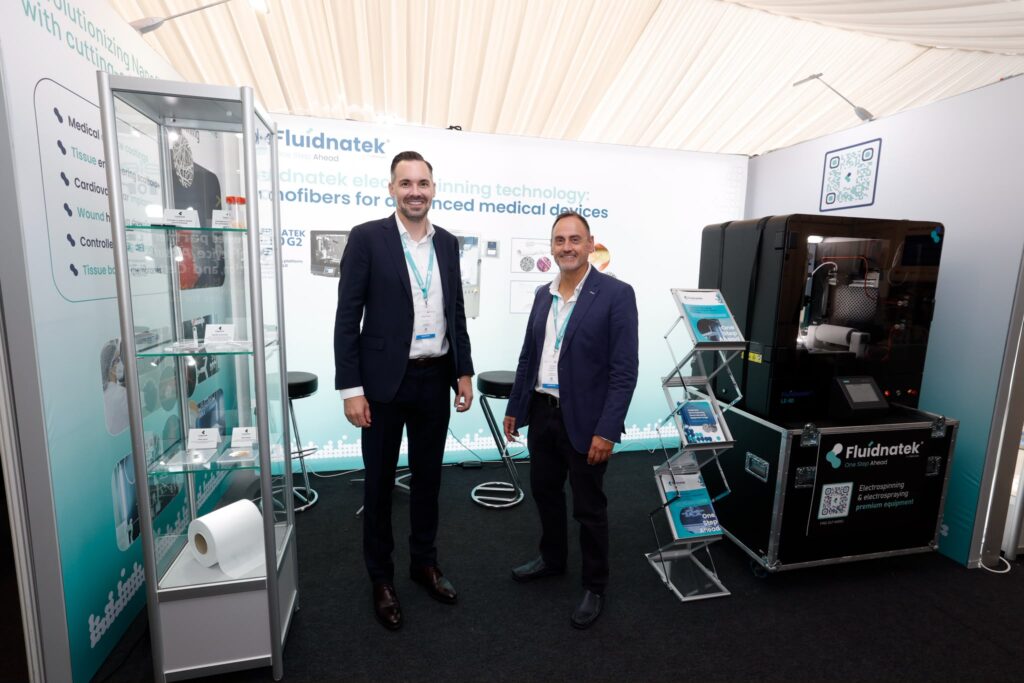
As part of this year’s exhibition, Fluidnatek participated in these discussions by showcasing the Fluidnatek LE-50 Gen2 electrospinning platform and engaging with professionals developing advanced medical devices, biomaterials, tissue engineering solutions, wound care products, drug delivery systems, and other healthcare technologies.

Electrospinning Continues to Gain Momentum

Many of the conversations held during the event reflected the growing interest in electrospinning as an enabling manufacturing technology for medical innovation.

By allowing precise control over nanofiber architecture, electrospinning enables the development of materials with highly tailored structural and functional properties. This level of control is becoming increasingly important for applications where porosity, surface area, mechanical performance, or controlled therapeutic release directly influence clinical outcomes.

As more medical products move from laboratory research toward commercialization, manufacturers are also placing greater emphasis on process reproducibility, scalability, and manufacturing robustness. These requirements extend beyond material design and increasingly influence technology selection from the earliest stages of product development.

From Research to Industrial Manufacturing

One of the recurring themes throughout Medical Technology Germany was the importance of establishing manufacturing strategies that can successfully transition from proof-of-concept studies to industrial production.

This transition was a recurring topic in many technical discussions throughout the event. While every project presents unique challenges, successful technology transfer often depends on combining robust process development with scalable manufacturing strategies.

These principles are reflected in many of the collaborative projects developed by Fluidnatek together with medical technology companies, research organisations, and industrial manufacturers, several of which are featured in our Customer Success Stories.

During the exhibition, the Fluidnatek team discussed how electrospinning projects can be developed with scale-up in mind from the outset. Rather than treating research and manufacturing as separate stages, an integrated development approach helps reduce technical risk, improve process understanding, and facilitate future technology transfer.

Visitors also had the opportunity to see the Fluidnatek LE-50 Gen2 operating live, demonstrating the level of process control, environmental stability, and automation required to achieve reproducible electrospinning results.

Supporting the Future of Medical Innovation

Medical technology continues to evolve rapidly, driven by increasingly sophisticated biomaterials, regenerative medicine, personalized therapies, and advanced drug delivery platforms. As these technologies mature, manufacturing processes must evolve alongside them to deliver the consistency, traceability, and quality required for successful commercialization.

At Fluidnatek, we remain committed to supporting researchers and manufacturers throughout this journey—from early feasibility studies and process development to scale-up and industrial manufacturing.

We would like to thank everyone who visited our booth during Medical Technology Germany 2026. We appreciate the opportunity to exchange ideas, discuss technical challenges, and explore how electrospinning can contribute to the next generation of medical technologies.

Fluidnatek at RegMed XB 2026: Driving the Transition from Lab to Clinical Reality

fluidnatek regmed

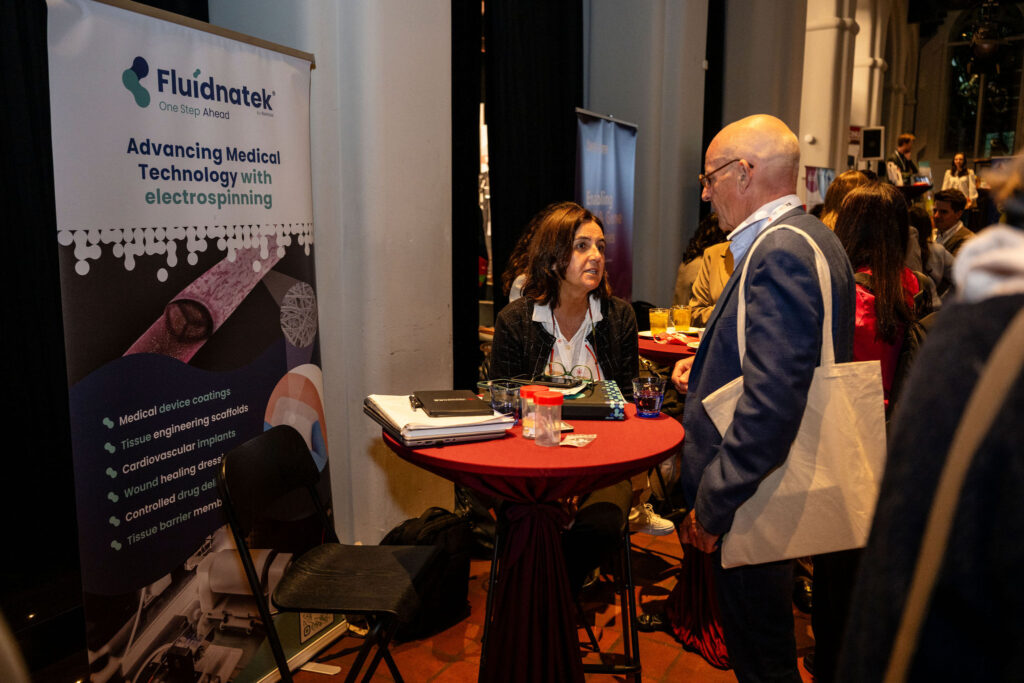
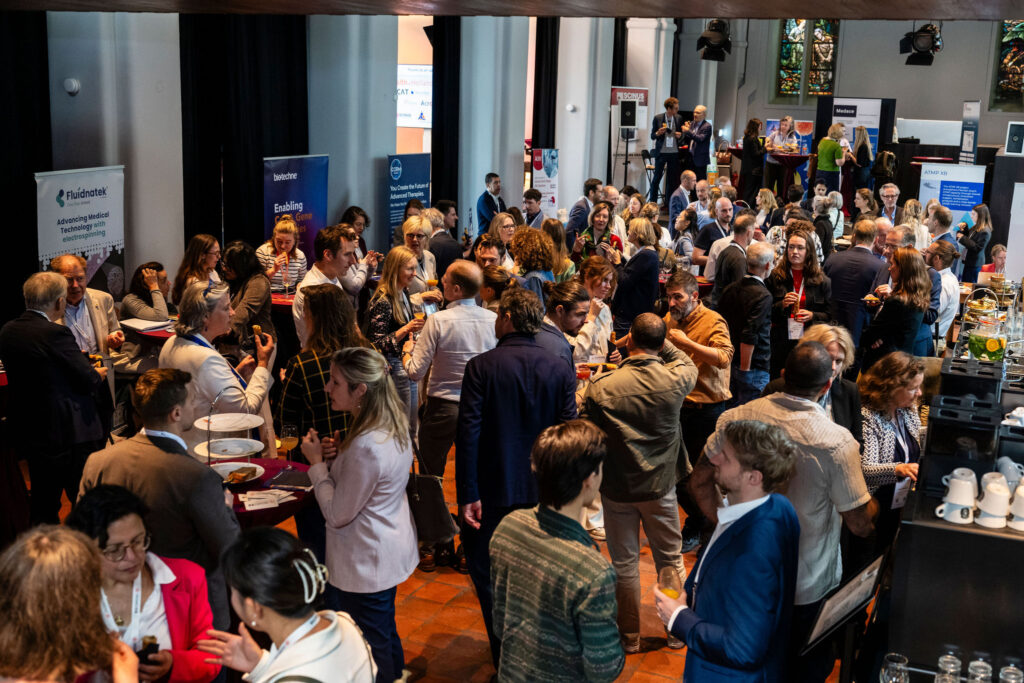
The RegMed XB Annual Conference 2026 in Utrecht has come to a close, and for Fluidnatek, it was much more than just a date on the calendar. Represented by our colleague Pilar Salinas, we spent several intensive days fully immersed in the heart of the regenerative medicine ecosystem, engaging with the pioneers who are redefining the future of healthcare.

Our presence at RegMed XB was driven by a clear purpose: to support the transition from groundbreaking research to real-world patient impact. 

The Translation Challenge

At Fluidnatek, we believe that the next generation of cell and gene therapies, tissue engineering, and advanced biomaterials depends entirely on the enabling technologies behind them. A brilliant scientific concept remains a concept until it can be manufactured under rigorous standards and moved into clinical applications.

During her interactions with researchers, clinicians, and ATMP developers, Pilar noted a common priority: bridging between proof-of-concept and clinical reality. Whether it’s developing complex scaffolds for tissue engineering or precision drug delivery systems, the consensus was clear—process control and scalability are the new frontiers.

Scaling Innovation with Precision

Our participation reinforced the vital role that electrospinning and electrospraying play in this ecosystem. These aren’t just laboratory techniques; they are scalable manufacturing platforms that offer:

  • Unmatched Precision: Creating nanofibrous structures that mimic the natural extracellular matrix.
  • Reproducibility: Essential for meeting the stringent requirements of regulatory bodies and clinical trials.
  • Scalability: Moving from benchtop research to pilot manufacturing without losing the properties that make the material effective.

Looking Ahead

Regenerative medicine is a collaborative journey. Seeing the entire value chain—from investors to policymakers and scientists—gathered in one place reminds us why we do what we do. At Fluidnatek, we are committed to providing the advanced processing technology that turns visionary research into tangible medical solutions.

The conference may be over, but the work of scaling the future of medicine continues. We are ready to help you navigate the manufacturing challenges of your next breakthrough.

Exhibitors regmed

Annual Meeting of the German Society for Materials Science

Annual Meeting of the German Society for Materials Science

Fluidnatek attended the Annual Meeting of the German Society for Materials Science (DGM), which took place from 10th to 12th of October in Berlin, where the DGBM was founded 31 years ago.

This year, DGBM Annual Meeting was dedicated to the translation of biomaterials and the requirements for their successful implementation for future therapeutic approaches.

It has been a great opportunity to showcase our proven experience in Nanofibers & Nanoparticles Technology and our Premium Electrospinning solutions.

We would like to thank the organizing committee of the DGBM for inviting us to this successful edition.

INTERESTED? CONTACT OUR SPECIALISTS!