


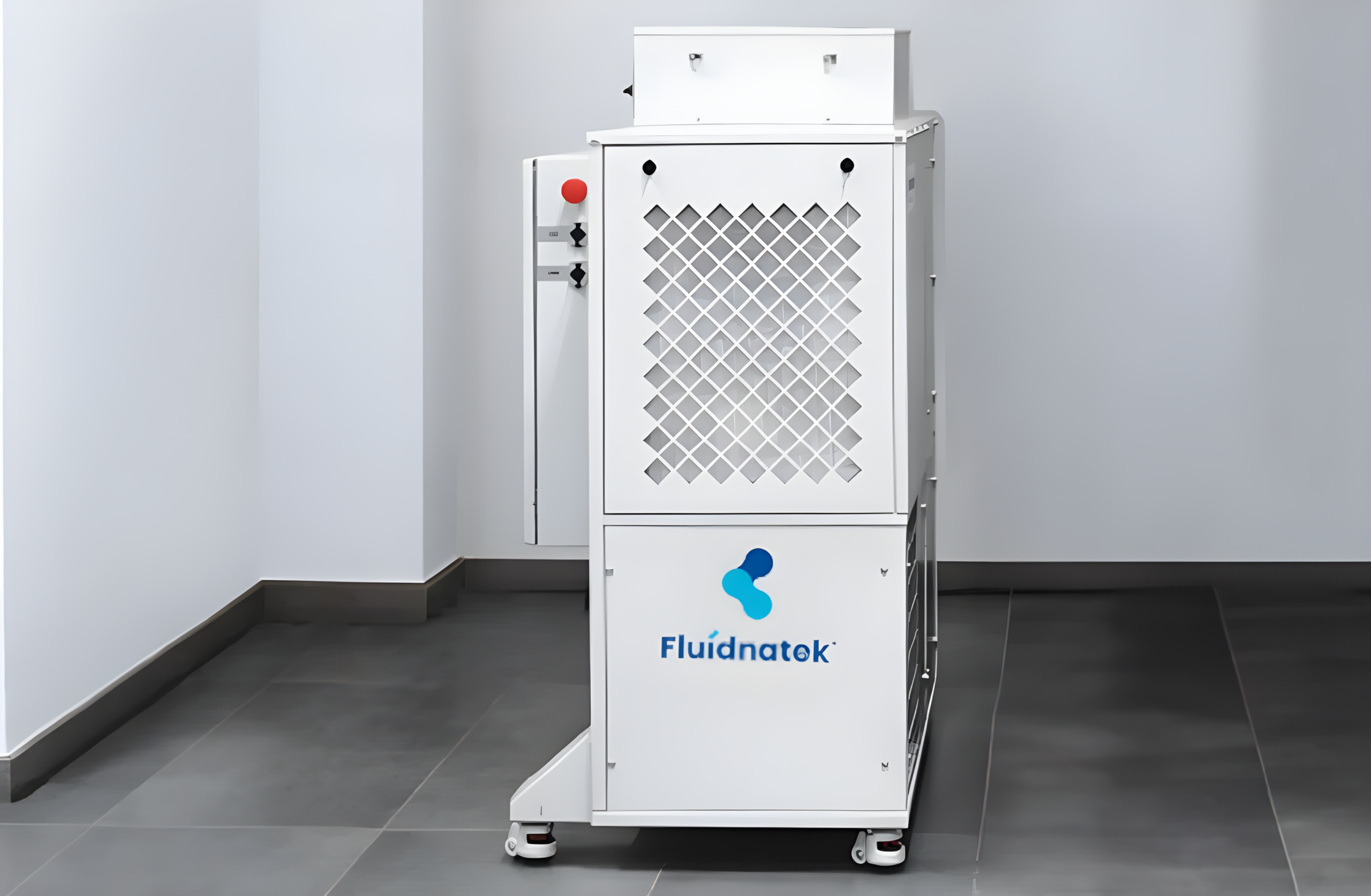
Environmental conditions strongly affect electrospinning outcomes, especially fiber diameter, morphology, and batch-to-batch reproducibility. Relative humidity and temperature influence solvent evaporation, jet stability, and fiber solidification, making environmental control a critical part of process development. Fluidnatek’s Environmental Control Unit (ECU) provides control of temperature and humidity to support more consistent electrospinning results across biomedical and research applications.
Introduction: Why Environmental Control Matters in Electrospinning
Electrospinning is highly sensitive to ambient conditions. Even when voltage, flow rate, and tip-to-collector distance are well optimized, changes in temperature and humidity can alter the way a jet forms and dries, which in turn affects final fiber morphology.
This sensitivity becomes especially important in applications where fiber uniformity matters, such as biomedical scaffolds, drug delivery systems, and protein-based biomaterials. In these cases, small changes in environmental conditions can lead to differences in fiber diameter, surface texture, and defect formation.
For this reason, environmental control is not simply a convenience. It is a practical tool for improving reproducibility, reducing process variability, and supporting more reliable electrospinning development. The Fluidnatek ECU is designed specifically for this purpose, giving users a controlled chamber environment that helps them work within a stable and adaptable climate window.
Mechanisms: How Humidity and Temperature Affect Fiber Morphology
Relative Humidity and Solvent Evaporation
Relative humidity plays an important role in electrospinning because it affects how quickly solvent evaporates from the jet and how the fiber surface solidifies. When humidity is too high, evaporation may slow down, which can increase the risk of surface pores, ribbon-like fibers, or other morphology changes. When humidity is too low, the jet may dry too quickly, which can also contribute to instability or defects in some systems.
The effect is not identical for every polymer or solvent system, but the broader principle is consistent: ambient humidity can significantly alter fiber formation. That is why controlled humidity is valuable when working with sensitive materials or when attempting to reproduce a specific morphology across multiple batches.
Temperature and Solution Properties
Temperature also influences electrospinning in several ways. It can affect solution viscosity, solvent vapor pressure, and the overall drying dynamics of the fiber jet. In many systems, a moderate increase in temperature can promote finer fiber formation by lowering viscosity and accelerating solvent evaporation.
At the same time, excessive heat can destabilize certain formulations, especially when working with protein-based or biologically sensitive materials. In those cases, process consistency depends not only on the electrospinning parameters themselves, but also on maintaining a stable and appropriate thermal environment throughout the run.
The Link Between Environment and Reproducibility
One of the biggest challenges in electrospinning is reproducibility. A process that works well on one day may behave differently on another if the lab environment changes. Seasonal shifts, air conditioning, ventilation, or simple humidity fluctuations can all influence the final fiber structure.
This is especially relevant when moving from exploratory research to more structured process development. If the goal is to compare formulations, optimize a scaffold, or build a scalable process, then environmental drift can make results harder to interpret. A controlled environment helps reduce this variability and makes it easier to isolate the effect of each process parameter.
The ECU addresses this need by providing active control over the chamber atmosphere. That gives researchers a more stable platform for comparing conditions, refining recipes, and documenting process behavior more consistently.
What the Fluidnatek ECU Brings to the Process
Fluidnatek’s Environmental Control Unit is designed to support electrospinning under controlled conditions by regulating temperature and humidity within the chamber. It is available as an integrated option across the Fluidnatek platform range and is intended to help users manage the climate conditions that affect fiber formation.
The ECU combines environmental stability with practical process support. According to Fluidnatek’s product positioning, it enables heating, cooling, drying, and humidifying of the chamber atmosphere, allowing users to explore the viable climate space for each process more effectively. This flexibility is particularly useful when working with polymers or solvents that respond differently to ambient conditions.
The system also supports a clean processing environment through HEPA filtration at the air intake stage. For biomedical and research applications, that added environmental control can be helpful when working toward more consistent and defensible results.
Applications Where Environmental Control Makes a Difference
Biomedical Scaffolds and Implantable Devices
In biomedical electrospinning, morphology matters. Fiber diameter, surface texture, and porosity all influence how a scaffold behaves in contact with cells and tissue. For applications such as wound dressings, vascular grafts, hernia meshes, and nerve guides, stable environmental conditions can help improve the consistency of the final material.
Polymer systems used in biomedical applications may be particularly sensitive to ambient changes. For that reason, the ability to control humidity and temperature during electrospinning can support more reliable scaffold development and more consistent batch-to-batch performance.
Drug Delivery and Functional Materials
Environmental control is also valuable in drug delivery work, where fiber morphology can affect loading behavior, surface characteristics, and release performance. In these cases, uncontrolled humidity may alter the way the fiber forms and dries, which can introduce unwanted variability.
Using a controlled chamber environment helps reduce one major source of uncertainty during process development. That makes it easier to compare formulations, evaluate design space, and make more confident decisions about process optimization.
Protein-Based Biomaterials
Protein-based electrospinning systems are often more sensitive than synthetic polymers. Materials such as collagen or gelatin may respond strongly to both temperature and humidity, which makes a stable processing environment even more important.
For these applications, environmental control can help preserve process consistency and reduce the likelihood of morphological defects. It also supports a more predictable workflow when researchers need to repeat experiments, compare formulations, or document results for publication or future scale-up.
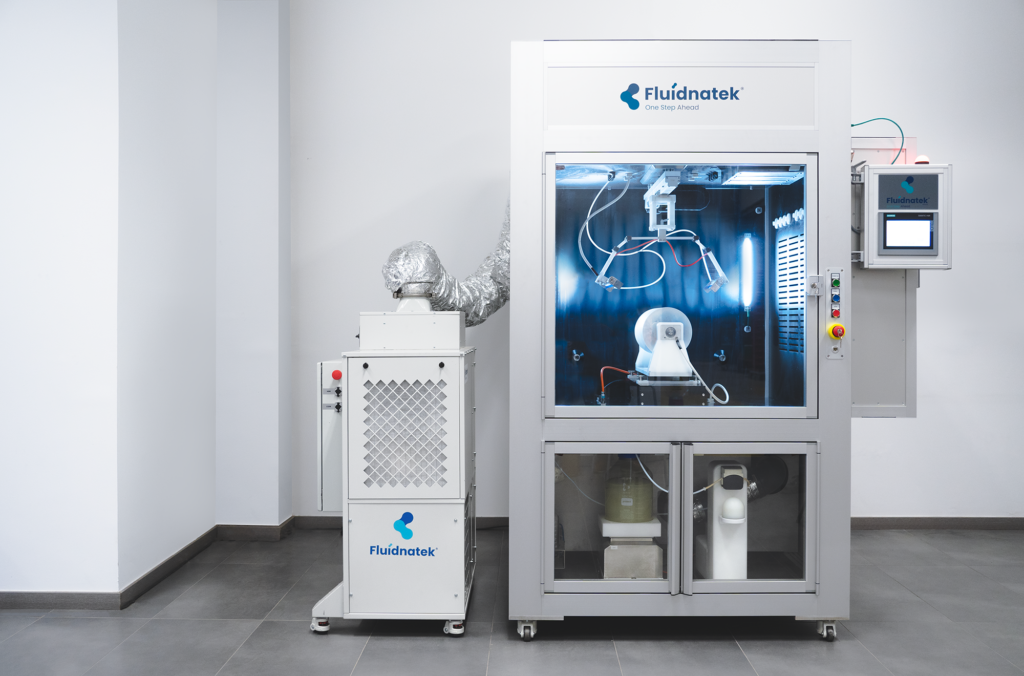
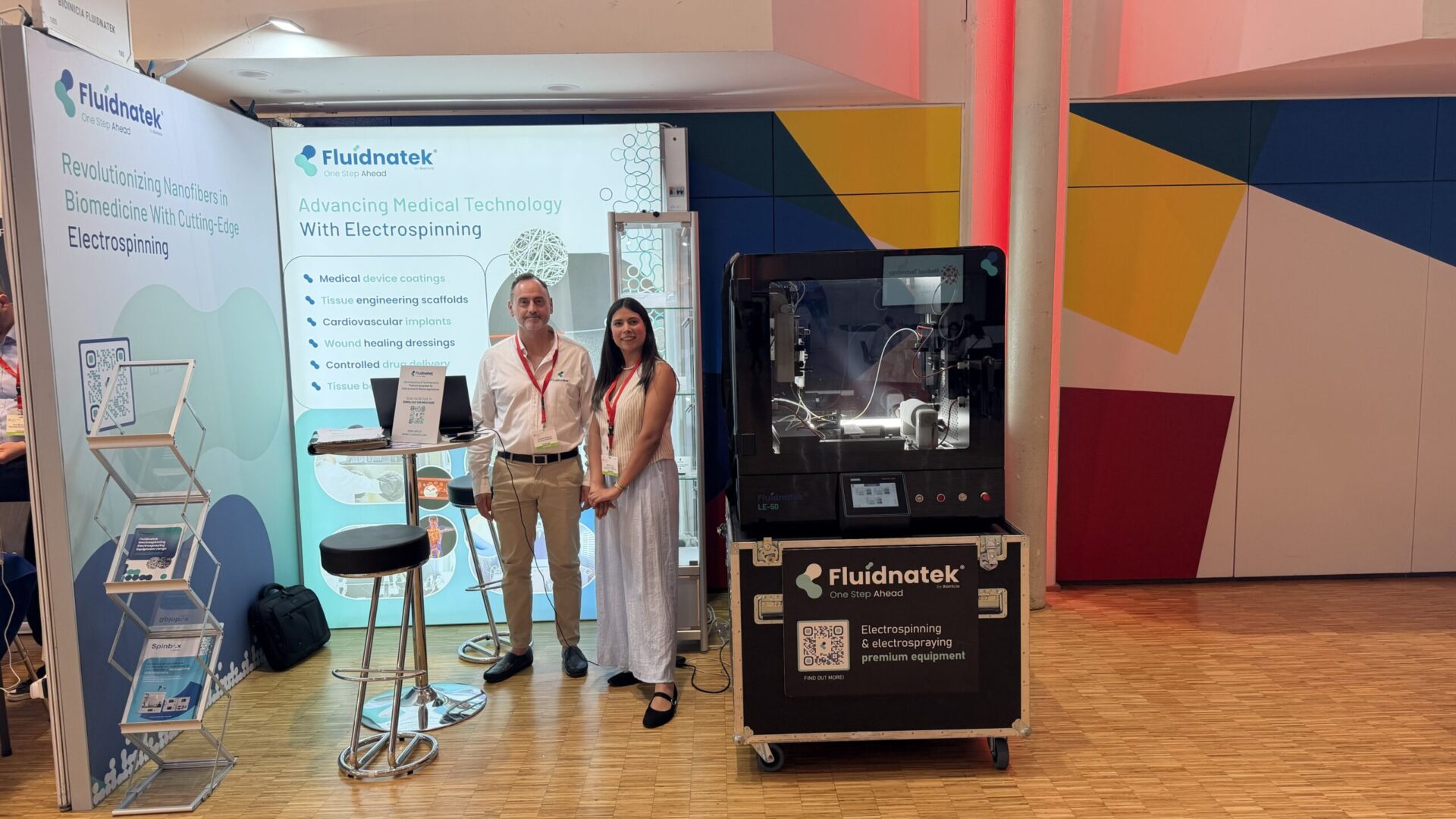
Fluidnatek LE-500 and ECU.
Environmental Control and Scale-Up
Environmental control becomes even more important as electrospinning moves from lab-scale development to larger or more formalized production settings. At a larger scale, minor fluctuations in airflow, vapor accumulation, or chamber conditions can have a greater effect on fiber consistency.
A controlled chamber helps reduce one of the common variables that can complicate scale-up. By keeping temperature and humidity within a defined range, researchers and manufacturers can work toward more repeatable results across different systems and production settings.
This is where the ECU fits naturally into Fluidnatek’s broader platform approach. It is designed to support process development, product optimization, and the transition from exploratory research to more controlled production workflows.
Why the ECU Fits Fluidnatek’s Platform Strategy
The ECU is not a general-purpose climate accessory. It is part of a system designed specifically for electrospinning, where temperature, humidity, and airflow must be considered together.
That matters because electrospinning is not a static process. It is sensitive to the interaction between the solution, the jet, the collector, and the surrounding atmosphere. A controlled chamber gives users more flexibility to explore those interactions while reducing the noise introduced by uncontrolled ambient conditions.
For researchers, that means better experimental control and easier comparison between runs. For process developers, it means a more stable route toward reproducibility. And for teams working on biomedical or regulated applications, it helps support a cleaner and more consistent process environment.
Conclusion
Environmental control is a fundamental part of electrospinning process development. Temperature and humidity can strongly influence fiber morphology, diameter distribution, and reproducibility, making them essential variables to manage when working on high-value applications.
Fluidnatek’s Environmental Control Unit is designed to provide that stability within the electrospinning chamber. By supporting controlled heating, cooling, drying, humidification, and HEPA-filtered air intake, the ECU helps users create a more consistent processing environment for research and development.
For teams developing biomedical scaffolds, drug delivery systems, or other electrospun materials, that controlled environment can make the difference between a promising result and a repeatable process.
Looking to improve reproducibility in your electrospinning work? Fluidnatek’s Environmental Control Unit provides the controlled chamber conditions you need to support better fiber morphology, more consistent results, and more confident process development.
Contact our technical team to learn how the ECU can support your application.
References
Casper, C. L., Stephens, J. S., Tassi, N. G., Chase, D. B., & Rabolt, J. F. (2004). Controlling surface morphology of electrospun polystyrene fibers: Effect of humidity and molecular weight in the electrospinning process. Macromolecules, 37(2), 573–578. https://doi.org/10.1021/ma0351975
Nezarati, R. M., Eifert, M. B., & Cosgriff-Hernandez, E. (2013). Effects of humidity and solution viscosity on electrospun fiber morphology. Tissue Engineering Part C: Methods, 19(10), 810–819. https://doi.org/10.1089/ten.tec.2012.0671
Samad, U. A., Alam, M. A., Al-Zahrani, S. M., & Sherif, E. S. M. (2020). Effect of humidity on formation of electrospun polycaprolactone nanofiber embedded with curcumin using needleless electrospinning. Procedia Manufacturing, 43. https://doi.org/10.1016/j.promfg.2020.02.193
Xue, J., Wu, T., Dai, Y., & Xia, Y. (2019). Electrospinning and electrospun nanofibers: Methods, materials, and applications. Chemical Reviews, 119(8), 5298–5415. https://doi.org/10.1021/acs.chemrev.8b00593
Omer, S., Forgách, L., Zelkó, R., & Sebe, I. (2021). Scale-up of Electrospinning: Market Overview of Products and Devices for Pharmaceutical and Biomedical Purposes. Pharmaceutics, 13(2), 286. https://doi.org/10.3390/pharmaceutics13020286
Vass, P., et al. (2020). Scale-up of electrospinning technology: Applications in the pharmaceutical industry. WIREs Nanomedicine and Nanobiotechnology, 12(4), e1611. https://doi.org/10.1002/wnan.1611
Fluidnatek. (2024). Electrospinning Environmental Control Unit (ECU). Bioinicia Fluidnatek SLU. https://fluidnatek.com/advanced-electrospinning-equipment/electrospinning-environmental-control/





 ESP
ESP