Tag Archives: ecu

Electrospinning Environmental Control: How Temperature and Humidity Shape Fiber Morphology — and Why the ECU Makes the Difference

Fluidnatek ECU is critical for biomedical and GMP applications.

Environmental conditions strongly affect electrospinning outcomes, especially fiber diameter, morphology, and batch-to-batch reproducibility. Relative humidity and temperature influence solvent evaporation, jet stability, and fiber solidification, making environmental control a critical part of process development. Fluidnatek’s Environmental Control Unit (ECU) provides control of temperature and humidity to support more consistent electrospinning results across biomedical and research applications.

Introduction: Why Environmental Control Matters in Electrospinning

Electrospinning is highly sensitive to ambient conditions. Even when voltage, flow rate, and tip-to-collector distance are well optimized, changes in temperature and humidity can alter the way a jet forms and dries, which in turn affects final fiber morphology.

This sensitivity becomes especially important in applications where fiber uniformity matters, such as biomedical scaffolds, drug delivery systems, and protein-based biomaterials. In these cases, small changes in environmental conditions can lead to differences in fiber diameter, surface texture, and defect formation.

For this reason, environmental control is not simply a convenience. It is a practical tool for improving reproducibility, reducing process variability, and supporting more reliable electrospinning development. The Fluidnatek ECU is designed specifically for this purpose, giving users a controlled chamber environment that helps them work within a stable and adaptable climate window.

Mechanisms: How Humidity and Temperature Affect Fiber Morphology

Relative Humidity and Solvent Evaporation

Relative humidity plays an important role in electrospinning because it affects how quickly solvent evaporates from the jet and how the fiber surface solidifies. When humidity is too high, evaporation may slow down, which can increase the risk of surface pores, ribbon-like fibers, or other morphology changes. When humidity is too low, the jet may dry too quickly, which can also contribute to instability or defects in some systems.

The effect is not identical for every polymer or solvent system, but the broader principle is consistent: ambient humidity can significantly alter fiber formation. That is why controlled humidity is valuable when working with sensitive materials or when attempting to reproduce a specific morphology across multiple batches.

Temperature and Solution Properties

Temperature also influences electrospinning in several ways. It can affect solution viscosity, solvent vapor pressure, and the overall drying dynamics of the fiber jet. In many systems, a moderate increase in temperature can promote finer fiber formation by lowering viscosity and accelerating solvent evaporation.

At the same time, excessive heat can destabilize certain formulations, especially when working with protein-based or biologically sensitive materials. In those cases, process consistency depends not only on the electrospinning parameters themselves, but also on maintaining a stable and appropriate thermal environment throughout the run.


The Link Between Environment and Reproducibility

One of the biggest challenges in electrospinning is reproducibility. A process that works well on one day may behave differently on another if the lab environment changes. Seasonal shifts, air conditioning, ventilation, or simple humidity fluctuations can all influence the final fiber structure.

This is especially relevant when moving from exploratory research to more structured process development. If the goal is to compare formulations, optimize a scaffold, or build a scalable process, then environmental drift can make results harder to interpret. A controlled environment helps reduce this variability and makes it easier to isolate the effect of each process parameter.

The ECU addresses this need by providing active control over the chamber atmosphere. That gives researchers a more stable platform for comparing conditions, refining recipes, and documenting process behavior more consistently.


What the Fluidnatek ECU Brings to the Process

Fluidnatek’s Environmental Control Unit is designed to support electrospinning under controlled conditions by regulating temperature and humidity within the chamber. It is available as an integrated option across the Fluidnatek platform range and is intended to help users manage the climate conditions that affect fiber formation.

The ECU combines environmental stability with practical process support. According to Fluidnatek’s product positioning, it enables heating, cooling, drying, and humidifying of the chamber atmosphere, allowing users to explore the viable climate space for each process more effectively. This flexibility is particularly useful when working with polymers or solvents that respond differently to ambient conditions.

The system also supports a clean processing environment through HEPA filtration at the air intake stage. For biomedical and research applications, that added environmental control can be helpful when working toward more consistent and defensible results.


Applications Where Environmental Control Makes a Difference

Biomedical Scaffolds and Implantable Devices

In biomedical electrospinning, morphology matters. Fiber diameter, surface texture, and porosity all influence how a scaffold behaves in contact with cells and tissue. For applications such as wound dressings, vascular grafts, hernia meshes, and nerve guides, stable environmental conditions can help improve the consistency of the final material.

Polymer systems used in biomedical applications may be particularly sensitive to ambient changes. For that reason, the ability to control humidity and temperature during electrospinning can support more reliable scaffold development and more consistent batch-to-batch performance.


Drug Delivery and Functional Materials

Environmental control is also valuable in drug delivery work, where fiber morphology can affect loading behavior, surface characteristics, and release performance. In these cases, uncontrolled humidity may alter the way the fiber forms and dries, which can introduce unwanted variability.

Using a controlled chamber environment helps reduce one major source of uncertainty during process development. That makes it easier to compare formulations, evaluate design space, and make more confident decisions about process optimization.


Protein-Based Biomaterials

Protein-based electrospinning systems are often more sensitive than synthetic polymers. Materials such as collagen or gelatin may respond strongly to both temperature and humidity, which makes a stable processing environment even more important.

For these applications, environmental control can help preserve process consistency and reduce the likelihood of morphological defects. It also supports a more predictable workflow when researchers need to repeat experiments, compare formulations, or document results for publication or future scale-up.
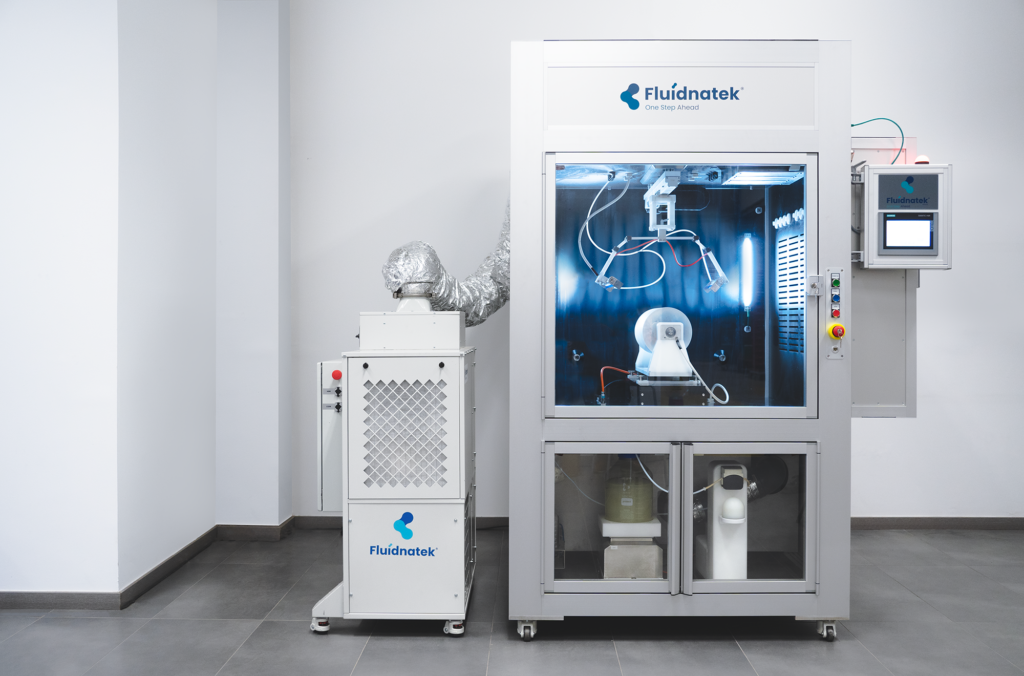
Fluidnatek LE-500 + ECU_front view

Fluidnatek LE-500 and ECU.

Environmental Control and Scale-Up

Environmental control becomes even more important as electrospinning moves from lab-scale development to larger or more formalized production settings. At a larger scale, minor fluctuations in airflow, vapor accumulation, or chamber conditions can have a greater effect on fiber consistency.

A controlled chamber helps reduce one of the common variables that can complicate scale-up. By keeping temperature and humidity within a defined range, researchers and manufacturers can work toward more repeatable results across different systems and production settings.

This is where the ECU fits naturally into Fluidnatek’s broader platform approach. It is designed to support process development, product optimization, and the transition from exploratory research to more controlled production workflows.


Why the ECU Fits Fluidnatek’s Platform Strategy

The ECU is not a general-purpose climate accessory. It is part of a system designed specifically for electrospinning, where temperature, humidity, and airflow must be considered together.

That matters because electrospinning is not a static process. It is sensitive to the interaction between the solution, the jet, the collector, and the surrounding atmosphere. A controlled chamber gives users more flexibility to explore those interactions while reducing the noise introduced by uncontrolled ambient conditions.

For researchers, that means better experimental control and easier comparison between runs. For process developers, it means a more stable route toward reproducibility. And for teams working on biomedical or regulated applications, it helps support a cleaner and more consistent process environment.

Conclusion

Environmental control is a fundamental part of electrospinning process development. Temperature and humidity can strongly influence fiber morphology, diameter distribution, and reproducibility, making them essential variables to manage when working on high-value applications.

Fluidnatek’s Environmental Control Unit is designed to provide that stability within the electrospinning chamber. By supporting controlled heating, cooling, drying, humidification, and HEPA-filtered air intake, the ECU helps users create a more consistent processing environment for research and development.

For teams developing biomedical scaffolds, drug delivery systems, or other electrospun materials, that controlled environment can make the difference between a promising result and a repeatable process.

Looking to improve reproducibility in your electrospinning work? Fluidnatek’s Environmental Control Unit provides the controlled chamber conditions you need to support better fiber morphology, more consistent results, and more confident process development.

Contact our technical team to learn how the ECU can support your application.


References

Casper, C. L., Stephens, J. S., Tassi, N. G., Chase, D. B., & Rabolt, J. F. (2004). Controlling surface morphology of electrospun polystyrene fibers: Effect of humidity and molecular weight in the electrospinning process. Macromolecules, 37(2), 573–578. https://doi.org/10.1021/ma0351975

Nezarati, R. M., Eifert, M. B., & Cosgriff-Hernandez, E. (2013). Effects of humidity and solution viscosity on electrospun fiber morphology. Tissue Engineering Part C: Methods, 19(10), 810–819. https://doi.org/10.1089/ten.tec.2012.0671

Samad, U. A., Alam, M. A., Al-Zahrani, S. M., & Sherif, E. S. M. (2020). Effect of humidity on formation of electrospun polycaprolactone nanofiber embedded with curcumin using needleless electrospinning. Procedia Manufacturing, 43. https://doi.org/10.1016/j.promfg.2020.02.193

Xue, J., Wu, T., Dai, Y., & Xia, Y. (2019). Electrospinning and electrospun nanofibers: Methods, materials, and applications. Chemical Reviews, 119(8), 5298–5415. https://doi.org/10.1021/acs.chemrev.8b00593

Omer, S., Forgách, L., Zelkó, R., & Sebe, I. (2021). Scale-up of Electrospinning: Market Overview of Products and Devices for Pharmaceutical and Biomedical Purposes. Pharmaceutics, 13(2), 286. https://doi.org/10.3390/pharmaceutics13020286

Vass, P., et al. (2020). Scale-up of electrospinning technology: Applications in the pharmaceutical industry. WIREs Nanomedicine and Nanobiotechnology, 12(4), e1611. https://doi.org/10.1002/wnan.1611

Fluidnatek. (2024). Electrospinning Environmental Control Unit (ECU). Bioinicia Fluidnatek SLU. https://fluidnatek.com/advanced-electrospinning-equipment/electrospinning-environmental-control/

Environmental Control in Electrospinning: How to Optimize Temperature and Humidity for Superior Fiber Morphology

Electrospinning environmental control

Why Environmental Control Is Crucial in Electrospinning

The Environmental Control Unit (ECU) is a self-contained external system that supplies conditioned, clean air to the fabrication chamber, regulating temperature (T) and relative humidity (RH) throughout the electrospinning process. Additionally, the air flow can be monitored and adjusted as needed. Properly controlling T, RH, and air flow is essential for achieving consistent fiber or particle morphology, enhancing sample uniformity and production efficiency, and ensuring effective evaporation of solvent vapors—thereby reducing residual solvent in fibers or particles.

Fluidnatek-electrosipinning-equipment
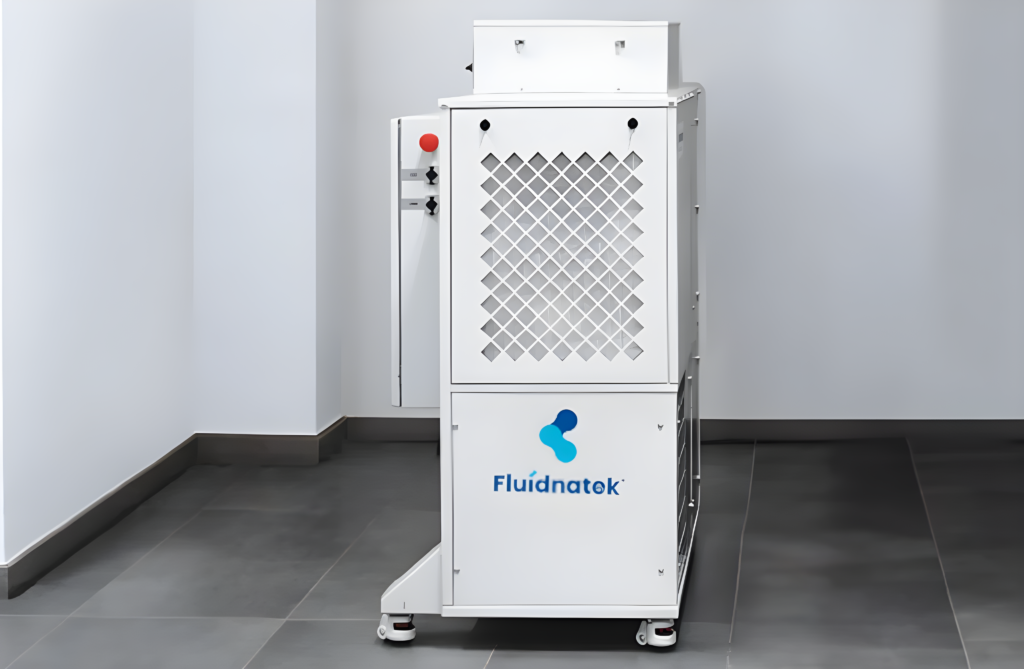
Enviromental Control Unit by Fluidnatek.

Achieving reproducible fabrication of nanofibers and nanoparticles by electrospinning and electrospraying can present challenges. Incorporating the ECU significantly boosts the performance of electrospinners by allowing consistent fabrication regardless of time and location and by reducing the risk of clogging. Effective environmental control in electrospinning opens up possibilities for using a broader range of polymers and solvents in advanced sample development. The ECU also enhances the process’s repeatability (ensuring batch-to-batch consistency) and scalability while maintaining safe conditions for the operator.

Advantages of using the Environmental Control Unit developed by Fluidnatek in your electrospinning process when it comes to:


  • Polymers
  • Solvents
  • ACTIVE INGREDIENTS
  • Fiber properties & Morphology
  • Scalability
  • Safety


POLYMERS

Polymers sensitive to temperature & relative humidity:

The ability to control the environmental conditions during electrospinning process expands the list of polymers that can be properly processed. These include polymers particularly sensitive to temperature and humidity. A good example of this, amongst others, are the following polymers: Polycaprolactone (PCL), polylactic acid (PLA), polyglycolic acid (PGA), polylactic-co-glycolic acid (PLGA), polyethylene oxide (PEO), polyacrylonitrile (PAN), polyurethane (PU), Gelatin (Gel), Collagen (Clg), and nylon (N6 or N66). These polymers are used in applications like tissue engineering, medical devices, drug delivery, filtration, energy storage, food packaging, and other ones.

Tightly controlling temperature, relative humidity and air flow will allow consistent Taylor cone stability, prevent needle clogging (in needle-based electrospinning systems), and open research and production possibilities resulting in consistent and reproducible fabrication independent of time of year and location.

Picture 1 demonstrates the impact of precise control over temperature and relative humidity on fiber morphology, showing SEM images of two defect-free samples produced using different environmental conditions.


Electrospun microfibers
Electrospun sub microfibers

Figure 1a

Figure 1b

Picture1. Electrospun fibers developed under tight conditions with the Fluidnatek Environmental Control Unit (ECU) technology: a) PCL microfibers at 24°C/40% RH, b) PLA sub-microfibers at 25°C/30% RH. Images by Nanoscience Instruments.

Polymers with High Solvent Affinity:

Polymers that have good affinity to solvents can be difficult to minimize the residual solvent unless the right temperature, relative humidity and sometimes even a specific air flow rate are used during fabrication. A few examples of this include Collagen (Clg), Gelatin (Gel), Chitosan (natural materials) and solvents like Hexafluoroisopropanol (HFIP). These natural polymers are widely used in electrospinning, in uses like tissue engineering applications and medical devices (e.g. in applications like wound healing) as they are found in the native extracellular matrix and can be tuned to application needs thanks to the unique capabilities of electrospinning.

The addition of the Fluidnatek Environmental Control Unit ensures a wide range of temperature and relative humidity, simplifying the processing of polymers and solvents with good affinity and ensuring proper solvent removal during sample development (e.g. R&D stage), or during fabrication, when the process has been scaled up and taken to manufacturing stage.

Figure 2 shows the collagen and gelatin fibers processed with HFIP under tight environmental conditions which can be achieved using the Fluidnatek ECU. Operating at low relative humidities can cause needle clogging and dripping. Preventing needle clogging and dripping was possible for collagen when increasing the humidity up to 63%, allowing for constant electrospun fiber production (Picture 2a).

In the other case, gelatin microfibers from a recipe with HFIP blended with acetic acid as solvents in this electrospinning process, were obtained at lower humidity (35% RH). In this case, the solution and processing parameters were optimized to allow for ribbon shaped structures (Foto 2b).


Electrospun collagen fibers
Electrospun gelatin fibers

Figure 2a

Figure 2b

Figure 2. Electrospun natural fibers produced at defined environmental conditions. a) Collagen fibers at 22°C and 63% RH, b) Gelatin fibers at 25°C and 35% RH, both dissolved in HFIP. Images by Nanoscience Instruments.

ENVIRONmental Control in electrospinning with fluidnatek ecu

Solvents

Managing environmental conditions during electrospinning expands the range of usable solvents.

Volatile Solvents:

Solvents like acetone (Ace), dichloromethane (DCM), chloroform (CHF), methyl acetate (MA), and ethyl acetate (EA) are frequently used in electrospinning and electrospraying. With high vapor pressures and rapid evaporation rates, can cause issues such as needle clogging or secondary jetting (Figure 3a), which makes consistent production and reproducibility difficult. Effective environmental control allows these volatile solvents to be used by setting optimal conditions to prevent needle clogging (Figure 3b).


Image 3. Images by Nanoscience Instruments.

Figure 3: A polymer solution with a low boiling point processed at varying humidity levels: a) 25°C, 35% RH causing clogging, and b) optimized at 25°C, 50% RH, allowing for a stable process and preventing clogging. Images by Nanoscience Instruments.

Figure 4 shows typical examples of PCL and PLA fibers and particles developed with high vapor pressure, volatile solvents. These biocompatible materials are widely used in fields such as tissue engineering, medical devices, and drug delivery. Without proper control over temperature and humidity, consistently producing these fibers or particles would not be feasible.


Electrospun fibers and electrosprayed particles 1
Electrospun fibers and electrosprayed particles 2
Electrospun fibers and electrosprayed particles 3

Figure 4a

Figure 4b

Figure 4c

Figure 4. Electrospun fibers and electrosprayed particles produced using highly volatile solvents under controlled environmental conditions: a) PCL in DCM at 25°C, 40% RH, b) PLA in DCM at 25°C, 50% RH, and c) PCL in MA at 22°C, 60% RH. Images by Nanoscience Instruments.

Non-volatile solvents (low evaporation rate):

Solvents with low evaporation rates, such as acetic acid (AA), dimethylformamide (DMF), dimethyl acetamide (DMAc), water (W), and N-Methyl-2-pyrrolidone (NMP), can be challenging to process because they do not evaporate fully, leading to fiber or particle adhesion and significant residual solvent content. This issue commonly arises with these types of solvents. How does the Environmental Control Unit address this challenge? By increasing the air temperature in the chamber (reducing relative humidity) and lowering absolute humidity, the unit facilitates processing and minimizes residual solvent in the resulting fibers or particles.

The water-soluble polymer polyethylene oxide (PEO) is often used in electrospinning as a sacrificial polymer, helping to produce fibers and particles from materials that are otherwise difficult or impossible to spin on their own. Figure 5a displays SEM images of PEO fibers dissolved in water. At low relative humidity, water evaporates more efficiently, enabling larger fiber formation. In contrast, higher relative humidity slows down evaporation, allowing for fine adjustments in microstructure to produce smaller fiber diameters.


Electrospun synthetic polymers dissolved in water
Electrospun synthetic polymers dissolved in dmf
Electrospun synthetic polymers dissolved in Thermoplastic polyurethane

Figure 5a

Figure 5b

Figure 5c

Photo 5. Electrospun synthetic polymers dissolved in low vapor pressure solvents under precise environmental conditions with the Fluidnatek Environmental Control Unit: a) PEO in water at 28°C, 40% RH, b) PAN in DMF at 25°C, 40% RH, and c) Thermoplastic polyurethane (TPU) in DMAc at 24°C, 43% RH. Images by Nanoscience Instruments.

Polyacrylonitrile (PAN) is often used in air filtration and as a precursor to carbon nanofibers (which can be produced through calcination) for energy storage applications like fuel cells, where membranes and separators require high energy density. Figure 5b shows PAN fibers produced in DMF, with temperature and humidity optimized to maximize production, reduce fiber bonding, and minimize residual solvent. PAN is highly sensitive to environmental conditions, so a stable Environmental Control Unit like Fluidnatek’s is essential for optimal results.

Thermoplastic Polyurethane (TPU) is widely applied as a coating for medical devices due to its stability and ideal mechanical properties, especially for implantable metals like stents, grafts, or heart valves. These devices often need to be crimped to smaller diameters, requiring flexibility. Controlling temperature and humidity helps prevent fiber bonding, which can otherwise interfere with TPU’s crimping ability. Figure 5c shows TPU fibers processed in DMAc, displaying their optimized microstructure.


Active ingredients

Many active ingredients commonly used in electrospinning—such as proteins, amino acids, vitamins, peptides, bacteria, live cells, or pharmaceuticals—are sensitive to temperature and humidity. High temperatures can degrade their native structure, while high humidity levels may cause hydrolysis, reducing effectiveness. In electrospraying, additives like surfactants and salts are used to improve particle suspension and surface tension but can be affected if temperature and humidity are not well controlled. The Fluidnatek Environmental Control Unit allows precise control from 18°C to 45°C (±1°C) and 10% to 80% (±3%) relative humidity to prevent these adverse effects, ensuring ideal conditions for thermolabile active ingredients or additives.


Fiber Properties and Morphology in Electrospun Materials

When developing an electrospinning or electrospraying process, optimizing from the start (R&D phase) is crucial for producing consistent and reproducible fibers or particles with defined properties. Uniform fiber morphology is essential to maintain key mechanical properties such as tensile strength, modulus, elongation, suture retention strength, and burst pressure. Additionally, fiber size can be modified to control the porosity of electrospun materials. The appearance of defects like beads and splashes in fiber morphology can also be strongly influenced by environmental conditions.

For example, producing gelatin fibers at 25°C and 70% RH leads to a beaded fiber structure (Figure 6a). At high humidity, water in the solution evaporates slowly, reducing solution viscosity and preventing full polymer elongation during jet formation, resulting in beads. These beaded structures can impact the mechanical properties, pore size, porosity, and potential release profile of active ingredients (e.g., in pharmaceuticals or cosmetics made via electrospinning or electrospraying).


Gelatin fibers 70RH
Gelatin fibers 35RH

Figure 6a

Figure 6b

Image 6. Gelatin fibers produced under varying humidity conditions: a) 25°C, 70% RH, and b) 25°C, 35% RH. Fibers created at high relative humidity display beaded structures, while those generated at lower humidity levels are smooth, round, and elongated. Images by Nanoscience Instruments.

Adjusting the electrospinning process to use a relative humidity of 35% for gelatin fibers results in rounded, consistent fiber morphology (Figure 6b). Lower humidity optimizes solvent evaporation, allowing material in the jet phase to elongate effectively and solidify at an ideal rate.

Temperature is another crucial factor influencing fiber characteristics and morphology, interacting closely with relative humidity and solvent properties. Humidity and temperature are interconnected variables; for instance, a rise in temperature may lower the relative humidity within the electrospinning chamber, impacting fiber thickness. Increasing temperature typically reduces solution viscosity, enabling faster movement of polymer chains, resulting in thinner fibers. However, higher evaporation rates due to increased temperature can also lead to thicker fibers. Therefore, achieving the optimal temperature balance is essential for specific application needs.

Generally, hydrophilic polymer fibers electrospun at low temperatures and high humidity will have smaller diameters, while those produced at higher temperatures and lower humidity will yield larger fiber diameters. For hydrophobic polymers, high humidity during electrospinning may cause water droplets to collect on the fiber surface, resulting in porous structures. These pores, while often considered defects that reduce mechanical strength, can be desirable for certain applications.


Scalability

Environmental control is essential when scaling the electrospinning process from initial proof-of-concept and feasibility studies to pilot production and, ultimately, industrial-scale manufacturing. The process’s stability, consistency, and reproducibility depend significantly on maintaining specific environmental conditions, along with other key factors.

As an example of the importance of environmental conditions in scaling electrospinning, polyacrylonitrile (PAN) fibers in dimethylformamide (DMF) were produced using 60 needles under controlled conditions. Optimal results were achieved with a flow rate of 30 mL/h (0.5 mL/h per needle) at 25°C, 35% relative humidity, and 90 m³/h air flow. However, when the number of needles doubled from 60 to 120, the flow rate increased to 60 mL/h to maintain a consistent rate per needle. Using the same environmental settings in this scaled-up configuration resulted in defects, specifically stacking and cross-stacking (Figure 7a). Stacking refers to fiber buildup from the collector to the needle, while cross-stacking describes fibers accumulated between fibers from separate needles.


PAN scalability defects
Electrospinning environmental control

Figure 7a

Figure 7b

Photo 7. Impact of temperature and humidity control on scaling PAN production: a) shows stacking and cross-stacking defects; b) optimized temperature, humidity, and airflow settings with defect-free production. Images by Nanoscience Instruments.

To address these issues, environmental parameters were refined, yielding a stable process at 40°C, 18% RH, and 120 m³/h airflow (Figure 7b). These optimized conditions, summarized in Table 1, increased evaporation rates and enabled faster solvent removal from the chamber due to higher airflow. This adjustment led to smooth, uniform PAN fiber production.

By controlling environmental conditions, the process benefits from improved solvent removal, prevention of needle clogging, and minimized defects, whether during sample development or large-scale material roll production. These optimized settings not only stabilize the process but also enhance electrospinning throughput (Table 1), making industrial-scale production feasible. The Environmental Control Unit thus enables seamless scaling from R&D to process development, pilot production, and finally to industrial manufacturing. The ECU’s core requirements include: 1) Versatility: full control over heating, cooling, drying, and humidifying; 2) Stability: precise and consistent temperature and humidity around set points for reliable processing; 3) Agility: the speed at which the ECU reaches desired environmental settings. The Fluidnatek Environmental Control Unit delivers all these features.

NeedlesFlow RateEnvironmental conditionsResult
6030 mL/h25°C, 35% RH, air flow of 90 m3/hStable process
12060 mL/h25°C, 35% RH, air flow of 90 m3/hStacking & cross-stacking defects
12060 mL/h40°C, 18% RH, air flow of 120 m3/hStable process
120120 mL/h40°C, 18% RH, air flow of 120 m3/hStable & increased throughput


Environmental Control IN ELECTROSPINNING with Fluidnatek ECU

Safety

Safety is a crucial consideration in electrospinning, as it often involves the use of flammable or toxic solvents, as well as potentially hazardous polymers and additives. The Environmental Control Unit (ECU) developed by Fluidnatek incorporates several safety features to ensure stable and safe conditions during the electrospinning process.

Actively Regulated Exhaust System
The system includes differential pressure sensors integrated into a control loop with an extraction fan, ensuring optimal ventilation while maintaining slightly negative pressure within the chamber. In case of a ventilation failure, the system shuts down safely to avoid the accumulation of harmful solvent vapors. This exhaust system works in tandem with the ECU to maintain stable environmental conditions, including temperature (18°C to 45°C ± 1°C), relative humidity (10% to 80% ± 3%), and airflow (50 m³/h to 180 m³/h).

Inert Atmosphere
For applications involving large quantities of highly flammable or explosive solvents, the ECU can be equipped with a nitrogen loop. Combined with an oxygen sensor, this feature ensures that the oxygen concentration remains below the Lower Explosion Limit (LEL), maintaining safe conditions. The user can set a desired oxygen concentration limit, and the system will automatically adjust to keep the levels within safe parameters.

CONCLUSIONS

The Environmental Control Unit (ECU) plays a vital role in the electrospinning process. The environmental conditions within the electrospinner’s chamber can significantly affect the properties of the electrospun materials, even when other process variables remain constant. Fluidnatek understands the critical importance of this, which is why we designed our ECU specifically for electrospinning processes. Our newly released ECU 2nd Generation offers enhanced features compared to its predecessor. Key qualities of an excellent ECU include versatility, stability, and agility.

Fluidnatek ECU 2nd Generation

As discussed, environmental control is essential because materials, solvents, and additives each have unique chemical and physical properties, and their behavior during electrospinning is highly influenced by the environment. Consequently, the properties of electrospun or electrosprayed materials can vary based on the chamber’s environmental conditions. It is crucial to determine the optimal temperature and relative humidity settings for each specific material and process. Furthermore, proper environmental control is vital for scaling up production and ensuring safety. Fluidnatek is proud to offer a superior Environmental Control Unit that works seamlessly with our electrospinning equipment. As manufacturers of electrospun and electrosprayed materials at an industrial scale, we are acutely aware of the importance of precise environmental control for successful electrospinning.

INTERESTED? CONTACT OUR SPECIALISTS!