Category Archives: Novel materials & Sensors

Sensor to Measure Glucose Level Using Electrospun Nanofibers

Glucose sensor

Introduction: The Need for Innovation in Glucose Biosensors

Diabetes is one of the fastest-growing global health challenges. According to the International Diabetes Federation, more than 540 million adults are currently living with diabetes worldwide, a number projected to increase to 783 million by 2045. Effective management of this chronic condition relies heavily on continuous glucose monitoring (CGM), yet conventional technologies—such as finger-prick tests, strips, or implantable devices—still face limitations in terms of invasiveness, cost, accuracy, and long-term stability.

This unmet need has accelerated research into innovative glucose biosensors capable of non-invasive, real-time, and highly reliable detection. Among the most promising approaches is the glucose sensor using electrospun nanofibers, which combines the benefits of nanotechnology, material science, and biomedicine to enhance sensitivity, response time, and user comfort.

Electrospun nanofibers, with their high surface-to-volume ratio and tunable properties, are revolutionizing biosensor design. They enable efficient enzyme immobilization, rapid analyte diffusion, and seamless integration into wearable or implantable systems—positioning them as a cornerstone of next-generation diabetes management technologies.

Electrospun Nanofibers for Glucose Sensing

Electrospinning is a versatile and scalable technique that produces nanofibers with diameters ranging from a few nanometers to several micrometers. These fibers can be engineered to exhibit high porosity, mechanical flexibility, and chemical functionality, making them an excellent substrate for biosensing.

Key advantages of electrospun nanofibers in glucose biosensors include:

  • High surface area – allowing dense enzyme immobilization and improved signal strength.
  • Porous structure – enabling rapid glucose diffusion for faster response times.
  • Material versatility – compatible with polymers, ceramics, metals, and nanocomposites.
  • Wearability – thin, flexible mats that can be integrated into textiles, skin patches, or microfluidic devices.

By exploiting these properties, researchers have developed nanofiber-based glucose biosensors with superior performance compared to flat-film or bulk-material sensors.

Enzyme-Functionalized Nanofibers for Biosensors

Enzymatic glucose detection remains the most widely adopted mechanism, typically using glucose oxidase (GOx). Immobilizing enzymes on electrospun nanofibers enhances sensor stability and activity. Common strategies include:

  • Physical adsorption – simple but prone to enzyme leaching.
  • Covalent bonding – stronger immobilization, ensuring long-term stability.
  • Encapsulation in core–shell fibers – protection of enzyme activity against denaturation.

Nanofibers are often modified with conductive materials such as polyaniline, graphene, carbon nanotubes, or metallic nanoparticles (silver, copper oxide, platinum). These additives improve electron transfer, lower detection limits, and enhance selectivity.

This synergy—enzyme immobilization on electrospun fibers combined with conductive nanomaterials—has enabled robust, reproducible, and miniaturized glucose sensors.

Fabrication Strategies and Sensor Architecture

The performance of an electrospun glucose sensor depends not only on materials but also on fabrication strategies and device architecture. Electrospinning allows flexible customization of nanofiber morphology and composition to match biosensing needs.

Key approaches include:

  • Blend electrospinning – polymers and functional ingredients (e.g., GOx, nanoparticles) are dissolved in the spinning solution ensuring uniform distribution.
  • Emulsion electrospinning – allows the encapsulation of lipophilic compounds using low-cost hydrophilic polymers and avoids the use of organic solvents.
  • Coaxial electrospinning – generates core–shell nanofibers, where sensitive biomolecules like enzymes are encapsulated in the core, protected from denaturation.
  • Layer-by-layer assembly – stacking nanofiber mats with electrodes or conductive films to create hybrid biosensors.

In sensor architecture, nanofiber mats are typically integrated with flexible electrodes (carbon, gold, indium tin oxide). This creates conformal devices that adhere comfortably to skin or textiles while maintaining robust electrical performance.

Electrospraying, a complementary electrohydrodynamic technique, is also used for precise deposition of enzymes, antibodies, or nanoparticles on nanofiber mats, offering greater reproducibility in biosensor fabrication.

Sensor Performance and Detection Mechanisms

Electrospun nanofiber-based sensors demonstrate remarkable improvements across essential biosensor metrics:

Performance Metrics of Nanofiber Glucose Sensors

  • Sensitivity – high enzyme loading and efficient electron transfer boost signal response.
  • Selectivity – surface chemistry tuning minimizes interference from molecules like ascorbic acid or uric acid.
  • Response time – porous nanofibers facilitate rapid analyte diffusion for near-instantaneous readings.
  • Stability – cross-linked or encapsulated nanofibers protect immobilized enzymes from degradation, extending sensor lifespan.

Enzymatic sensors (based on GOx) typically rely on the detection of hydrogen peroxide generated during glucose oxidation, while non-enzymatic electrospun glucose sensors use metallic nanofibers (fabricated via blend electrospinning technique and subsequent thermal treatment processes) or composites to catalyze glucose oxidation directly—offering improved stability without reliance on enzyme activity.

Recent studies have reported detection limits in the low micromolar (μM) range, wide linearity across physiological glucose concentrations (2–20 mM), and long-term operational stability under continuous monitoring.

From Lab to Wearable: Future of Glucose Monitoring

Electrospun nanofibers are driving innovation from laboratory prototypes toward real-world wearable glucose biosensors.

Key trends include:

  • Textile-based biosensors – electrospun mats integrated into fabrics or patches for discreet, non-invasive monitoring through sweat.
  • Electronic skins – transparent, flexible nanofiber-electrode composites adhered directly to skin for continuous, wireless monitoring.
  • Microfluidic chips – coupling nanofibers with microchannels for multiplexed biomarker analysis.
  • Tear- and saliva-based sensors – contact lenses and oral devices that exploit electrospun nanofibers for alternative biofluids.

These innovations are reshaping glucose monitoring by emphasizing comfort, portability, and user compliance—key factors for patient adoption in everyday life.

Real-World Applications and Future Trends

Electrospun glucose sensors are making their way into multiple biomedical and healthcare domains:

  • Point-of-care diagnostics – rapid, low-cost glucose testing at clinics or pharmacies.
  • Wearable healthcare devices – continuous monitoring integrated into smartwatches, skin patches, or smart textiles.
  • Implantable biosensors – nanofiber-based systems designed for stable, long-term glucose detection in vivo.
  • Telemedicine and IoT – real-time glucose data transmitted wirelessly for predictive analytics using AI.

Future directions highlights:

  • Non-invasive glucose detection using nanofibers in sweat, tears, and interstitial fluid.
  • Multiplexed biosensors for detecting glucose alongside lactate, cortisol, or ketone bodies.
  • Eco-friendly platforms – biodegradable nanofibers reducing medical waste.
  • Mass production scalability – advances in electrospinning systems making industrial manufacturing feasible.

Internal links (example):

  • Electrospun Nanofibers in Medicine
  • Wearable Biosensors: Nanofiber Applications

External references: Journal of Biomedical Nanotechnology, Biosensors and Bioelectronics, Sensors (MDPI), Nature Biomedical Engineering.

How Fluidnatek Enables Biosensor Development

The transition from lab-scale proof-of-concept to scalable, commercial glucose sensors requires high precision, reproducibility, and industrial robustness. This is where Fluidnatek’s electrospinning and electrospraying systems excel.

Key advantages for biosensor developers include:

  • Advanced process control – fine-tuning of voltage, flow rate, humidity, and temperature for reproducible nanofiber morphology.
  • Multi-material capability – simultaneous electrospinning and electrospraying for hybrid architectures (e.g., enzyme immobilization + conductive nanoparticles).
  • Scalability – systems designed from R&D to pilot lines and GMP-ready industrial production.
  • Integration flexibility – compatibility with medical-grade polymers, biocompatible nanomaterials, and flexible substrates.
  • Cleanroom-ready equipment – essential for biomedical device development under regulatory compliance.

By partnering with Fluidnatek, researchers and manufacturers can accelerate the development of nanofiber-based glucose biosensors, from concept validation to industrial deployment, ensuring both scientific excellence and commercial viability.

Conclusion

Glucose sensors using electrospun nanofibers are redefining the future of diabetes monitoring. With unmatched sensitivity, stability, and wearability, they provide a path toward non-invasive, real-time, and patient-friendly glucose management solutions. Advances in electrospinning and electrospraying are enabling reliable biosensors that can seamlessly integrate into everyday life, offering new hope for millions living with diabetes.

Looking to develop advanced glucose sensors using nanofibers?
Fluidnatek’s electrospinning systems provide precise, scalable, and reproducible solutions for next-generation biosensors in medical and wearable applications. Whether you are working on enzyme-functionalized nanofibers, non-invasive wearable devices, or implantable platforms, Fluidnatek empowers you to bridge the gap from research to commercialization.

References

  1. Du Y, Zhang X, Liu P, Yu DG, Ge R. Electrospun nanofiber-based glucose sensors for glucose detection. Frontiers in Chemistry. 2022;10:944428.
  2. Advanced biosensors based on various electrospun nanofiber materials. ScienceDirect. 2024.
  3. Multifunctional Conductive Nanofibers for Self‐Powered Glucose Detection. Advanced Science. 2024.
  4. Electrospun biosensors for biomarker detection. ScienceDirect. 2024.
  5. Electrospun nanofibers and their application as sensors for healthcare. Frontiers in Bioengineering & Biotechnology. 2025.

Functionalized Fabrics Using Electrospun Fibers: Revolutionizing Smart Textiles

functionalized fabrics using electrospun fibers

Introduction: The Rise of Functionalized Fabrics

The textile industry is undergoing a major transformation. Beyond comfort and aesthetics, fabrics are now being designed to provide advanced technical properties that meet the demands of modern industries. These functionalized fabrics are widely adopted in healthcare, sports, protective apparel, and electronics, where safety, adaptability, and performance are critical.

A central enabler of this revolution is the use of electrospun fibers. Electrospinning technology allows the fabrication of nanofibers with exceptional surface to volume, tunable size and porosity , and the ability to incorporate functional agents. This makes it possible to develop functionalized fabrics using electrospun fibers that are antimicrobial, UV-protective, conductive, or even stimuli-responsive—paving the way for truly smart textiles.


What Are Functionalized Fabrics?

Functionalized fabrics are textiles engineered to provide value-added properties beyond traditional fibers. Key examples include:

  • Antimicrobial fabrics: Inhibit the growth of bacteria and fungi.
  • UV-protective textiles: Shielding users from harmful solar radiation.
  • Conductive textiles: Enabling electronic sensing and energy transfer.
  • Moisture management: Controlling absorption and evaporation.
  • Self-cleaning surfaces: Repelling dirt and liquids.

Functionalization strategies involve:

  • Direct incorporation of agents during fiber formation.
  • Nanofiber coatings through electrospun fiber deposition.
  • Embedding nanoparticles or biomolecules.
  • Designing advanced multi-layered architectures.

Explore more: https://journals.sagepub.com/home/trj

Why Use Electrospinning to Functionalize Fabrics?

Electrospinning produces ultrafine fibers—often at the nanoscale—by applying a high electric field to a polymer solution or melt. This process is ideal for fabric functionalization due to:

  • Precision: Control over fiber diameter, porosity, and alignment.
  • Versatility: Compatibility with diverse polymers and additives.
  • Scalability: From lab-scale to industrial production.
  • Integration: Direct electrospinning onto fabrics or free-standing nanofiber mats.

The unique nanostructured coatings obtained via electrospinning increase the interaction between functional agents and the surrounding environment, enhancing performance in filtration, sensing, and antimicrobial electrospun fabrics.

Electrospun Fibers for Advanced Textile Functionality

Antimicrobial and UV-Protective Fabric Coatings

Nanofibers functionalized with silver nanoparticles, zinc oxide, or titanium dioxide create antimicrobial fabrics that inhibit bacterial and fungal growth. These coatings are vital in healthcare, sportswear, and outdoor gear.

Similarly, UV-protective nanofiber coatings incorporate UV-absorbing compounds that extend fabric durability and safeguard users. Protective clothing and outdoor textiles are key beneficiaries.

Smart Textiles: Sensors and Conductivity Through Nanofibers

Electrospun nanofibers incorporating conductive polymers (polypyrrole, polyaniline), graphene, or carbon nanotubes enable wearable smart textiles with sensing and energy capabilities. Applications include:

  • Physiological monitoring garments.
  • Environmental sensors.
  • Flexible circuits for wearable electronics.

Research on conductive nanofibers for wearable fabrics shows potential for energy storage and bio-batteries, opening new horizons for sustainable smart textiles.

Key Functionalities Achievable with Electrospun Fibers

Electrospun fibers enable a diverse array of functionalities in textiles, including:

  • Antimicrobial Electrospun Fabrics: By incorporating agents like silver or copper nanoparticles, electrospun fabrics can actively inhibit microbial growth, reducing the risk of infection and odor.
  • UV-Resistant Coatings: Nanofibers loaded with UV-absorbing materials protect both the fabric and the wearer from ultraviolet degradation1.
  • Conductive Nanofibers for Wearable Fabrics: The integration of conductive polymers or carbon-based nanomaterials allows textiles to transmit electrical signals, enabling applications in sensors, health monitoring, and flexible electronics.
  • Hydrophobic and Self-Cleaning Surfaces: The large surface area and tunable hydrophobicity” chemistry  of nanofibers make it possible to create fabrics that repel water and resist stains, ideal for outdoor and technical clothing.
  • Stimuli-Responsive Materials: Electrospun fibers can be engineered to respond to temperature, pH, or mechanical stress, enabling adaptive textiles for specialized applications.
Functionalized Fabrics electrospun fibers

Electrospun fibers enable a diverse array of functionalities in textiles.

Materials Used and Integration Strategies

A wide variety of polymers and functional additives can be electrospun to create advanced textile coatings:

  • Polymers: Common choices include polyvinyl alcohol (PVA), polycaprolactone (PCL), polylactic acid (PLA), polyurethane (PU), and cellulose derivatives. These materials are selected for their mechanical properties, biocompatibility, and ease of processability.
  • Functional Additives: Silver nanoparticles, titanium dioxide, graphene, carbon nanotubes, phase-change materials, and bioactive agents can be incorporated to impart specific functionalities.

Integration strategies include:

  • Direct electrospinning onto fabrics: This method allows for the seamless coating of textile substrates with functional nanofibers, ensuring strong adhesion and uniform coverage.
  • Laminating electrospun mats: Nanofiber mats can be produced separately and then laminated onto fabrics, offering flexibility in design and functionality.
  • Hybridization with traditional fibers: Combining electrospun nanofibers with conventional textile fibers creates composite materials with enhanced performance characteristics.

The ability to fine-tune the composition and structure of electrospun fibers enables the production of nanofiber coated fabrics with properties tailored to specific applications.

Applications in Industry

The versatility of electrospun functionalized fabrics is driving their adoption across a wide range of industries:

  • Healthcare: Electrospun fabrics are used in wound dressings, surgical gowns, and implantable scaffolds, where their antimicrobial properties and biocompatibility are critical. For example, electrospun matrices can be loaded with growth factors or drugs for controlled release in tissue engineering and wound healing.
  • Wearable Electronics: The development of flexible, conductive textiles is enabling new forms of wearable sensors, energy storage devices, and smart clothing that can monitor health or environmental conditions in real time.
  • Filtration: Electrospun nanofibers offer high efficiency in air and liquid filtration due to the small pore size and large surface area of the electrospun materials, making them ideal for use in masks, industrial filters, and water purification systems.
  • Protective Apparel: Functionalized fabrics with UV resistance, flame retardancy, and chemical protection are increasingly used in protective clothing for firefighters, military personnel, and industrial workers.
  • Automotive and Aerospace: Lightweight, multifunctional composites made with electrospun fibers are being adopted for interiors, insulation, and structural components, offering improved performance and reduced weight.


Prospective Analysis: Sustainability and Circular Economy in Functionalized Fabrics

The integration of electrospinning technology in the textile industry is not only revolutionizing fabric functionalities but is also emerging as a pivotal driver for advancing circular economy principles and sustainability across the sector. Looking ahead, it is essential to anticipate how these innovations will shape future industry scenarios and strategic priorities.

Reducing Waste and Valorizing Materials
Electrospinning enables the use of recycled polymers and biopolymers to produce functionalized nanofibers, making it possible to upcycle textile or plastic waste into high-value applications. This directly supports the circular economy goal of keeping materials in use for as long as possible and reduces reliance on virgin resources.

Eco-Design and Enhanced Durability
With the versatility of electrospinning, it is possible to engineer smart textiles with antimicrobial, self-cleaning, or UV-resistant properties, significantly extending product lifespan and reducing waste from frequent replacement. The ability to tailor functionalities also supports new circular business models such as rental, reuse, and remanufacturing.

Traceability and Transparency
Electrospinning facilitates the integration of smart labels and sensors directly into textiles, enabling advanced traceability solutions. This allows for real-time monitoring of a garment’s lifecycle, composition, and recyclability—addressing the growing demand for transparency and responsible sourcing in the textile value chain.

Challenges and Opportunities
While the benefits are clear, large-scale adoption of electrospinning for circularity faces technical and economic challenges, such as industrial scalability, integration into existing manufacturing processes, and efficient waste management. However, regulatory pressure, market demand, and cross-sector collaboration are expected to drive investment and innovation in these technologies, reinforcing their role in the transition to a more circular and sustainable textile industry.

Conclusion

Functionalized fabrics using electrospun fibers represent the future of technical textiles. Their adaptability, multifunctionality, and scalability position them as key enablers for industries ranging from healthcare to aerospace.

If your team is exploring smart textiles with electrospun nanofibers or needs to develop tailored electrospun fiber coatings for textiles, contact Fluidnatek to learn how our platforms support both research and industrial-scale production.


References

  1. ElectrospinningTech. (2015). Functionalized Fabrics using Electrospun fibers. Retrieved from http://electrospintech.com/funcfabrics.html
  2. Yang, X., Wang, J., Guo, H., Liu, L., Xu, W., & Duan, G. (2020). Structural design toward functional materials by electrospinning: A review. e-Polymers, 20(1), 682–712. https://doi.org/10.1515/epoly-2020-0068
  3. Huang, Z.-M., Zhang, Y. Z., Kotaki, M., & Ramakrishna, S. (2003). A review on polymer nanofibers by electrospinning and their applications in nanocomposites. Composites Science and Technology, 63(15), 2223–2253. https://doi.org/10.1016/S0266-3538(03)00178-7
  4. Yi, L., Wang, Y., Fang, Y., Zhang, M., Yao, J., Wang, L., & Marek, J. (2019). Development of core-sheath structured smart nanofibers by coaxial electrospinning for thermo-regulated textiles. RSC Advances, 9, 21844. https://doi.org/10.1039/C9RA03299J
  5. Greiner, A., & Wendorff, J. H. (2007). Electrospinning: A fascinating method for the preparation of ultrathin fibers. Angewandte Chemie International Edition, 46(30), 5670–5703. https://doi.org/10.1002/anie.200604646
  6. Weerasinghe, V. T., Dissanayake, D. G. K., Pereira, P. T. D., Tissera, N. D., Wijesena, R. N., & Wanasekara, N. D. (2020). All-organic, conductive and biodegradable yarns from core-shell nanofibers through electrospinning. RSC Advances, 10, 32875. https://doi.org/10.1039/D0RA05655A

Electrospinning Techniques for Wearable Sensors: Enabling the Next Generation of Flexible Electronics

electrospinning wearable sensors

Wearable technology is rapidly transforming healthcare, sports, and personal electronics, driven by the need for lightweight, flexible, and highly sensitive sensors. Electrospinning, a versatile nanofiber fabrication technique, is at the forefront of this revolution, enabling the creation of electrospun sensors with unprecedented performance and integration capabilities. This application note explores the principles, materials, techniques, and real-world applications of electrospinning wearable sensors, with a focus on how Fluidnatek’s scalable platforms empower innovation in this dynamic field.

Introduction: The Expanding World of Electrospinning Wearable Sensors

The global market for wearable sensors and smart textiles is experiencing unprecedented growth, with projections exceeding $30 billion by 2027 (MarketsandMarkets, 2023). Among them, the innovative electrospinning wearable sensors are transforming healthcare, sports performance monitoring, and consumer electronics by enabling continuous tracking of vital signs, environmental conditions, and human-machine interactions.

Key Requirements for Next-Generation Wearable Sensor Technology:

  • Mechanical flexibility for body-conformable integration
  • Lightweight and breathable architectures for user comfort
  • High sensitivity and rapid response to physiological and environmental stimuli
  • Durability under repeated wear and washing cycles

Traditional sensor fabrication methods often fail to deliver this essential combination of flexibility, comfort, and sensitivity. This is where electrospinning technology for wearable sensors is creating a revolution in flexible electronics and smart textiles.

How Electrospinning Creates Next-Generation Flexible Sensors

To address these challenges, electrospinning has emerged as a promising fabrication technique. Electrospinning technology stands at the forefront of wearable sensor development, offering unique capabilities that conventional fabrication methods cannot match. This versatile process uses a high-voltage electric field to transform polymer solutions into ultrafine nanofibers—typically ranging from 50-500 nanometers in diameter—creating the ideal foundation for flexible, lightweight sensor platforms.

The Science Behind Nanofiber Architectures for Enhanced Sensitivity

Electrospun wearable sensors derive their exceptional performance from several key structural advantages:

  • Extraordinary surface area-to-volume ratio (typically 10-100× higher than flat films), dramatically enhancing analyte interaction and sensor response times
  • Three-dimensional porous architecture that promotes airflow and moisture wicking—essential properties for comfortable, all-day wear
  • Mechanical compliance that enables seamless conformity to complex body contours while maintaining signal integrity during movement
  • Micro-to-nanoscale fiber dimensions allowing unprecedented miniaturization without compromising sensitivity

These structural features translate directly to improved sensor performance. For example, a recent study by Wang et al. (2024) demonstrated that electrospun humidity sensors responded 15× faster than conventional film-based sensors due to their enhanced surface area and porous structure.

Explore Fluidnatek’s electrospinning solutions for sensor development →

Material Selection Guide: Polymers and Composites for Wearable Applications

One of electrospinning’s greatest strengths is its compatibility with diverse materials, enabling developers to precisely engineer sensor properties for specific applications:

  • Conductive polymers (e.g., polyaniline, PEDOT:PSS) for electrical signal transduction.
  • Piezoelectric polymers (e.g., PVDF, PVDF-TrFE) for energy harvesting and pressure sensing.
  • Biodegradable and biocompatible polymers (e.g., PCL, PLA, silk fibroin) for medical and skin-contact applications.
  • Composite nanofibers incorporating carbon nanotubes, graphene, MXene, or metal nanoparticles for enhanced conductivity, sensitivity, and multifunctionality.

Material System

Key Properties

Ideal Applications

Sensitivity Range

Temperature Range

PVDF & PVDF-TrFE

Piezoelectric response, flexibility, chemical stability

Pressure sensing, motion detection, acoustic monitoring

0.005-50 kPa

-40 to ~150 °C (crystallization at 150.6 °C for PVDF, phase transitions at 134.6 °C and 77.8 °C for PVDF-TrFE) source

Polyaniline & PEDOT:PSS

Tunable conductivity, environmental sensitivity

Temperature sensing, humidity monitoring, biosignal detection

0.1°C, 2-98% RH

Room temp to ~130 °C (thermal conductivity tested up to 130 °C) source

Graphene/CNT composites

Ultra-high conductivity, mechanical strength

Strain gauges, EMG sensors, multifunctional sensing

0.1-100% strain

Stable up to 1100–1400 °C (annealing/processing)

MXene (Ti₃C₂Tx)

High capacitance, hydrophilicity

Sweat analysis, humidity sensing, electrochemical detection

0.5-500 ppm

10–300 K operational for resistivity studies (~-263 °C to 27 °C)

Silk fibroin, PLA, PCL

Biocompatibility, biodegradability

Medical implants, transient electronics, skin-contact sensors

Application-specific

PLA: Tg ~58 °C, Tm ~148–154 °C, degrades ~332–374 °C; PCL: Tm ~50–60 °C, degrades ~342–412 °C; Silk fibroin: Tm ~307–321 °C


Selecting the optimal material combination is crucial for developing successful electrospun wearable sensors. Fluidnatek’s application engineers can help identify the ideal polymer systems and processing parameters for your specific sensing requirements.

Case Study: Ultra-Sensitive Motion Detection
Researchers at MIT utilized Fluidnatek’s LE-100 electrospinning system to develop highly aligned PVDF-TrFE nanofibers doped with graphene nanoplatelets. The resulting flexible motion sensors achieved sensitivity values of 15 mV/Pa—approximately 200% higher than commercial piezoelectric films—while maintaining flexibility that conformed perfectly to joint movements.

electrospun sensors-table

Advanced Electrospinning Techniques for Wearable Sensor Integration

To further enhance the performance and integration of wearable sensors, electrospinning techniques have evolved in several key directions:

Aligned and Patterned Nanofibers: Precision Control for Superior Sensor Performance

Multi-layer and Core-Shell Structures: Building Multifunctional Capabilities

  • Coaxial electrospinning creates core–shell fibers for multifunctional sensors (e.g., encapsulating enzymes for biosensing).
  • Hybrid fiber mats combine different polymers or nanoparticles, tuning electrical, mechanical, and sensing properties.

Smart Textile Integration: From Laboratory to Commercial Applications

  • Direct electrospinning onto fabrics produces robust, washable, and skin-conformable sensor layers (Chen et al., RSC Adv. 2023).
  • Scalable roll-to-roll systems (as offered by Fluidnatek) enable industrial production of electrospinning for smart textiles.

By integrating these advanced electrospinning strategies, researchers and manufacturers can overcome the limitations of traditional sensor fabrication and develop wearable sensors that are flexible, sensitive, and comfortable for continuous use.

Real-World Applications of Electrospun Wearable Sensors

Healthcare Monitoring: Breakthrough Biosensors Using Nanofiber Technology

Electrospun nanofibers have been functionalized with enzymes, antibodies, or aptamers for real-time detection of glucose, lactate, and other biomarkers. Their high surface area enables rapid, sensitive response at low analyte concentrations.

  • Example: Wu et al. (Polymer 2024) developed a TPU/CNT nanofiber-based flexible strain sensor for human motion monitoring, demonstrating high sensitivity and durability.
  • Example: Peng et al. (Sci. Adv. 2020) created a self-powered, breathable electronic skin using all-nanofiber triboelectric nanogenerators, capable of detecting touch, humidity, and temperature.

Motion and Pressure Sensing: Flexible Solutions for Activity Tracking

Aligned electrospun piezoelectric fibers (e.g., PVDF-TrFE) generate electrical signals in response to mechanical deformation, ideal for wearable strain and pressure sensors.

  • Example: Persano et al. (Nat. Commun. 2013) reported aligned PVDF-TrFE nanofiber arrays with high piezoelectric output, suitable for wearable pressure mapping.
  • Example: Abolhasani et al. (J. Appl. Polym. Sci. 2022) demonstrated porous graphene/PVDF nanofibers for high-performance pressure sensing.

Environmental Monitoring: Temperature and Humidity Sensing with Nanofibrous Materials

Electrospun nanofibers can be engineered for environmental sensing:

  • Temperature: Okutani et al. (Adv. Sci. 2022) developed ultrathin fiber-mesh thermistors with rapid thermal response.
  • Humidity: Wang et al. (Nano-Micro Lett. 2021) fabricated PVA/MXene nanofiber-based humidity sensors, self-powered by a piezoelectric nanogenerator.

Application

Material/System

Performance Highlights

Biosensing

TPU/CNT, functionalized PCL

High sensitivity, skin-conformable, real-time detection

Strain/Pressure

PVDF-TrFE, graphene/PVDF

Fast response, durability, piezoelectric output

Temperature

Fiber-mesh thermistors

Ultrafast response, flexibility

Humidity

PVA/MXene, biodegradable nanofibers

Self-powered, high selectivity, eco-friendly

Overcoming Challenges in Electrospun Wearable Sensor Development

Electrospinning has unlocked new possibilities for wearable sensor technology, yet several significant challenges must be addressed to fully realize its potential in commercial and real-world applications.

Scaling Production: From Lab to Market with Fluidnatek Platforms

Scalability remains a primary concern. While electrospinning is highly effective at producing nanofiber-based sensors in laboratory settings, transitioning to industrial-scale manufacturing requires robust and reproducible platforms, along with careful engineering of equipment, process optimization, and stringent quality control measures. Companies like Fluidnatek are developing modular systems to help bridge this gap.

Integration Strategies for Reliable Electronic Connections

Integration with electronics is another critical hurdle. Achieving a seamless connection between flexible, nanofiber-based sensors and conventional electronic circuitry is essential for reliable device performance, especially as wearable devices become more complex and multifunctional.

Ensuring Long-Term Stability and Durability in Real-World Conditions

Long-term stability of electrospun sensors is also a concern. These devices must maintain their performance under repeated mechanical deformation, exposure to sweat, and multiple washing cycles to be practical for daily use. Material durability and device design optimization are ongoing areas of research to address these issues.

  • Standardization is needed to ensure consistent performance and regulatory compliance across different devices and manufacturers. The lack of established protocols for benchmarking sensor performance and durability currently limits broader adoption.

The Future of Electrospinning in Wearable Technology

Looking ahead, several promising directions are shaping the future of electrospun wearable sensors:

Emerging Trends: Self-Powered and Biodegradable Sensor Solutions

  • Multifunctional sensors that combine biosensing, strain detection, and environmental monitoring within a single, integrated platform are under active development
  • Self-powered systems are gaining traction, with electrospun nanofibers being used in triboelectric and piezoelectric nanogenerators to enable battery-free operation. These advances not only improve sustainability but also reduce device maintenance
  • Biodegradable/eco-friendly sensors are emerging as a response to environmental concerns, leveraging green polymers and sustainable processing methods for disposable medical and environmental monitoring applications.

AI-Enhanced Wearables: Combining Nanofiber Sensors with Smart Analytics

  • AI-driven data analytics is increasingly being integrated with wearable sensor platforms, enabling personalized health monitoring and smart environment applications by extracting actionable insights from continuous sensor data.

Conclusion: Accelerating Your Wearable Sensor Innovation with Electrospinning

Electrospinning wearable sensors are redefining the landscape of flexible, high-performance, and user-friendly electronics. By leveraging the unique properties of electrospun nanofibers-mechanical flexibility, skin-conformability, breathability, and tunable micro-to-nanoscale architectures-engineers and researchers can develop sensors tailored for next-generation wearables, smart textiles, and biomedical devices.

Looking to integrate electrospun nanofibers into your next-generation wearable sensors? Fluidnatek offers scalable electrospinning platforms tailored to advanced sensor development. Contact our team to discuss your application needs and accelerate your innovation pipeline.

References

  1. Zhao Y, Huang Y, Yang Y, Wang Y, Yu J, He J, Liu Y, Du X. (2025). Electrospun nanofibers and their application as sensors for healthcare. Sensors and Actuators B: Chemical. [Online ahead of print]. https://pubmed.ncbi.nlm.nih.gov/40182987/
  2. Li Y, Wang B, Liu Y, et al. (2024). Wearable Electrospun Nanofibrous Sensors for Health Monitoring. Sensors. 4(4):49. https://www.mdpi.com/2673-8023/4/4/49
  3. Liu Y, Wang Y, Zhang X, et al. (2024). Electrospun multifunctional nanofibers for advanced wearable sensors. Polymer. [Online ahead of print]. https://www.sciencedirect.com/science/article/abs/pii/S0039914024014644
  4. Huang Z-M, Zhang Y-Z, Kotaki M, Ramakrishna S. (2003). A review on polymer nanofibers by electrospinning and their applications in nanocomposites. Composites Science and Technology, 63(15), 2223–2253. https://doi.org/10.1016/S0266-3538(03)00178-7
  5. Wang X, Wang G, Liu G, et al. (2024). The Potential of Electrospinning to Enable the Realization of Energy-Autonomous Wearable Wireless Sensing Systems. ACS Nano. 18(3):12345-12367.  https://pubs.acs.org/doi/10.1021/acsnano.3c09077
  6. Teo W-E. (2024). Electrospinning techniques for wearable sensors. ElectrospinTech. https://electrospintech.com/wearable.html
  7. Wang Z, Yu D-G, Yang J, et al. (2022). From 1D to 2D to 3D: Electrospun Microstructures towards Wearable Sensing and Energy Devices. Chemosensors. 11(5):295. https://www.mdpi.com/2227-9040/11/5/295
  8. Alagumalai K, et al. (2022). Recent progress in electrospun nanomaterials for wearables. Frontiers in Bioengineering and Biotechnology. 10:924921. https://pmc.ncbi.nlm.nih.gov/articles/PMC9249212/

This application note is based on the latest literature, including Teo, W.-E. (2024), and references high-impact studies in the field.

Electrospun Membrane Hydrophilicity: Materials & Methods

Electrospun Membrane Hydrophilicity copia

Electrospun membrane hydrophilicity represents a critical property that significantly influences their performance across various applications. When fabricating nanofibrous materials through electrospinning, controlling surface wettability becomes essential for optimizing functionality in fields ranging from biomedical engineering to environmental remediation.

Hydrophilic membranes facilitate fluid transport, enhance cell adhesion, improve filtration efficiency, and promote biomolecule immobilization—making them particularly valuable in tissue engineering, drug delivery systems, and water treatment processes.

The ability to precisely engineer membrane hydrophilicity through careful selection of materials, processing parameters, and post-fabrication treatments has positioned electrospinning as a versatile technique for creating application-specific fibrous structures.

This article explores the fundamental concepts, methodologies, and applications related to hydrophilic electrospun nanofibers, providing insights for researchers and industry professionals seeking to leverage these advanced materials.

What is Membrane Hydrophilicity?

Membrane hydrophilicity refers to the affinity of a membrane surface for water molecules. This property is governed by the chemical composition and physical structure of the membrane surface, which determine its interaction with water through hydrogen bonding and other molecular forces.

Measuring Hydrophilicity

The most common method for quantifying membrane hydrophilicity is the water contact angle measurement. This technique involves placing a water droplet on the membrane surface and measuring the angle formed between the surface and the tangent line at the droplet’s edge:

  • Contact angle > 150°: Indicates a superhydrophobic surface with minimal contact area
  • Contact angle > 90°: Indicates a hydrophobic surface where water tends to bead up
  • Contact angle < 90°: Indicates a hydrophilic surface where water spreads more readily
  • Contact angle < 10°: Indicates a superhydrophilic surface with excellent wetting properties

The water contact angle of a nanofiber membrane is a key indicator of nanofiber membrane hydrophilicity, influenced by both the polymer’s chemical composition and the fibrous network’s physical architecture.

Hidrophilicity_plasma

Contact angle comparison of scaffolds with and without plasma treatment. Data are mean ± standard error of the mean, n = 3; *p<0.05. [Zhu et al. PLoS ONE 2015; 10(7): e0134729. doi:10.1371/journal.pone.0134729. cc by 4.0].

Factors Affecting Hydrophilicity

Several factors influence the hydrophilicity of electrospun membranes:

  1. Chemical composition: The presence of hydrophilic functional groups (hydroxyl, carboxyl, amino, etc.) on the polymer backbone increases water affinity
  2. Surface roughness: Nanoscale roughness can either enhance or reduce wettability depending on the baseline hydrophilicity of the material
  3. Porosity: Higher porosity typically increases the effective surface area available for water interaction
  4. Fiber diameter: Smaller fiber diameters generally correlate with increased hydrophilicity due to higher specific surface area
  5. Surface energy: Materials with higher surface energy tend to exhibit greater hydrophilicity

Understanding these factors allows researchers to strategically design electrospun nanofibers with tailored wetting properties for specific applications.

How Electrospinning Affects Hydrophilicity

The electrospinning process plays a pivotal role in surface wettability control by influencing fiber formation, polymer orientation, and surface morphology, ultimately determining the final hydrophilicity of electrospun membranes.

Material Selection Impact

The choice of polymer is the primary determinant of membrane hydrophilicity. Common polymers used in electrospinning can be categorized based on their inherent hydrophilicity:

Hydrophilic Polymers:

Hydrophobic Polymers:

PolyVinyl Alcohol (PVA)

PolyCaproLactone (PCL)

PolyEthylene Oxide (PEO)

PolyLactic Acid (PLA)

PolyAcrylic Acid (PAA)

PolyStyrene (PS)

PolyVinylPyrrolidone (PVP)

Poly (Methyl MethAcrylate) (PMMA)

Natural polymers (gelatin, collagen, chitosan)

PolyVinyliDene Fluoride (PVDF)

Electrospinning Parameters

Various electrospinning parameters directly influence the wettability of the resulting membranes:

  • Solution concentration: Higher polymer concentrations typically yield fibers with larger diameters and potentially lower hydrophilicity
  • Applied voltage: Affects fiber morphology and surface roughness, indirectly influencing wetting behavior
  • Flow rate: Can impact fiber diameter and membrane porosity
  • Collector distance: Influences solvent evaporation and fiber crystallinity
  • Environmental conditions: Humidity and temperature affect solvent evaporation rates and subsequent fiber properties

Research has shown that optimizing these parameters can produce membranes with controlled hydrophilicity even when using inherently hydrophobic polymers. For instance, Li et al. (2019) demonstrated that reducing the flow rate from 1.5 mL/h to 0.5 mL/h when electrospinning PVDF resulted in fibers with smaller diameters and increased surface area, decreasing the water contact angle from 142° to 128°.

Similarly, Zhu et al. (2021) reported that increasing applied voltage from 12 kV to 18 kV during PCL electrospinning created fibers with enhanced surface roughness that, when combined with plasma treatment, achieved a 40% greater improvement in hydrophilicity compared to fibers produced at lower voltages.

Surface Modification Approaches

Surface modification techniques are widely employed to enhance the hydrophilicity of electrospun membranes:

  1. Plasma treatment: Low-temperature plasma exposure introduces oxygen-containing functional groups on the fiber surface, significantly improving hydrophilicity without affecting bulk properties
  2. Chemical treatment: Alkaline hydrolysis or acid treatment can cleave polymer chains to create hydrophilic functional groups
  3. UV irradiation: Initiates photochemical reactions that introduce hydrophilic groups on polymer surfaces
  4. Coaxial electrospinning: Creates core-shell fibers with hydrophilic exteriors and hydrophobic interiors for multifunctional properties
  5. Blend electrospinning: Incorporates hydrophilic polymers or additives into primarily hydrophobic polymer solutions
  6. Surface coating: Post-fabrication application of hydrophilic agents like polyethylene glycol (PEG) or hydrophilic polymers

These approaches enable precise control over surface wettability while maintaining the mechanical integrity and bulk properties of the electrospun membrane.

Applications of Hydrophilic Electrospun Membranes

The enhanced wettability of hydrophilic electrospun membranes makes them particularly valuable across diverse applications:

Biomedical Applications

Tissue Engineering:

  • Improved cell adhesion, proliferation, and migration on hydrophilic scaffold surfaces
  • Enhanced nutrient transport and waste removal in three-dimensional tissue constructs
  • Better mimicry of the natural extracellular matrix environment

Drug Delivery:

  • More efficient loading of hydrophilic drugs
  • Controlled release profiles due to improved interaction with aqueous environments
  • Improved biocompatibility and reduced foreign body response

Wound Dressing:

  • Superior absorption of wound exudates
  • Maintenance of a moist healing environment
  • Facilitated delivery of therapeutic agents to wound sites

Environmental Applications

Water Filtration:

  • Electrospun hydrophilic membranes enable enhanced removal of contaminants through improved interaction with water, making them ideal for advanced filtration systems. Reduced fouling due to hydrophilic surface properties
  • Higher flux rates compared to hydrophobic membranes

Oil-Water Separation:

  • Selective permeation of water through hydrophilic membranes while rejecting oil
  • Self-cleaning properties that reduce maintenance requirements
  • Sustainable approach to treating industrial wastewater

Sensor Technologies

Biosensors:

  • Improved immobilization of biomolecules on hydrophilic surfaces
  • Enhanced sensitivity and response times due to better interaction with aqueous analytes
  • Reduced non-specific binding and improved selectivity

Case Studies and Recent Research

Recent advances in hydrophilic electrospun membrane development highlight the ongoing innovation in this field:

Case Study 1: Superhydrophilic Nanofibers for Oil-Water Separation

Researchers at the Massachusetts Institute of Technology (MIT) led by Wang et al. (2020) developed a polyacrylonitrile (PAN) nanofiber membrane with superhydrophilic and underwater superoleophobic properties. By optimizing electrospinning parameters and subsequent alkaline hydrolysis, they achieved a water contact angle near zero while maintaining excellent mechanical strength. The membrane demonstrated 99.8% separation efficiency for various oil-water mixtures with high flux rates (>5.000 L/m²·h) and anti-fouling properties, retaining over 95% of its initial flux after ten cycles of operation. This work, published in the Journal of Membrane Science, represents a significant advancement in sustainable water treatment technologies.

Case Study 2: Biomimetic Electrospun Membranes for Tissue Engineering

A team from the National University of Singapore created a biomimetic hydrophilic scaffold using a blend of PCL and gelatin. The electrospun nanofibers exhibited a water contact angle of approximately 45°, compared to 135° for pure PCL membranes. The optimized hydrophilicity significantly enhanced human dermal fibroblast attachment, proliferation, and extracellular matrix production, making these membranes promising candidates for skin tissue engineering applications.

Recent Research Advances

Several cutting-edge approaches to controlling membrane hydrophilicity have emerged in recent literature:

  • Stimuli-responsive membranes: Electrospun materials that can switch between hydrophilic and hydrophobic states in response to environmental triggers (pH, temperature, light)
  • Gradient hydrophilicity: Membranes with spatially varying wettability to guide cell migration or fluid flow
  • Janus membranes: Asymmetric membranes with hydrophilic and hydrophobic faces for directional fluid transport
  • Mineral-incorporated nanofibers: Integration of hydrophilic nanoparticles (silica, hydroxyapatite) to enhance surface wettability while adding functionality

These innovations demonstrate the continuing evolution of hydrophilic electrospun membrane technology and its expanding applications.

The Future of Hydrophilic Electrospun Membranes

As research in electrospun nanofibers continues to advance, several promising directions are emerging for hydrophilic membrane development:

  1. Sustainable materials: Increased focus on biodegradable and bio-based polymers with inherent hydrophilicity
  2. Multifunctional membranes: Integration of hydrophilicity with other properties like antimicrobial activity or electrical conductivity
  3. Precision engineering: Finer control over hydrophilicity gradients and patterns within a single membrane
  4. Scalable production: Development of industrial-scale processes for manufacturing consistent hydrophilic membranes
  5. Computational modeling: Advanced simulation tools to predict and optimize hydrophilicity based on material and process parameters

These advancements will further expand the utility of hydrophilic electrospun membranes across existing and emerging applications.

Conclusion

The hydrophilicity of electrospun membranes represents a critical parameter that significantly influences their performance across numerous applications. By carefully selecting materials, optimizing processing parameters, and applying surface modification techniques, researchers can precisely control membrane hydrophilicity to meet specific application requirements.

The versatility of electrospinning as a fabrication technique, combined with the numerous approaches available for enhancing surface wettability, has positioned hydrophilic electrospun membranes as valuable materials for addressing challenges in healthcare, environmental protection, and advanced manufacturing. As research continues to advance, we can anticipate further innovations in this dynamic field.

Looking to tailor electrospun membrane hydrophilicity for your application? Discover how Fluidnatek’s platforms enable electrospinning surface wettability control and precise fabrication of electrospun hydrophilic membranes, tailored to your application requirements. Our technology allows for reproducible fabrication of hydrophilic nanofibrous materials optimized for your specific requirements.


References

  1. Ahmed, F. E., Lalia, B. S., & Hashaikeh, R. (2015). A review on electrospinning for membrane fabrication: Challenges and applications. Desalination, 356, 15-30. https://doi.org/10.1016/j.desal.2014.09.033
  2. Bhardwaj, N., & Kundu, S. C. (2010). Electrospinning: A fascinating fiber fabrication technique. Biotechnology Advances, 28(3), 325-347. https://doi.org/10.1016/j.biotechadv.2010.01.004
  3. Haider, A., Haider, S., & Kang, I. K. (2018). A comprehensive review summarizing the effect of electrospinning parameters and potential applications of nanofibers in biomedical and biotechnology. Arabian Journal of Chemistry, 11(8), 1165-1188. https://doi.org/10.1016/j.arabjc.2015.11.015
  4. Liu, M., Duan, X. P., Li, Y. M., Yang, D. P., & Long, Y. Z. (2017). Electrospun nanofibers for wound healing. Materials Science and Engineering: C, 76, 1413-1423. https://doi.org/10.1016/j.msec.2017.03.034
  5. Liao, Y., Wang, R., Tian, M., Qiu, C., & Fane, A. G. (2018). Fabrication of polyvinylidene fluoride (PVDF) nanofiber membranes by electro-spinning for direct contact membrane distillation. Journal of Membrane Science, 30-39, 425-426. https://doi.org/10.1016/j.memsci.2012.09.023
  6. Desmet, T., Morent, R., De Geyter, N., Leys, C., Schacht, E., & Dubruel, P. (2009). Nonthermal plasma technology as a versatile strategy for polymeric biomaterials surface modification: A review. Biomacromolecules, 10(9), 2351-2378. https://doi.org/10.1021/bm900186s
  7. Konwarh, R., Karak, N., & Misra, M. (2017). Electrospun cellulose acetate nanofibers: The present status and gamut of biotechnological applications. Biotechnology Advances, 31(4), 421-437. https://doi.org/10.1016/j.biotechadv.2013.01.002
  8. Li, X., Wang, C., & Yang, Y. (2019). Influence of electrospinning parameters on hydrophilicity of electrospun polyvinylidene fluoride nanofiber membranes. Journal of Applied Polymer Science, 136(22), 47585. https://doi.org/10.1002/app.47585
  9. Zhu, M., Han, J., Wang, F., Shao, W., & Xiong, R. (2021). Electrospun nanofibers with controlled hydrophilicity for high-efficiency oil-water separation. Separation and Purification Technology, 264, 118383. https://doi.org/10.1016/j.seppur.2021.118383
  10. Wang, K., Abdalla, A. A., Khaleel, M. A., Hilal, N., & Khraisheh, M. K. (2020). Superhydrophilic electrospun PAN nanofiber membranes with hierarchical structures for efficient oil-water separation. Journal of Membrane Science, 612, 118465. https://doi.org/10.1016/j.memsci.2020.118465

Electromagnetic Interference Shielding Using Electrospun Fibers: Advancing EMI Protection Solutions

electromagnetic interference shielding

Unquestionably, Electromagnetic Interference Shielding (EMI) is becoming increasingly vital in modern electronics to maintain optimal device performance and prevent signal degradation caused by unwanted electromagnetic radiation.

Among the innovative solutions available, electrospun fibers stand out as a promising technology due to their unique structure and exceptional ability to enhance EMI protection performance. Consequently, this article explores the role of electrospun fibers in providing effective EMI shielding, their benefits, and future perspectives.

Understanding Electromagnetic Interference Shielding

Electromagnetic interference (EMI) shielding addresses the disruptive effects of electromagnetic radiation emitted by electronic devices, which can compromise signal integrity, data transmission, and device functionality. EMI occurs across a broad frequency spectrum, from low-frequency waves in power lines (50/60 Hz) to high-frequency signals in 5G networks (millimeter waves above 24 GHz).

Certainly, effective shielding mechanisms rely on three primary principles: reflection (redirecting waves via conductive surfaces), absorption (dissipating energy through magnetic or dielectric materials), and multiple internal reflections (trapping waves within porous structures). 

In similar fashion, material properties like electrical conductivity (for reflection) and magnetic permeability (for absorption) determine shielding effectiveness. Industries such as aerospace (avionics protection), healthcare (MRI compatibility), and telecommunications (5G infrastructure) prioritize EMI shielding to meet regulatory standards like FCC Part 15 and IEC 61000.

In particular, effective electromagnetic interference shielding is essential to minimize this interference, ensuring the proper functioning of electronic equipment and preventing signal degradation. At this point, as devices become more sensitive and operate at higher frequencies, advanced materials and design are required to achieve optimal EMI protection.

Non-woven fiber-based film of PEO Biodegradable polymer

Non-woven fiber-based film of PEO Biodegradable polymer SEM Image.

The Role of Electrospun Fibers in EMI Shielding

Basically, Electrospinning is a versatile fiber production method that uses electric force to draw charged threads of polymer solutions or melts into fibers with diameters in the micrometer and nanometer range. These fibers can be engineered with tailored materials and architectures to enhance their EMI shielding effectiveness.

Advanced Materials and Design for Electromagnetic Interference Shielding

By all means, the effectiveness of EMI shielding largely depends on the materials used. Electrospun fibers can incorporate a variety of conductive materials, such as metals, carbon nanotubes, and conductive polymers, to enhance their protection properties.

Also, the high surface area and porosity of electrospun fiber mats further contribute to their efficiency in blocking electromagnetic radiation. Moreover, the ability to adjust the fiber diameter and the porosity of the electrospun mats allows tuning the range of wavelengths that can be shielded.

Materials for Electromagnetic Interference Shielding

At the present time, several materials have been successfully used in electrospun fibers for EMI shielding. These include:

  • Iron Nanofibers: These nanofibers exhibit excellent magnetic properties, enhancing their ability to attenuate electromagnetic waves (Lee S K et al., 2009).
  • FeNi Alloy Nanofibers: Alloys like FeNi offer a combination of magnetic and conductive properties, making them effective for EMI shielding across a range of frequencies (Lee Y I, Choa Y H., 2012).
  • Metallized Nanofibers: Coating electrospun fibers with a thin layer of metal significantly boosts their conductivity and, consequently, their protection effectiveness (Kim H R et al., 2012; Wei K et al., 2011).
  • PVDF/Barium Hexaferrite Composites: These composites combine the flexibility of PVDF with the magnetic properties of barium hexaferrite, resulting in enhanced EMI protection in specific frequency bands (Salem M M et al., 2023).
  • Carbon Nanofibers with Ni Nanocrystals: This composite material provides an optimized impedance matching, enhancing microwave absorption (Zhang D et al., 2024).
  • Graphene-Based Electrospun Fibers: Graphene-based composites have shown remarkable performance in EMI shielding due to their high conductivity and structural benefits.

Benefits of Using Electrospun Fibers for EMI Protection

Without doubt, Electrospun fibers offer several advantages for EMI protection applications:

  • Lightweight: Electrospun fiber mats are lightweight, making them suitable for weight-sensitive applications.
  • Flexible: The flexibility of electrospun fibers allows them to be easily integrated into various device shapes and sizes, providing adaptable EMI shielding materials.
  • High Surface Area: The high surface area of nanofiber-based electromagnetic protection enhances their interaction with electromagnetic waves, improving shielding performance.
  • Customizable: The composition and structure of electrospun fibers can be tailored to meet specific EMI protection requirements.

Future Perspectives in EMI Shielding Technologies

In a word, the field of EMI protection is continuously evolving, with ongoing research focused on developing advanced materials and designs. Future trends include:

  • Development of novel composite materials: Combining different materials to achieve synergistic effects in EMI shielding.
  • Optimization of electrospinning parameters: Fine-tuning the electrospinning process to produce fibers with enhanced protection properties.
  • Integration of electrospun fibers into wearable electronics: Creating flexible and effective EMI shielding for wearable devices.
  • Exploring magnetic alloys: Using magnetic alloys like FeCoNi to achieve low-frequency electromagnetic wave absorption (Yang B et al., 2022).

For instance, recent advances include coaxial electrospinning for core-shell structures and 3D nonwoven architectures that combine shielding with thermal management. These fibers are particularly valuable for flexible electronics.

Conclusion

To conclude, Electrospun fibers represent a significant advancement in electromagnetic interference shielding, offering a versatile and effective solution for a wide range of electronic applications. As technology advances, the demand for high-performance EMI protection will continue to grow, making electrospun fibers an increasingly important component in ensuring electromagnetic compatibility.

Interested in implementing advanced EMI shielding solutions with electrospun fibers? Contact our experts at Fluidnatek to explore tailored solutions.

References

  1. Graphene-Based Electrospun Fibrous Materials with Enhanced EMI ShieldingPMC9520699.
  2. Iron Oxide Quantum Dots and Graphene Nanoplatelets Integrated in Conductive Thin Films for Enhanced EMI ShieldingACS Applied Nano Materials, 2025, 8(7), 3617–3630. DOI: 10.1021/acsanm.4c07086.
  3. Electrospun Nanofiber Based Structures for Electromagnetic Interference ShieldingAZoNano.
  4. A Comprehensive Study on EMI Shielding Performance of Carbon Nanomaterial-Embedded CompositesMaterials, 2023, 14(23), 5224. DOI: 10.3390/ma14235224.
  5. Lightweight and Flexible Electrospun Polymer Nanofiber/Metal Nanoparticle Hybrid Membranes for EMI Shieldingnpj Flexible Electronics, 2018. DOI: 10.1038/s41427-018-0070-1.
  6. Electromagnetic Interference Shielding with Electrospun Nanofiber MatsNanomaterials, 2020, 10(6), 47. DOI: 10.3390/nano10060447.
  7. Progress in Electrospun Polymer Composite Fibers for Microwave AbsorptionACS Applied Electronic Materials, 2021. DOI: 10.1021/acsaelm.1c00827.
  8. Electrospun Composite Nanofiber Membranes for Electromagnetic Interference ShieldingACS Applied Nano Materials, 2023. DOI: 10.1021/acsanm.3c05572.

ELECTROSPINNING FOR CERAMIC MATERIALS

Introduction

Ceramic materials are widely known for their high temperature resistance, chemical stability, and high mechanical and electrical properties. Ceramic materials come in a variety of forms, including nanoparticles (0D), nanofibers (1D), thin films or coatings (2D) and bulk ceramics (3D).

In recent years, electrospinning for ceramic materials has attracted interest for its ability to produce ceramic nanofibers with unique properties.

Electrospinning with ceramic materials

In the ceramic materials context, and because they are not amenable to direct dissolution, the electrospinning process to obtain ceramic nanofibers typically involves the incorporation of a ceramic precursor into a polymeric solution (using a polymer with a high capacity to be stably processed by electrospinning). The main steps for obtaining ceramic nanofibers are:

  • Preparation of the polymer solution: since a solution made only with ceramic precursors does not have sufficient viscosity to form a jet during the electrospinning process (and viscosity is one of the essential parameters in the electrospinning process), a compatible polymer is usually added. The choice of polymer and ceramic precursor, as well as their concentration and ratio, depends on the desired properties of the final ceramic nanofibers. Another option is to use the sol-gel process, which includes a polymerization step.

  • Electrospinning process: the solution is loaded into a syringe (in the case of laboratory-scale electrospinning equipment), and a high voltage is applied between the needle and the collector. The electric field causes the solution to form what is known as a Taylor cone at the tip of the needle, which in turn generates a jet. This jet is stretched and, as it travels between emitter and collector, the solvent evaporates, and solidified nanofibers are generated. At this point, the ceramic precursor is embedded in the polymer nanofibers.

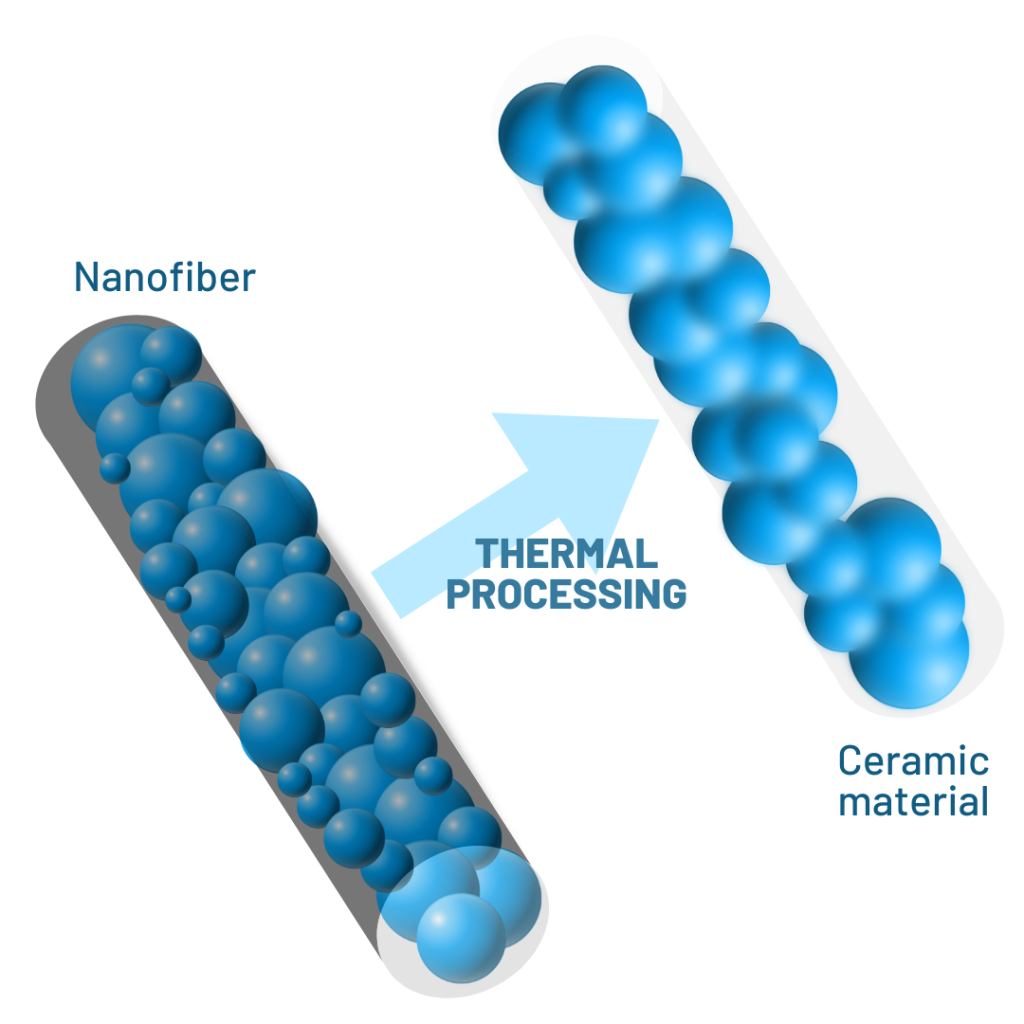
  • Heat treatment (post-processing): electrospun ceramic nanofibers are often subjected to calcination treatment in the form of post pyrolysis, hydrothermal and carbothermal processes. These treatments remove the polymer, so that the resulting nanofibers are composed exclusively of the ceramic material. These treatments also remove the polymer, so that the resulting nanofibers are composed exclusively of the ceramic material.

electrospinning for ceramic materials

Ceramic materials and precursors

There are several ceramic materials that have been successfully processed by electrospinning, allowing the number of applications to continue to grow. Examples of ceramic materials include oxides (e.g. TiO2, ZnO, SiO2), carbides (e.g. SiC), nitrides (e.g. BN), and composites. The choice of ceramic precursor influences the properties of the resulting nanofibers, such as their mechanical strength, electrical conductivity and thermal stability.

Composite fibers combining polymers with ceramic materials are attracting a lot of interest. These composites often have improved mechanical, thermal or electrical properties compared to their individual components.

Polymer-ceramic composites: by carefully selecting polymers and ceramic precursors, researchers create composites that exploit the desirable properties of both components. The electrospinning technique can generate nanofibers from polymer-ceramic composites. These composites have applications in a wide range of fields, from aerospace to electronics.

Carbon-ceramic composites: electrospinning has played a key role in producing carbon-ceramic composites. These materials show improved mechanical and thermal stability, making them suitable for high temperature applications.

Ceramic nanofibers applications with electrospinning

Some of their applications include:

  • Catalysis: ceramic nanofibers, with their high surface area, are an excellent platform for catalytic applications. Catalysis tests performed on electrospun ceramic nanofibers show increased activity and stability, making them valuable for industrial applications.
  • Sensors: electrospun ceramic nanofibers are being investigated for use in sensors due to their high surface area to volume ratio. They can be used in gas and moisture sensors, and in biosensors, as they have a high sensitivity to changes in the environment.
  • Energy storage: ceramic nanofibers play a key role in energy storage devices such as lithium-ion batteries and supercapacitors. Their unique structure facilitates fast charge/discharge cycles, improving the performance of these devices. Electrospinning nanofiber membranes usually generates high energy density and good electronic transfer. This is why electrospinning is also emerging in energy-related applications.
  • Tissue engineering: In the biomedical field, ceramic nanofibers are being investigated for tissue engineering applications. These fibers can provide a scaffold that replicates the extracellular matrix, promoting cell adhesion and growth. Electrospinning is one of the techniques being explored most recently in the field of tissue engineering.
  • Filtration: the high porosity and small pore size of ceramic nanofibers produced by electrospinning make them suitable for certain filtration applications. They have been successfully employed in air and water filtration systems, demonstrating their ability and efficiency to separate particles.

Challenges and sustainability

Among the main challenges in obtaining ceramic nanofibers is achieving a homogeneous distribution of the ceramic precursor within the polymer matrix, as this is critical for the formation of uniform ceramic nanofibers. Researchers are currently facing challenges related to phase separation during the electrospinning process to improve the overall quality of the nanofibers.

On the other hand, researchers are exploring the use of eco-friendly ceramic precursors with the aim of developing sustainable methods for large-scale production while reducing environmental impact.

Conclusions

Electrospinning has emerged as a particularly suitable technique for producing ceramic nanofibers due to its low cost, ease of preparation of the solution containing the ceramic precursor and the polymer, and its ability to generate solid and hollow nanofibers. The properties of nanofibers obtained by electrospinning are superior to their bulk equivalent due to their low weight, as well as their porous structure and high surface area.

The applications of ceramic nanofibers are broad, ranging from catalysis and energy storage to tissue engineering. The unique properties exhibited by ceramic nanofibers continue to drive innovation in various fields. Ongoing research is addressing challenges related to dissolution formulation, phase separation and process scale-up. More sustainable alternatives and eco-friendly applications are also being explored, ensuring the continued growth of electrospinning in the field of ceramic materials.

At Bioinicia Group, we have experience in the processing of some ceramic materials by electrospinning. Also, some of our customers, users of Fluidnatek electrospinning equipment, are specialists in ceramic applications with electrospinning nanofibers, with a positive and satisfactory result of the use of Fluidnatek technology for electrospinning and electrospraying.

References

[1] B. Sahoo et al., “Electrospinning of functional ceramic nanofibers”, Open Ceramics 11 (2022) 100291.

[2] H. Esfahani et al., “Electrospun Ceramic Nanofiber Mats Today: Synthesis, Properties, and Applications”, Materials 2017, 10, 1238.

INTERESTED? CONTACT OUR SPECIALISTS!