Category Archives: Energy

Electrospun Nanofibers for Piezoelectric Power Generation

Piezoelectric Power Generation

Introduction: The Challenge of Low-Power Energy Generation

The rapid expansion of wearable electronics, distributed sensor networks, implantable medical devices, and Internet of Things (IoT) platforms has intensified the demand for decentralized, low-power energy sources. Traditional battery technologies, despite their prevalence, present significant bottlenecks regarding their limited operational lifespan, periodic maintenance, rigid form factors, and environmental concerns related to disposal and replacement.

As electronic devices become smaller, lighter, and more flexible, the energy systems that power them must follow the same trajectory. This technological pressure has accelerated research into wearable energy harvesting strategies capable of converting ambient mechanical energy—such as body motion, vibration, pressure fluctuations, or acoustic waves—into usable electrical power.

Among the different energy harvesting mechanisms (triboelectric, thermoelectric, photovoltaic), piezoelectric power generation has emerged as a particularly attractive approach due to its direct electromechanical coupling, high energy conversion efficiency at small scales, and compatibility with flexible materials. When combined with nanostructured architectures fabricated via electrospinning, piezoelectric materials can reach performance levels suitable for practical autonomous systems.

This article explores how electrospun piezoelectric power generation enables the development of flexible nanogenerators, the materials involved, fabrication strategies, performance considerations, and how Fluidnatek’s electrospinning platforms support this field.

What Is Piezoelectric Power Generation?

Piezoelectricity is the ability of certain materials to generate an electric charge in response to applied mechanical stress. The phenomenon arises from non-centrosymmetric crystal structures or aligned molecular dipoles, which produce charge displacement under deformation.

In energy harvesting applications, mechanical stimuli such as bending, compression, or vibration induce electrical polarization, creating a measurable voltage output. Devices exploiting this mechanism are commonly referred to as piezoelectric nanogenerators (PENGs), a concept introduced in early nanoscale energy harvesting research (Wang & Song, 2006).

Piezoelectric materials can be broadly categorized into:

  • Ceramics (e.g., PZT – lead zirconate titanate), which offer high piezoelectric coefficients but are typically brittle, rigid, and contain lead, raising concerns for flexible and wearable applications as well as for environmentally conscious designs.
  • Polymers (e.g., PVDF and PVDF-TrFE), which are flexible, lightweight, and compatible with thin, conformable form factors.

In the context of wearable and flexible electronics, piezoelectric polymers are favored over lead-based ceramics due to their superior mechanical compliance, facile processability, and inherently higher biocompatibility. Among them, poly(vinylidene fluoride) (PVDF) and its copolymer poly(vinylidene fluoride-co-trifluoroethylene) (PVDF-TrFE) are the most widely studied, particularly when processed into nanofibers via electrospinning to maximize their electroactive β-phase content and molecular alignment.
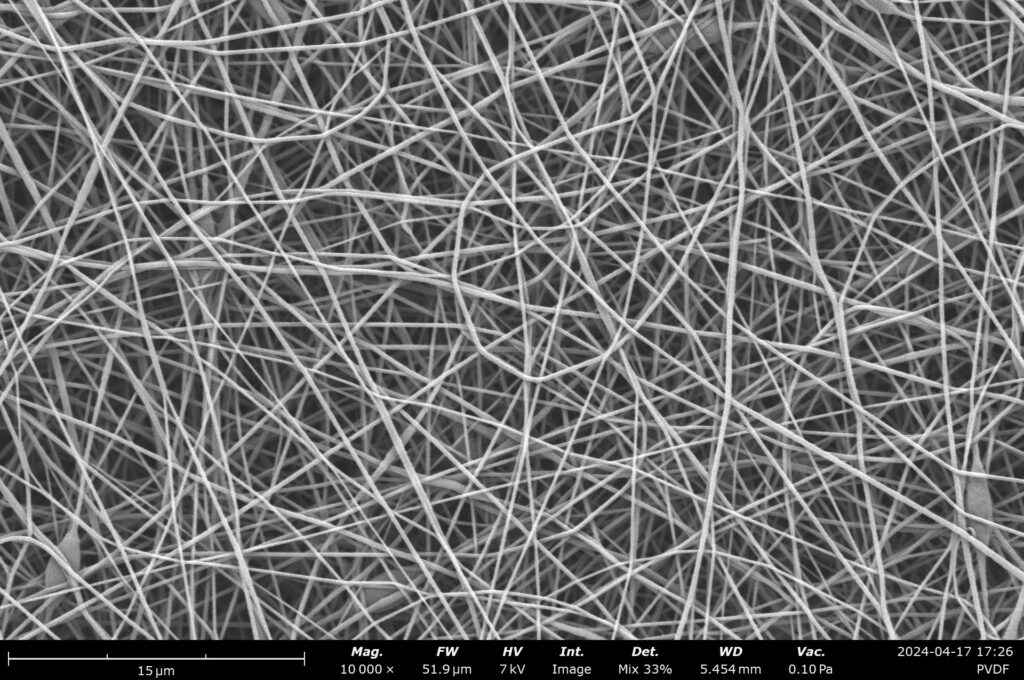
PVDF electrospun nanofibers.

SEM image of PVDF electrospun nanofibers. Image credit: Nanoscience Instruments.

Why Use Electrospun Nanofibers for Piezoelectric Applications?

Electrospinning is a high-voltage fiber fabrication technique capable of producing continuous fibers with diameters ranging from micrometers down to tens of nanometers. The process offers several intrinsic advantages for electrospun piezoelectric nanofibers:

  1. Enhanced β-Phase Formation

During electrospinning, strong electric fields and extensional forces align polymer chains along the fiber axis. In PVDF-based systems, this promotes the formation of the electroactive β-phase, which is responsible for piezoelectric behavior. Electrospinning can substantially increase β-phase content compared to conventional film casting, often reducing or eliminating the need for extensive post-poling treatments (Li & Xia, 2004; Persano et al., 2013).

  1. High Surface-to-Volume Ratio

Nanofibrous mats exhibit large interfacial areas and low bending stiffness. These characteristics enhance mechanical sensitivity and strain-induced polarization, improving voltage output under small deformations.

  1. Mechanical Flexibility

Electrospun membranes are lightweight and flexible, making them ideal for piezoelectric textiles, wearable patches, flexible sensors, and autonomous biomedical devices.

  1. Structural Tunability

Electrospinning enables precise control over fiber diameter, fiber alignment, porosity, multilayer architectures, and composite incorporation (e.g., ceramic nanoparticles). This versatility supports the development of nanofiber-based piezoelectric devices optimized for specific mechanical environments.

For related insights into functional fiber development, visit: https://fluidnatek.com/

Piezoelectric Nanogenerators from Electrospun Fibers

Electrospun fibers can be integrated into flexible device architectures where mechanical deformation induces charge separation. A typical configuration includes an electrospun PVDF or PVDF-TrFE nanofiber mat, top and bottom conductive electrodes, and an encapsulation layer for mechanical protection. Under cyclic bending or compression, the aligned dipoles generate alternating voltage output.

Key performance parameters include open-circuit voltage (Voc), short-circuit current (Isc), power density (µW/cm²), mechanical durability, and frequency response.

Electrospun architectures are particularly advantageous for low-frequency biomechanical energy harvesting (e.g., walking, breathing, joint motion), making them suitable for wearable energy harvesting systems.

Using PVDF and PVDF-TrFE for Energy Harvesting

PVDF nanofibers are the benchmark material in polymer-based piezoelectric systems. Their advantages include high β-phase stabilization under electrospinning, good chemical resistance, mechanical durability, and commercial availability.

PVDF-TrFE further enhances performance due to its intrinsically higher ferroelectric phase content and reduced need for post-processing. Electrospun PVDF-TrFE nanofiber generators typically show improved polarization stability and enhanced output compared to pure PVDF systems (Chang et al., 2010).

In particular, Persano et al. (2013) demonstrated that aligned arrays of electrospun PVDF-TrFE nanofibers can achieve exceptional piezoelectric performance, enabling pressure sensing down to 0.1 Pa and suitability for both energy harvesting and self-powered sensing applications. Aligned fibers exhibit substantially higher piezoelectric output than randomly oriented mats, a finding confirmed across multiple independent studies, as the higher orientation degree accelerates charge transfer along the fiber axis (Persano et al., 2013).

Optimization strategies include controlling solvent systems to tailor crystallinity, adjusting applied voltage and collector distance, using rotating collectors for fiber alignment, and incorporating ceramic fillers (e.g., BaTiO₃ nanoparticles).

Wearable and Autonomous Power Sources with Nanofibers

The integration of electrospun piezoelectric membranes into textiles enables the development of piezoelectric textiles capable of converting body motion into electricity.

Applications include self-powered health monitoring patches, motion detection systems, flexible pressure sensors, and autonomous IoT nodes. Electrospun nanofiber mats can be laminated onto fabrics or directly integrated into multilayer textile architectures. Their mechanical conformity ensures minimal discomfort while maintaining functional output.

For additional insights into smart textile fabrication, see: https://fluidnatek.com/functionalized-fabrics-electrospinning/

Materials and Fabrication Strategies

The performance of electrospun PVDF systems depends strongly on processing parameters. The α→β phase transformation in PVDF—the key transition responsible for piezoelectric activity—is influenced by both mechanical and electrical conditions during fiber formation (Sencadas et al., 2009).

Polymer Solution Parameters

Concentration affects fiber uniformity and bead formation. Solvent volatility influences crystallinity. Additives can modify conductivity and phase behavior.

Electrospinning Parameters

Applied voltage, flow rate, needle-to-collector distance, and ambient humidity and temperature all play critical roles in determining fiber morphology and β-phase content.

Post-Treatments

Thermal treatment promotes crystalline growth, whereas electrostatic poling and mechanical drawing are critical for aligning molecular dipoles and polymer chains orientation. The uniaxial stretching of PVDF films has been documented as a key method for driving the α→β transition (Sencadas et al., 2009), and electrospinning replicates this effect at the fiber scale during the spinning process itself.

Composite Systems

To enhance dielectric and piezoelectric properties, researchers incorporate BaTiO₃ nanoparticles, ZnO nanostructures, and graphene derivatives. Such hybrid systems aim to combine polymer flexibility with ceramic piezoelectric coefficients, increasing output power without sacrificing mechanical compliance.

Performance in Energy Harvesting Applications

Performance metrics in electrospun piezoelectric power generation systems depend on device architecture and testing conditions.

Wang and Song (2006) demonstrated the foundational concept of nanoscale piezoelectric generators using zinc oxide nanowire arrays. Subsequent research has refined polymer-based systems to improve scalability and flexibility.

Persano et al. (2013) reported high-performance flexible devices based on aligned PVDF-TrFE nanofiber arrays capable of detecting pressures as low as 0.1 Pa, demonstrating the suitability of these architectures for both energy harvesting and ultra-sensitive pressure sensing applications. In flexible configurations, electrospun nanofibers have shown stable output over thousands of mechanical cycles, with voltage outputs spanning from a few volts to tens of volts and power densities typically in the µW/cm² range depending on architecture, fiber alignment, and mechanical input frequency in many reported devices (Persano et al., 2013; Chang et al., 2010).

Electrospun architectures are particularly well-suited for:

  • Low-frequency biomechanical energy capture
  • Integration with flexible electronics
  • Hybrid energy harvesting (combined piezoelectric + triboelectric systems)

Importantly, electrospinning offers scalability from laboratory R&D to pilot and industrial production, enabling translation from academic prototypes to commercial devices.

Fluidnatek’s Capabilities for Piezoelectric Nanofiber Development

Fluidnatek provides advanced electrospinning platforms specifically designed for research, pilot-scale production, and industrial manufacturing of functional nanofibers.

The precise high-voltage control offered by Fluidnatek systems directly supports the β-phase promotion mechanisms described above, while rotating and patterned collectors enable the fabrication of aligned nanofiber architectures that, as Persano et al. (2013) demonstrated, are critical for maximizing piezoelectric output. Environmental control of humidity and temperature during spinning addresses the process-sensitive crystallization behavior of PVDF documented by Sencadas et al. (2009).

Key capabilities include:

  • Precise voltage and environmental control
  • Multi-needle and needleless configurations
  • Rotating and patterned collectors for fiber alignment
  • Scalable systems for continuous production
  • Compatibility with PVDF and PVDF-TrFE systems

These systems support development of flexible piezoelectric materials, optimization of fiber morphology, fabrication of aligned nanofiber membranes, and scale-up of nanofiber-based piezoelectric devices. Fluidnatek equipment enables reproducibility, process monitoring, and parameter control essential for advanced materials research.

Explore Fluidnatek’s electrospinning solutions: https://fluidnatek.com/electrospinning-machines/

Conclusion

The multidisciplinary convergence of flexible electronics, wearable technologies, and autonomus sensor systems has intensified the development of miniaturized, high-efficiency energy harvesting strategies. Electrospun piezoelectric generators represent a pivotal advancement in this domain, integrating breakthroughs in material science and nanotechnology with scalable manufacturing. By leveraging electrospinning, researchers can enhance β-phase formation, tailor fiber alignment, and fabricate high-performance PVDF and PVDF-TrFE nanogenerators suitable for real-world applications. The resulting systems support wearable energy harvesting, smart textiles, and self-powered sensing platforms.

As demand for flexible, lightweight, and sustainable power sources grows, electrospun nanofiber architectures will play an increasingly strategic role in next-generation energy systems.

Ready to Create Next-Generation Piezoelectric Materials?

Fluidnatek provides scalable electrospinning solutions for energy harvesting nanofiber systems designed for innovation in wearables and autonomous sensors. Whether your focus is PVDF-TrFE fiber alignment, composite nanogenerators, or piezoelectric textile integration, our team can support your process from lab to production scale.

Contact our team to develop your next electrospun piezoelectric nanogenerator platform.

References

Chang, C., Tran, V. H., Wang, J., Fuh, Y. K., & Lin, L. (2010). Direct-write piezoelectric polymeric nanogenerator with high energy conversion efficiency. Nano Letters, 10(2), 726–731. https://doi.org/10.1021/nl903612n

Li, D., & Xia, Y. (2004). Electrospinning of nanofibers: Reinventing the wheel? Advanced Materials, 16(14), 1151–1170. https://doi.org/10.1002/adma.200400719

Persano, L., Dagdeviren, C., Su, Y., Zhang, Y., Girardo, S., Pisignano, D., Huang, Y., & Rogers, J. A. (2013). High performance piezoelectric devices based on aligned arrays of nanofibers of poly(vinylidenefluoride-co-trifluoroethylene). Nature Communications, 4, 1633. https://doi.org/10.1038/ncomms2639

Sencadas, V., Gregorio, R., & Lanceros-Méndez, S. (2009). α to β phase transformation and microstructural changes of PVDF films induced by uniaxial stretch. Progress in Polymer Science, 34(10), 1003–1033. https://doi.org/10.1016/j.progpolymsci.2009.05.004

Wang, Z. L., & Song, J. (2006). Piezoelectric nanogenerators based on zinc oxide nanowire arrays. Science, 312(5771), 242–246. https://doi.org/10.1126/science.1124005

Copper Oxide Electrospun Nanofibers for Energy

Copper Oxide Nanofibers for Energy

Introduction: The Need for Advanced Materials in the Energy Transition

The global push for cleaner, more efficient energy solutions is reshaping the landscape of materials science. As the world transitions toward renewable energy sources and seeks to reduce carbon emissions, the demand for advanced materials capable of enhancing the performance of batteries, supercapacitors, solar cells, and energy storage devices has reached unprecedented levels. Among these advanced materials, Copper oxide electrospun nanofibers have emerged as a key innovation, offering unique properties and exceptional versatility for next-generation energy applications.

The energy sector’s transformation requires materials that can deliver superior performance while maintaining cost-effectiveness and environmental sustainability. Traditional materials often fall short of meeting the stringent requirements of modern energy devices, creating an urgent need for novel nanomaterials that can bridge this performance gap. Electrospun copper oxide nanofibers are at the forefront of this technological shift, thanks to their outstanding conductivity, catalytic activity, and adaptability.

Why Copper Oxide Nanofibers? Unique Properties for Energy Use

Copper oxide (CuO) stands out as a semiconductor material with several compelling advantages for energy-related applications. Its intrinsic properties make it particularly attractive for various energy conversion and storage technologies.

The fundamental advantages of copper oxide include:

  • High electrical and thermal conductivity: Essential for efficient charge and heat transfer in energy devices
  • Excellent catalytic and photocatalytic activity: Critical for solar energy conversion and environmental applications
  • Low cost and natural abundance: Ensures economic viability for large-scale implementation
  • Ability to form nanostructures with high surface-to-volume ratios: Maximizes active sites for enhanced performance

When CuO is structured as nanofibers through electrospinning, these inherent properties are significantly amplified. The resulting Copper oxide electrospun nanofibers exhibit enhanced characteristics, including increased surface area for greater interaction with electrolytes and reactants, improved electron and ion transport pathways, and porous structures that facilitate diffusion while minimizing mechanical stress during battery cycling operations.

The fibrous morphology also provides mechanical flexibility and structural integrity, making these materials ideal for flexible energy devices and applications requiring durability under mechanical stress. This is why copper oxide electrospun nanofibers are increasingly chosen for advanced energy storage and conversion systems.

Electrospinning as a Route to Create CuO Nanofibers

Electrospinning represents a versatile and scalable technique for producing continuous nanofibers from polymer or inorganic precursor solutions. This process involves applying a high voltage to a solution containing a CuO precursor and a carrier polymer, generating a fine jet that solidifies in air and deposits as a nanofibrous mat on a generally negative charged collector. The electrospinning process is particularly advantageous for producing Copper oxide electrospun nanofibers due to its precise control over fiber morphology and scalability.

The electrospinning process offers several distinct advantages for CuO nanofiber production:

  • Precise control over fiber diameter and morphology: Enables tailoring of material properties for specific applications
  • Ability to incorporate other materials: Facilitates creation of hybrid or composite structures with enhanced functionality
  • Scalability: Adaptable for both laboratory-scale research and industrial-scale manufacturing
  • Cost-effectiveness: Relatively simple setup with moderate equipment requirements

The typical process involves dissolving copper precursors (such as copper acetate or copper nitrate) in a polymer solution, followed by electrospinning under controlled conditions. After electrospinning, the precursor fibers undergo thermal treatment to remove the polymer carrier and yield crystalline copper oxide nanofibers with optimized properties for energy applications. This method ensures high-quality copper oxide nanofibers with the characteristics required for high-performance energy devices.

Energy Applications of CuO Electrospun Nanofibers
Copper oxide electrospun nanofibers have demonstrated outstanding performance across a diverse range of energy applications, driving significant innovation in both energy storage and conversion devices. The use of copper oxide electrospun nanofibers in these fields is rapidly expanding due to their superior electrochemical and structural properties.

Electrospun Copper Oxide Nanofibers for Energy Storage

Advantages in Battery and Supercapacitor Design
In lithium-ion batteries, CuO nanofibers offer exceptional electrochemical performance characteristics. The fibrous morphology provides stable reversible capacity and excellent cycling performance over extended periods. Recent studies have demonstrated that CuO nanofibers produced by electrospinning can achieve specific capacities up to 452 mAh/g while maintaining stable performance over 100+ charge-discharge cycles. This remarkable performance is attributed to the unique structure of copper oxide electrospun nanofibers, which significantly outperforms conventional materials.

The one-dimensional structure of the nanofibers facilitates rapid lithium-ion diffusion and provides excellent electronic conductivity pathways. Additionally, the porous nature of the fibrous network accommodates volume changes during lithium insertion and extraction, reducing mechanical degradation and extending battery life.

For supercapacitors, the porous, conductive network of CuO nanofibers enables rapid charge transfer and higher energy density compared to traditional electrode materials. The high surface area provides numerous active sites for charge storage, while the interconnected fibrous structure ensures efficient electron transport. Integrating these nanofibers into hybrid electrodes has shown to enhance both power density and device longevity significantly. These advantages make Copper oxide electrospun nanofibers a preferred choice for next-generation supercapacitors.

Nanofibers for Photocatalysis and Solar Energy

Copper oxide nanofibers excel in photocatalytic applications and solar energy conversion systems. Their semiconductor properties enable efficient absorption of visible light and generation of electron-hole pairs, making them ideal for multiple applications including photocatalytic degradation of organic pollutants, hydrogen production via water splitting, and integration into photodetectors and next-generation solar cells.

The high surface area and tunable architectures of Copper oxide electrospun nanofibers further enhance process efficiency by providing more active sites for photocatalytic reactions.

The fibrous structure also facilitates better light scattering and absorption, improving overall photocatalytic performance. These properties open new avenues for solar energy utilization and environmental remediation applications.

Key Material Combinations and Hybrid Nanostructures

The performance of copper oxide electrospun nanofibers can be significantly enhanced by combining them with other materials to create sophisticated hybrid or composite structures. Hybrid electrodes based on Copper oxide electrospun nanofibers and other nanomaterials are being developed to achieve superior energy storage and conversion performance.

Notable examples of hybrid nanostructures include copper nanofiber networks with cobalt oxides (CuNFs@CoOx), which demonstrate improved electrode conductivity and mechanical stability, leading to higher capacity and better cycling performance in lithium-ion batteries. The cobalt oxide coating provides additional active sites while protecting the copper core from oxidation.

Core-shell and multilayer nanofiber designs represent another promising approach, optimizing electron transfer and ion diffusion while protecting the active material from degradation. These architectures can be precisely controlled during the electrospinning process by adjusting solution properties and processing parameters.

Composites incorporating graphene, metal oxides, or conductive polymers expand the range of applications and improve efficiency in both storage and conversion devices. For instance, CuO-graphene composites combine the high surface area of CuO nanofibers with the excellent electrical conductivity of graphene, resulting in enhanced electrochemical performance.

Such nanostructured material engineering strategies provide unprecedented opportunities for developing customized, high-performance energy devices tailored to specific application requirements.

copper oxide benefits

Benefits of Copper and Magnesium Cosubstitution in Na0.5Mn0.6Ni0.4O2 as a Superior Cathode for Sodium Ion Batteries. Source: Tao ChenWeifang LiuFang LiuYi LuoYi ZhuoHang HuJing GuoJun Yan*Kaiyu Liu*

Challenges, Industrial Scalability, and Fluidnatek’s Role

Despite significant scientific progress, integrating copper oxide electrospun nanofibers into industrial applications presents several critical challenges that must be addressed for successful commercialization. The large-scale production of Copper oxide electrospun nanofibers requires robust process control and advanced manufacturing solutions.

Scalability remains a primary concern, as large-scale production requires robust electrospinning systems capable of delivering high volumes of nanofibers with consistent quality and reproducible properties. The transition from laboratory-scale to industrial-scale production demands sophisticated process control and monitoring systems.

Uniformity and property control represent another significant challenge, as ensuring homogeneity in fiber diameter, morphology, and composition across large production batches is critical for commercial device performance. Variations in these parameters can significantly impact the final device performance and reliability.

Device integration requires efficient assembly of nanofibers into electrodes and functional components, demanding specialized engineering solutions and manufacturing processes that can handle the delicate nature of nanofibrous materials while maintaining their structural integrity.

Fluidnatek stands at the forefront of addressing these challenges through advanced electrospinning technology. The company offers sophisticated platforms specifically designed for scalable, controlled production of copper oxide nanofibers tailored for energy applications.

Fluidnatek’s systems are engineered to enable the industrial adoption of copper oxide electrospun nanofibers, bridging the gap between laboratory innovation and commercial-scale manufacturing

Conclusion: Copper Oxide Electrospun Nanofibers—The Future of Advanced Energy Materials

Copper oxide electrospun nanofibers represent one of the most promising solutions for next-generation energy devices, offering a unique combination of properties that address multiple challenges in energy storage and conversion. The continued development and deployment of copper oxide electrospun nanofibers will be key to advancing energy technologies worldwide.

Their exceptional surface area, excellent electrical conductivity, and structural versatility make them ideal candidates for advanced batteries, supercapacitors, photocatalytic systems, and solar energy conversion devices.

The ability to engineer hybrid and composite structures further expands their potential applications and performance capabilities, opening new possibilities for customized energy solutions. As the energy sector continues to evolve toward more sustainable and efficient technologies, these nanomaterials will play an increasingly important role in enabling the next generation of energy devices.

The primary challenges of scalability and quality control can be effectively addressed through advanced electrospinning technologies. Success in overcoming these challenges will unlock the full potential of copper oxide nanofibers and accelerate their industrial adoption across various energy applications.

Ready to Accelerate Your Energy Innovation?

Interested in scalable production of copper oxide nanofibers for energy devices? Discover how Fluidnatek’s electrospinning platforms empower energy innovation and enable the transition from laboratory research to industrial manufacturing.

Let Fluidnatek help you move from lab-scale research to commercial production with reliable, high-performance nanofiber solutions specifically tailored for the future of energy technology.

References

  1. Li, D., & Xia, Y. (2004). Electrospinning of nanofibers: Reinventing the wheel? Advanced Materials, 16(14), 1151-1170. https://doi.org/10.1002/adma.200400719
  2. Li, X., et al. (2021). Electrospun copper oxide nanofibers for high-performance lithium-ion batteries. Journal of Power Sources, 482, 228949. https://doi.org/10.1016/j.jpowsour.2020.228949
  3. Wang, Y., et al. (2017). Electrospun CuO nanofibers for high-performance supercapacitors. Nano Energy, 32, 294-301. https://doi.org/10.1016/j.nanoen.2016.12.015
  4. Zhang, X., et al. (2019). Recent advances in copper oxide nanostructures for energy applications. ACS Applied Energy Materials, 2(2), 1420-1440. https://doi.org/10.1021/acsaem.8b01909
  5. Fluidnatek by Bioinicia. (2025). Electrospinning technology for functional nanomaterials. https://fluidnatek.com/electrospinning-electrospraying/


Electrospun Membrane in Batteries: Enhancing Performance and Efficiency

Electrospun Membrane in Batteries

The demand for high-performance energy storage solutions is rapidly increasing, driving innovation in battery technology. One promising approach involves the use of electrospun membranes in batteries to enhance its performance and efficiency.

With this purpose in mind, this article explores the role of electrospinning in battery technology, the benefits of electrospun membranes, and future perspectives in this exciting field.

The Role of Electrospinning in Battery Technology

Electrospinning has emerged as a pivotal technique in the development of advanced battery technologies due to its ability to produce nanofiber membranes with tailored properties. Particularly, these membranes, which can serve as separators, electrode materials, or composite structures, are characterized by their high surface area, porosity, and tunable morphology.

By adjusting parameters such as fiber diameter, pore size, and material composition during the electrospinning process, researchers can optimize the performance of these membranes for specific battery applications. For instance, the controlled porosity of electrospun separators enhances ion transport while maintaining mechanical stability, which is crucial for safety and performance in -ion batteries.

Additionally, electrospinning enables the incorporation of functional materials like doped polymers or metal oxides into the fibers, further improving conductivity and thermal stability. Subsequently, this versatility positions electrospinning as a cornerstone for innovation in energy storage solutions.

Electrospun Membranes for Next-Generation Batteries

Certainly, Electrospun membranes are at the forefront of next-generation battery research due to their ability to address key challenges such as energy density, power output, and longevity.

In fact, these membranes are particularly promising for advanced battery chemistries like lithium-sulfur and lithium-air systems. In lithium-sulfur batteries, electrospun separators with enhanced electrolyte retention and polysulfide-trapping capabilities significantly improve cycling stability.

Similarly, in lithium-air batteries, the use of electrospun cathodes provides a highly porous structure that facilitates oxygen diffusion and reaction kinetics, resulting in better efficiency and durability.

Furthermore, multilayered or composite electrospun membranes offer multifunctionality by combining mechanical strength with thermal resistance and ionic conductivity. hence, this adaptability allows for the creation of customized solutions tailored to the demands of emerging battery technologies.

As research progresses, the integration of advanced materials into electrospun fibers is expected to unlock even greater performance gains, paving the way for more efficient and sustainable energy storage systems.

Electrospun materials in Batteries: A Revolution in Energy Storage

The use of electrospun materials in batteries represents a revolutionary advancement. Moreover, the unique properties of electrospun nanofibers, such as high surface area and porosity, facilitate faster ion transport and improved electrode-electrolyte contact. Therefore, this results in batteries with enhanced performance characteristics.

Electrospun Cathode for Lithium Air Battery: Applications and Benefits

One particularly promising application is the use of an electrospun cathode for lithium air battery. Lithium-air batteries have the potential for extremely high energy density, but they face challenges related to cathode performance.

Overall, Electrospun cathodes can improve the battery’s efficiency, lifespan, and stability by providing a highly porous and interconnected structure that facilitates oxygen transport and reaction.

Lithium-ion industrial high current batteries

Lithium-ion industrial high current batteries.

Advantages of Electrospun Membranes in Battery Performance

Unquestionably, Electrospun nanofiber membranes for lithium-ion batteries offer several key advantages:

  • Improved Ion Conductivity: The porous structure of electrospun membranes allows for faster ion transport, leading to higher power output.
  • Enhanced Electrolyte Retention: Electrospun membranes can effectively retain the electrolyte, ensuring good ionic contact between the electrodes.
  • Increased Surface Area: The high surface area of electrospun anode materials and electrospun cathode materials provides more active sites for electrochemical reactions, improving energy storage capacity.
  • Better Mechanical Properties: Electrospun membranes can be designed with good mechanical strength and flexibility, enhancing the battery’s durability.
  • Customizable Morphology: The electrospinning process allows for precise control over the membrane’s pore size, fiber diameter, and composition, enabling tailored solutions for specific battery requirements. Electrospun nanofiber battery separators also benefit from this.

Future Perspectives in Electrospinning for Battery Development

Subsequently, the future of electrospinning in battery technology looks bright, with ongoing research focused on:

  • Developing new electrospun anode materials and electrospun cathode materials: Exploring novel materials to further enhance battery performance.
  • Optimizing the electrospinning process: Fine-tuning parameters to achieve even greater control over membrane properties.
  • Creating multi-functional membranes: Combining different functionalities within a single electrospun membrane to improve overall battery performance.
  • Scaling up production: Developing cost-effective methods for mass production of electrospun membranes.

Conclusion

Summing up, Electrospun membranes are poised to play a significant role in the future of battery technology. Their unique properties and versatility make them an ideal solution for enhancing the performance and efficiency of next-generation batteries. To point out, the development of the electrospun cathode for lithium air battery is just one example of the exciting possibilities offered by this technology.

Interested in leveraging electrospun membranes for high-performance battery applications? Contact our experts at Fluidnatek to explore tailored solutions. Learn more about our advanced electrospinning technology on our applications page.

References

  1. Preparation of Electrospun Membranes and Their Use as Separators in Lithium BatteriesBatteries, 2023, 9(4), 201; DOI: 10.3390/batteries90402011.
  2. Electrospun Lithium Metal Oxide Cathode Materials for Lithium-Ion BatteriesRSC Advances, 2013; DOI: 10.1039/c3ra45414b2.
  3. Electrospun Cellulose Nanofiber Membranes as Multifunctional Separators for High Energy and Stable Lithium-Sulfur BatteriesEnergy Engineering and Power Technology, 2023; DOI: 10.1155/2023/15418583.
  4. Electrospun Nanofibers Enabled Advanced Lithium–Sulfur BatteriesAccounts of Materials Research, 2022; DOI: 10.1021/accountsmr.1c001984.
  5. Advances in Electrospun Materials and Methods for Li-Ion BatteriesBatteries, 2023; DOI: 10.3390/batteries90402015.
  6. Electrospun Nanofiber Electrodes for LithiumIon BatteriesMacromolecular Rapid Communications, 2022; DOI: 10.1002/marc.2022007406.
  7. A Review of Electrospun Separators for LithiumBased BatteriesChemElectroChem, 2022; DOI: 10.1002/cey2.5397

Electrospinning Techniques for Energy Generation and Storage

electrospinning-energy-generation-storage

Electrospinning is widely recognized for its role in nanofiber production, but it also holds potential for energy generation. This article explores how electrospinning contributes to energy applications.

Nanogenerators and Energy Harvesting

One of the most promising applications of electrospinning in the energy sector is in the development of nanogenerators. These devices harness mechanical energy and convert it into electrical energy, making them useful for powering small electronic devices and wearable technology.

Nanogenerators rely on electrospun nanofibers to enhance their energy-harvesting capabilities. These fibers improve the surface area and mechanical properties of the generator, making energy conversion more efficient.

Some of the most common types of nanogenerators include:

  • Piezoelectric nanogenerators (PENGs): Convert mechanical stress into electrical energy.
  • Triboelectric nanogenerators (TENGs): Utilize contact electrification to generate power.

Recent advancements in electrospinning techniques have significantly improved nanofiber production and applications in various fields. Crystal engineering has emerged as a promising approach to create oriented crystal LiMPO4/carbon nanofiber hybrids, enhancing lithium storage and transfer capabilities in battery applications. This technique allows for the fabrication of high-performance electrodes without polymeric binders, resulting in improved capacity retention and discharge rates.

These types of nanogenerators depend on high-quality nanofibers, which can only be produced using a stable and reliable electrospinning power supply.

Scanning Electron Micrographs (SEMs)

Scanning Electron Micrographs (SEMs) of different nanofibers structures.

Fuel Cells and Battery Applications

Electrospun nanofibers are also being used to enhance energy storage devices, such as batteries and fuel cells. These fibers increase electrode surface area, improve conductivity, and enhance ion transport efficiency, leading to better overall performance.

Recent advancements in electrospinning techniques have enabled the fabrication of high-performance electrodes without polymeric binders, improving capacity retention and discharge rates.

One notable innovation in this area is the development of continuous gradient composite films (GCFs) using dynamic concentration adjustment techniques combined with electrospinning. These films exhibit a gradient distribution of nanoparticles within the carbon fiber matrix, significantly enhancing electronic conductivity and electrochemical performance. Such an approach is particularly promising for cathode development in aqueous zinc-ion batteries, offering improved efficiency and stability.

Further advancements in near-field electrospinning technology have also contributed to precise fiber deposition in energy storage applications. By reducing the spinning distance and voltage, near-field electrospinning enables high-precision jet control, allowing for the accurate deposition of cured fibers. When integrated with a precise motion platform, this technique facilitates the formation of aligned fibers with predesigned topologies, unlocking new possibilities for optimizing electrode architectures and improving battery performance.

Experimental procedures and configurations

Experimental procedures and configurations. (A) The synthesis of zeolitic imidazolate framework (ZIF)-8 nanocrystals and the fabrication of electrospun ZIF/polyacrylonitrile (PAN) nanofibrous mats. (B) A contact-separation triboelectric nanogenerator (TENG) device utilizing the ZIF/PAN nanofibrous mat as the electropositive triboelectric material. (C) Schematic representation of the proposed rotary TENG device operating in rolling mode [Tabassian et al., 2024].

Optimizing Electrospinning for Energy Applications

To achieve the best results in energy-related electrospinning applications, researchers must carefully optimize process parameters. Some key factors include:

1. Polymer Selection

Choosing the right polymer is essential for maximizing the electroactive properties of nanofibers used in energy devices. Popular choices include:

  • Polyvinylidene fluoride (PVDF) for piezoelectric applications
  • Polyaniline (PANI) for conductive fiber production

Additionally, blending different polymers or incorporating nanomaterials such as carbon nanotubes or graphene can significantly improve electrical and mechanical properties. This allows for more efficient energy harvesting and storage applications, further expanding the potential of electrospun fibers in sustainable energy solutions.

2. Solution Viscosity

The concentration and viscosity of the polymer solution affect fiber diameter and uniformity. Achieving the right balance ensures the best performance in energy devices. High-viscosity solutions tend to form thicker fibers, while low-viscosity solutions may produce beads rather than continuous fibers. Researchers often experiment with different solvent compositions to optimize viscosity and ensure defect-free fiber production. The choice of solvent also impacts the drying rate and overall fiber morphology, making it a critical factor in the electrospinning process.

3. Collector Type

Using a rotating drum or a conductive substrate as the fiber collector can help align nanofibers for specific energy applications, improving their efficiency in devices like batteries and nanogenerators. Additionally, adjusting the collector speed and shape can influence fiber alignment and density. Recent advances in electrospinning technology have enabled the development of patterned collectors that further enhance fiber organization, leading to improved charge transport in energy storage applications. Properly aligning nanofibers can increase conductivity and energy efficiency, making them more viable for industrial applications.

Advancements in collector technology have expanded the range of possible nanofiber structures and morphologies. Innovative collector designs now enable the production of defect-free nonwoven sheets, tubular structures, continuous yarns, and fine coatings on various substrates. These advancements allow researchers and manufacturers to tailor a sample’s microstructure to meet specific application requirements, further enhancing the versatility of electrospun materials.

Rotating drum collector.

Rotating drum collector.

Importance of a Reliable Electrospinning Power Supply

A stable electrospinning power supply is critical for ensuring the uniformity and consistency of electrospun nanofibers. Several factors must be considered when selecting a power source for electrospinning:

1. Voltage Stability

Voltage fluctuations can lead to inconsistencies in fiber morphology, affecting their electrical and mechanical properties. A high-precision power source for electrospinning ensures uniform fiber production.

2. Adjustable Voltage Range

Different polymers and applications require different voltage settings. An adjustable electrospinning power supply allows researchers to fine-tune the process for optimal fiber formation.

3. Safety Features

Since electrospinning involves high voltages, choosing a power supply with built-in safety mechanisms, such as current limits and overload protection, is crucial for laboratory and industrial applications.

Future Perspectives in Electrospinning and Energy Harvesting

The use of electrospinning in energy applications is an exciting area of research with the potential to revolutionize energy harvesting and storage.

As research continues, electrospinning will likely play an even greater role in energy-related applications. Advances in polymer chemistry, and process optimization will lead to more efficient and scalable energy solutions.

Electrospun fibers are transforming energy storage and power generation with their advanced capabilities. At Fluidnatek, we deliver state-of-the-art electrospinning technology for next-generation applications. Discover how our innovative solutions can elevate your power supply—contact us today!

Author
Wee-Eong TEO

References:

Electrospinning Technology and Its Energy Applications

Adachi M, Murata Y, Takao J, Jiu J, Sakamoto M, Wang F. Highly efficient dye-sensitized solar cells with a titania thin-film electrode composed of a network structure of single-crystal-like TiO2 nanowires made by the “oriented attachment” mechanism. J Am Chem Soc 2004; 126: 14943.

Al-Dhubhani E, Tedesco M, Vos W M, Saakes M. Combined Electrospinning-Electrospraying for High-Performance Bipolar Membranes with Incorporated MCM-41 as Water Dissociation Catalysts. ACS Appl. Mater. Interfaces 2023; 15: 45745.

Al-Enizi A M, Karim A, Yousef A. A novel method for fabrication of electrospun cadmium sulfide nanoparticles-decorated zinc oxide nanofibers as effective photocatalyst for water photosplitting. Alexandria Engineering Journal 2023; 65: 825.

Hamadanian M, Jabbari V. Improved conversion efficiency in dye-sensitized solar cells based on electrospun TiCl4-treated TiO2 Nanorod electrodes. International Journal of Green Energy 2014; 11: 364.

Shafii C. Energy Harvesting Using PVDF Piezoelectric Nanofabric. MSc Thesis. University of Toronto 2014

Bipolar Membranes with 3D Electrospun Junction and Polymeric Catalyst for Energy applications: Hydrogen production…

The aim of this paper is to investigate the use of 3D membrane junctions obtained by electrospinning to improve the catalytic process in bipolar membranes (BPMs) used in water dissociation processes. For this purpose, bipolar membranes with 2D junctions manufactured by lamination are compared with 3D entangled junctions manufactured by electrospinning, using the same polymers for the anionic and cationic layer. In addition, the use of the P4VP polymer as a catalyst for the reaction has been investigated.

Introduction

Bipolar membranes (BPMs) are a type of membrane that allows ion exchange. BPMs are used to dissociate water in many electrodialysis-based processes, resulting in hydroxides (OH-) and protons (H+) from a neutral solution. Industrial applications of BPMs include the production and purification of acids and bases, CO2 capture, flow batteries and fuel cells, among others.
BPMs are composed of two adjacent charged layers: an anion exchange layer (AEL) and a cation exchange layer (CEL), which are bonded by different techniques. The contact surface between the two exchange layers is called the membrane junction. This junction is generally two-dimensional (2D) and is where the electrocatalytic process of water dissociation takes place.
Conventional BPMs are manufactured by alternating successive layers of anion and cation exchange, which are bonded or pressed together at high pressures and temperatures. BPMs can also be made by melting the different anion and cation exchange layers in a controlled and sequential manner.
Current BPMs have certain limitations, such as low water dissociation rate and poor stability under adverse conditions. To overcome these limitations, the authors of this publication propose to fabricate the membrane junctions of the BPMs by electrospinning. In this case, nanofibers of different polymeric materials used in the anionic and cationic layers are deposited at the membrane junction to increase the contact region between the exchange layers. This generates a three-dimensional (3D) entangled and open structure that facilitates the transport of water within the BPM, thereby increasing the efficiency of the dissociation process. In addition, they also propose the use of polymeric catalysts, particularly P4VP.

Materials and methods

Two different types of polymers were used to manufacture the membranes. The polymer used as cation exchanger was SPEEK (sulphonated poly(ether ether ketone)). The polymer used as an anion exchanger was FAA-3. In both cases, the solvent used was DMAc (dimethylacetamide). On the other hand, there are different catalysts that can be used together with BPM to accelerate the water dissociation process. In this work, the use of P4VP (poly(4-vinylpyrrolidine)) as a catalyst has been investigated by incorporating it into the membrane junction of some of the BPMs manufactured.
Specifically, 5 different types of BPMs have been manufactured in this research work:
– 2 BPMs with 2D junction by lamination and hot pressing: one without catalyst, and the other with P4VP electro-stretched into the bond before lamination.
– 3 BPMs with 3D entangled junction by electrospinning and subsequent hot pressing: one without catalyst, one with 7.7% wt of P4VP in the FAA-3 fibers at the juction, and one with 15% wt of P4VP in the FAA-3 fibers, both at the junction and at the AEL.
The electrospinning equipment used to manufacture the BPMs with 3D bonding was a Fluidnatek LE-50 equipped with two independent emitters mounted on two translation axes for the simultaneous electrospinning of the SPEEK and FAA-3 solutions. The equipment also incorporated an environmental control unit (ECU) to establish and precisely maintain the required temperature and humidity conditions during the process.
The fabricated membranes were morphologically characterized using SEM (scanning electron microscopy) images and EDS (energy dispersive X-ray spectroscopy). The characterization of the electrochemical properties was carried out using a homemade five-compartment test cell that allowed the measurement of current efficiency and OCV (open-circuit voltage).

Results

The obtained results show that the electrospinning fabricated BPMs with 3D junction offer a higher performance in the water dissociation process compared to the BPMs with laminated 2D junctions, since the entangled 3D juctions offer a higher specific exchange surface for dissociation. On the other hand, the results also show that the use of a polymer catalyst such as P4VP improves the performance of the water dissociation process due to the increase in the number of additional active sites for the reaction.
The increased performance and stability in the water dissociation process offered by 3D BPMs fabricated by electrospinning make them ideal candidates for applications such as desalination, hydrogen production and energy storage.

References:
ACS Appl. Energy Mater. 2021, 4, 3724-3736

INTERESTED? CONTACT OUR SPECIALISTS!