


Astrea Bioseparations has developed AstreAdept®, a proprietary nanofibre-based chromatography technology designed to address the challenges of purifying large and complex cell and gene therapy modalities, including lentiviral vectors, extracellular vesicles and plasmid DNA.
Challenge
Unlike traditional chromatography resins, which were originally developed for smaller biomolecules, these larger modalities present different purification challenges. AstreAdept® was conceived around a nanofibre membrane architecture that combines a very high surface-area-to-volume ratio with an open flow path, providing a large accessible surface for chromatography while enabling efficient flow.
For lentiviral vector purification in particular, the membrane architecture needs to support efficient processing while handling large and fragile particles. The AstreAdept® structure provides an open, interconnected flow path designed to support convective flow through the membrane, with no dead-end channels and bidirectional flow.
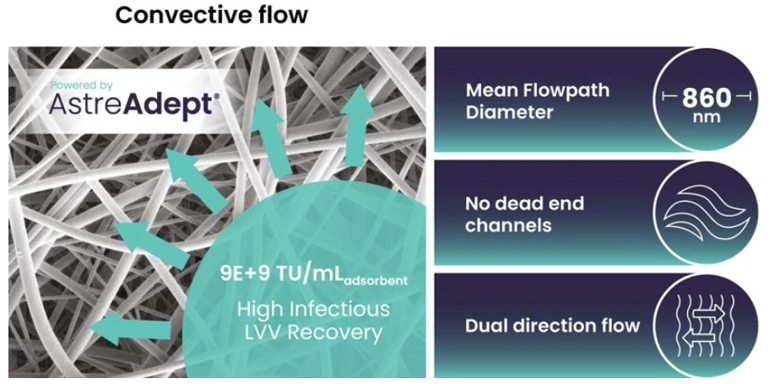
Figure 1. The AstreAdept® nanofibre architecture provides an open, interconnected structure designed to support convective and bidirectional flow during chromatography.
A key challenge was translating this innovative membrane concept into a robust and reproducible electrospinning process. AstreAdept® is based on a composite nanofibre membrane produced by electrospinning two different polymers in sequential layers.
Developing the membrane required precise control of the electrospinning process to achieve the required fibre structure and membrane characteristics while maintaining consistency and reproducibility.
As the technology progressed from early development towards finished chromatography products, Astrea needed an electrospinning platform capable of providing the process control, flexibility and repeatability required to develop the nanofibre membrane.
Solution
Fluidnatek worked closely with Astrea Bioseparations throughout the development of the AstreAdept® nanofibre technology, providing both electrospinning expertise and the equipment platform required to develop and optimise the membrane.
The Fluidnatek LE500 electrospinning machine provided the process control and flexibility required to investigate and optimise the electrospinning conditions for the composite membrane. The ability to control the electrospinning process was critical to developing the nanofibre structure required to deliver the combination of accessible surface area, permeability and flow characteristics needed for chromatography applications.
The development programme brought together complementary areas of expertise. Astrea’s team contributed its understanding of chromatography, purification processes and the performance requirements of large and complex biomolecules, while Fluidnatek contributed specialist knowledge of electrospinning, polymer processing and nanofibre formation.
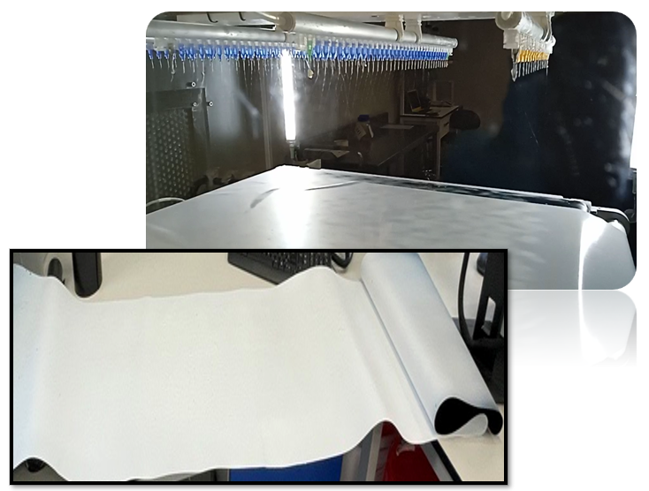
Figure 2. The Fluidnatek LE500 provided the process control and flexibility required to develop and optimise the AstreAdept® electrospun nanofibre membrane.
Through close technical collaboration and an iterative approach to process development, the teams were able to establish the electrospinning conditions required to produce the composite nanofibre membrane consistently.
The Fluidnatek LE500 provided an important platform for developing the membrane process and investigating the relationship between electrospinning parameters and membrane properties. Its process control and flexibility enabled Astrea to optimise the manufacturing process as the technology progressed towards incorporation into finished chromatography devices.
““The development of AstreAdept® required us to bring together our expertise in chromatography with a completely different manufacturing technology. Fluidnatek was an important partner in making that possible. The LE500 gave us the control and flexibility we needed to understand and optimise the electrospinning process, while the Fluidnatek team worked closely with us to solve the technical challenges we encountered along the way.
That combination of electrospinning expertise and close collaboration was instrumental in taking the nanofibre concept and turning it into a reproducible membrane technology that could be incorporated into our chromatography products.” — Dr Marc Hummersone, CSO, Astrea Bioseparations.
Results
The collaboration with Fluidnatek enabled Astrea Bioseparations to establish a controlled and reproducible electrospinning process for the composite nanofibre membrane at the heart of the AstreAdept® technology.
The resulting membrane technology was successfully translated into finished chromatography devices for lentiviral vector purification. The LentiHERO® product range has evolved through multiple formats and scales, including 1 mL, 10 mL and 100 mL devices, providing solutions for different processing requirements.
Key outcomes included:
• Developed a composite electrospun nanofibre membrane specifically for chromatography applications.
• Established and optimised a controlled and reproducible electrospinning process using the Fluidnatek LE500 platform.
• Developed the nanofibre structure required to provide high accessible surface area and efficient flow characteristics.
• Successfully translated the membrane technology into finished chromatography devices.
• Developed LentiHERO® devices across 1 mL, 10 mL and 100 mL formats.
• Successfully brought the resulting nanofibre-based chromatography technology to market.
• Established a technology platform supporting the purification of large and complex biomolecules relevant to cell and gene therapy applications.
The progression from membrane development to finished chromatography devices demonstrates how the electrospinning process was successfully translated into a practical chromatography product platform.
The collaboration with Fluidnatek has supported Astrea Bioseparations from development of the underlying nanofibre technology through to the manufacture and sale of finished AstreAdept® chromatography devices. The Fluidnatek LE500 provided the process control and flexibility required throughout this development, while the close technical relationship between the two teams enabled the electrospinning process to be adapted to the demanding requirements of modern bioprocessing.
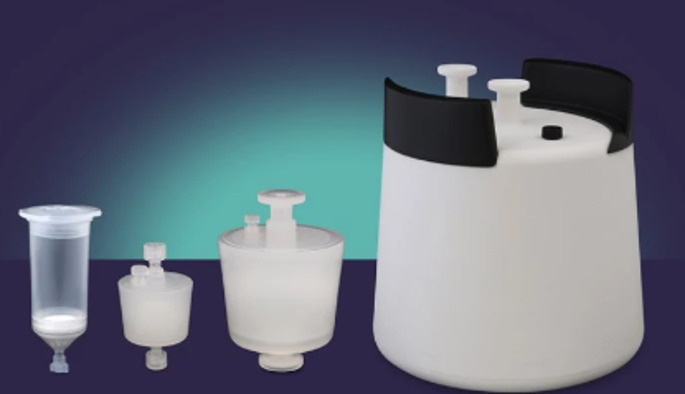
Figure 3. Evolution of the AstreAdept® LentiHERO® product range, from early product formats through to 1 mL, 10 mL and 100 mL devices..
Want to develop advanced biomaterials with Fluidnatek? Let’s talk!



 ESP
