


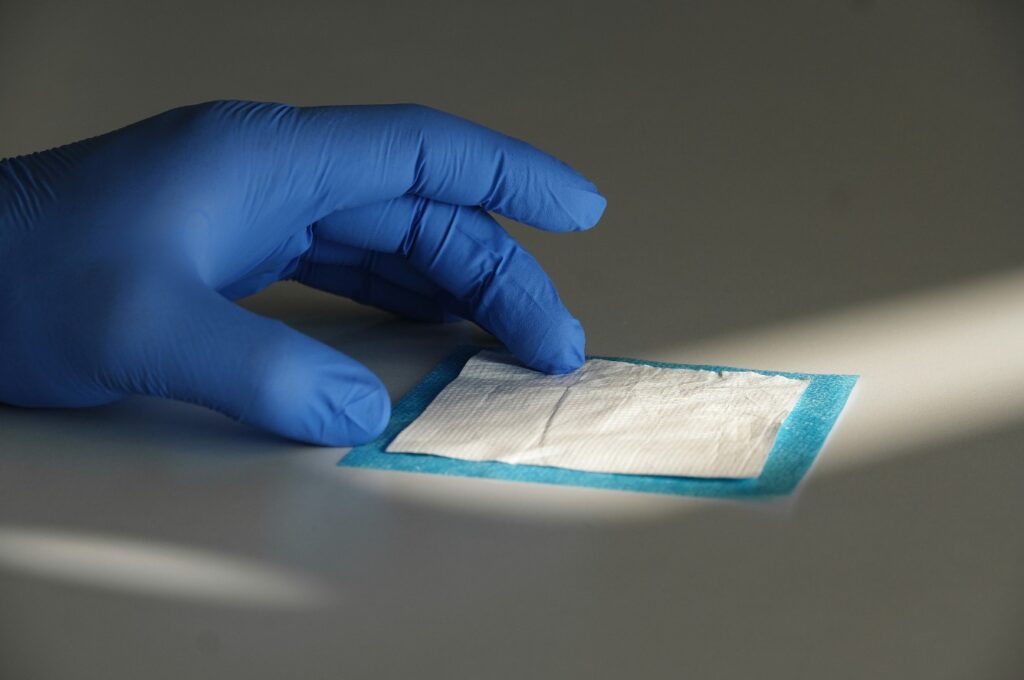
Introduction: Characterizing Biomaterials at the Nanoscale
In regenerative medicine and biomedical engineering, the structural characteristics of biomaterials at the micro- and nanoscale play a decisive role in determining their biological performance. Cell adhesion, proliferation, and tissue integration are strongly influenced by surface morphology, mechanical properties, and scaffold architecture. Consequently, advanced biomaterial characterization techniques are essential for validating new materials intended for biomedical applications.
Among the many fabrication technologies used in tissue engineering, electrospinning has emerged as one of the most versatile methods for producing nanofiber scaffolds that resemble the fibrous architecture of the extracellular matrix (ECM). Electrospun biomaterials can provide highly porous, interconnected structures that support cell–material interactions and tissue regeneration (Almine et al., 2010).
To ensure that electrospun biomaterials meet the requirements for biomedical use, detailed microscopy analysis and nanofiber characterization are required. Techniques such as scanning electron microscopy (SEM) allow researchers to investigate fiber morphology, structural organization, and surface features at high resolution.
A collaborative research initiative involving Skinomics GmbH, Martin Luther University Halle-Wittenberg, and the Fraunhofer Institute for Microstructure of Materials and Systems IMWS is currently investigating innovative wound dressing materials based on human tropoelastin. The goal of this project is to develop customized biomaterials that combine biocompatibility, biodegradability, durability, and mechanical properties comparable to those of human skin (Fraunhofer IMWS, 2024). In this context, advanced Fraunhofer IMWS microscopy techniques are being used to characterize the structure and morphology of tropoelastin-based materials. Such characterization is a critical step in evaluating the biomedical potential of electrospun protein-based scaffolds.
Tropoelastin Nanofibers for Biomedical Applications and Tissue Engineering
What Is Tropoelastin and Why Is It Important in Biomedicine?
Tropoelastin is the soluble precursor of elastin, a structural protein that plays a fundamental role in maintaining the elasticity and resilience of many tissues in the human body. Elastin is present in the vasculature, skin, and lungs, where it enables tissues to stretch and return to their original shape (Wise, Mithieux & Weiss, 2009).
During biological processes, tropoelastin molecules assemble and crosslink to form elastin fibers. These fibers contribute to the mechanical stability and elasticity of tissues, making elastin an essential component of the extracellular matrix. Elastin is one of the most long-lived proteins in the human body, with a half-life that can span decades in tissues with low cellular turnover (Mithieux, Wise & Weiss, 2012).
According to the Fraunhofer IMWS project description, elastin is chemically and enzymatically stable, biocompatible, and inspires designs for tropoelastin-based materials with sustained mechanical performance in biological environments, given its long half-life in native tissues. These characteristics have motivated the development of tropoelastin-based biomaterials. By using the precursor protein of elastin, researchers aim to create materials that reproduce the mechanical and biological functions of native tissues (Fraunhofer IMWS, 2024).
As Dr. Christian Schmelzer, Head of the Department of Biological and Macromolecular Materials at Fraunhofer IMWS, stated: “Elastin is chemically and enzymatically extremely stable, biocompatible and does not produce immunological rejections when used as a biomaterial in humans. Therefore, we want to create new and innovative solutions for the treatment of complex wounds based on human tropoelastin” (Fraunhofer IMWS, 2024).
An additional motivation for developing tropoelastin-based materials lies in the limitations of conventional protein biomaterials derived from animal tissues. Animal-derived materials can pose risks of pathogen transmisión or unwanted immune reactions. Moreover, concerns about animal-derived medical products have increased among patients and healthcare providers. The use of human-derived recombinant tropoelastin may reduce such concerns while maintaining favorable mechanical and biological properties (Wise, Mithieux & Weiss, 2009).
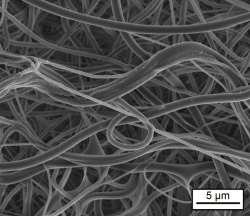
Microstructure of a tropoelastin nonwoven. Image: Fraunhofer IMWS
Electrospinning of Tropoelastin-Based Nanofibers
Electrospinning is widely used to fabricate electrospun biomaterials with nanoscale fibrous structures that mimic the architecture of the extracellular matrix. The technique involves the application of a high electric field to a polymer or protein solution, generating ultrafine fibers that are deposited as nonwoven membranes.
The electrospinning of tropoelastin has been studied as a method for producing porous protein scaffolds. Research has shown that the morphology of electrospun tropoelastin fibers can be modulated by varying spinning parameters such as delivery flow rate and starting protein concentration, and that cross-linked electrospun scaffolds retain the elasticity and cell-interactive properties inherent in the tropoelastin precursor (Wise, Mithieux & Weiss, 2009).
Electrospun scaffolds typically exhibit several characteristics that are advantageous for biomedical applications:
- High surface-to-volume ratio
- Porous fibrous architecture
- Structural similarity to extracellular matrix networks
- Tunable fiber diameter and scaffold morphology
In the Fraunhofer-associated research project, tropoelastin-based materials are being developed as customized wound dressing materials, specifically targeting the treatment of chronic and complex wounds. These conditions represent a major challenge in healthcare, particularly in aging populations. Chronic wounds such as venous ulcers, leg ulcers, and foot ulcers often require long-term treatment and can significantly affect patients’ quality of life (Fraunhofer IMWS, 2024). These conditions are also associated with considerable healthcare costs. Preclinical tests described in the Fraunhofer IMWS project documentation indicate that the tropoelastin-based material developed within the collaboration is a promising candidate for use as a wound dressing in such contexts. The material combines biocompatibility, biodegradability, durability, and favorable mechanical behavior.
Microscopy Techniques for Electrospun Biomaterial Characterization
SEM and Microscopy Techniques for Nanofiber Characterization Analyzing the structural properties of electrospun biomaterials requires detailed nanofiber characterization techniques capable of resolving features at the micro- and nanoscale. Microscopy methods are essential tools in biomaterials research for this purpose.
Among the techniques commonly used in the field to analyze electrospun scaffolds are:
- Scanning Electron Microscopy (SEM): provides high-resolution images of fiber networks, enabling evaluation of fiber uniformity, diameter distribution, and structural integrity.
Transmission Electron Microscopy (TEM): allows investigation of internal fiber structure and nanoscale features.
- Atomic Force Microscopy (AFM): used to assess surface topography and nanomechanical properties of individual fibers.
- Optical microscopy: applied for preliminary morphological assessment and scaffold-level organization.
Scanning Electron Microscopy is instrumental analysis for evaluating electrospun protein-based scaffolds, as it enables high-resolution visualization of nanofiber topographies. Through SEM-based morphometric analysis, critical parameters—including fiber diameter distribution, uniformity, and overall architecture can be quantified, providing essential insights into the materials performance within biological environments.
Fraunhofer IMWS Research on Elastin-Like Materials
The Fraunhofer Institute for Microstructure of Materials and Systems IMWS specializes in the structural characterization of advanced materials. Within the tropoelastin research project, the institute applies microscopy techniques to analyze the morphology and structural properties of the developed biomaterials (Fraunhofer IMWS, 2024).
By combining electrospinning with detailed microstructural characterization, the research team can evaluate how the processing of tropoelastin-based materials influences their final structural and mechanical properties. These analyses provide insights into key aspects such as:
- Fiber morphology and structural organization
- Scaffold architecture and fiber distribution
- Surface morphology of the nanofibers
- Potential relationships between microstructure and material performance
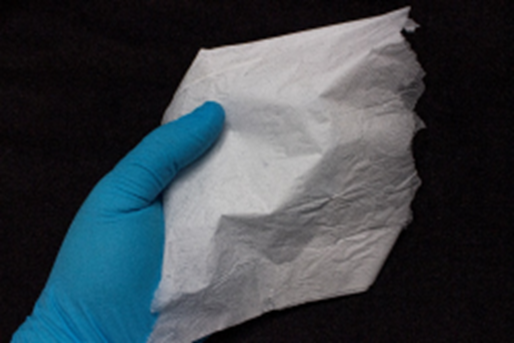
Electrospun nonwoven of biotechnologically produced tropoelastin. Image: Fraunhofer IMWS.
Material Properties of the Tropoelastin-Based Wound Dressing
The collaborative project aims to create customized wound dressings based on tropoelastin biomaterials. According to the Fraunhofer IMWS project description, the developed material demonstrates a combination of properties that are particularly relevant for wound care applications (Fraunhofer IMWS, 2024):
- Biocompatibility
- Biodegradability
- Mechanical properties comparable to human skin in preclinical assessments
- Durability suitable for biomedical use
These characteristics are essential for wound dressing materials intended to support tissue regeneration while maintaining mechanical compatibility with the surrounding tissue. An important aspect highlighted in the project documentation is the similarity between the mechanical properties of the tropoelastin-based material and those of human skin—a property that can be attributed to the role of elastin in conferring skin elasticity and resilience (Wise, Mithieux & Weiss, 2009). Microscopy characterization is central to evaluating these structural properties. By analyzing nanofiber morphology and scaffold architecture, researchers can assess whether the material structure supports its intended biomedical function. The detailed characterization results from the Fraunhofer IMWS project are expected to be published in peer-reviewed literature as the project progresses.
Implications for Regenerative Medicine and Biomedical Device Development
The treatment of chronic and complex wounds represents a significant medical challenge, particularly in aging populations. Conditions such as venous ulcers and foot ulcers often require long-term care and can lead to serious complications if not treated effectively (Fraunhofer IMWS, 2024).
Innovative biomaterials are therefore being actively investigated to improve wound healing outcomes. Materials that combine biocompatibility, mechanical compatibility with surrounding tissues, and structural similarity to natural ECM are particularly promising. Tropoelastin-based biomaterials represent one such approach: because tropoelastin is the monomer of elastin, materials derived from it can reproduce structural and mechanical characteristics relevant to skin and other elastic tissues (Almine et al., 2010).
The use of human-derived recombinant protein materials also addresses concerns associated with animal-derived biomaterials, including potential infection risks and immune responses. This is a recognized advantage in the development of next-generation protein biomaterials for clinical use (Wise, Mithieux & Weiss, 2009).
The integration of electrospinning technologies with advanced biomaterial characterization enables researchers to systematically investigate these materials. Through high-resolution microscopy and structural analysis, researchers can evaluate whether electrospun tropoelastin scaffolds exhibit the morphological and mechanical properties required for biomedical applications.
Such interdisciplinary approaches—combining biomaterials science, nanofiber fabrication, and microscopy analysis—are central to the development of next-generation biomaterials for regenerative medicine and wound care.
Conclusion
The development of customized wound dressings based on human tropoelastin represents a significant and scientifically grounded direction in biomaterials research. By leveraging the properties of the soluble elastin precursor, researchers aim to create biomaterials that replicate the elasticity and resilience of natural skin tissue.
The collaborative project involving Skinomics GmbH, Martin Luther University Halle-Wittenberg, and Fraunhofer IMWS highlights the importance of combining biomaterial design with advanced structural characterization. Microscopy analysis
plays a key role in understanding the fiber morphology and scaffold architecture of electrospun tropoelastin materials, ensuring they meet the requirements for biomedical applications.
Continued advancements in the characterization and fabrication of tropoelastin-based materials may transform the treatment for non-healing wounds, offering a biomimetic foundation for innovative tissue engineering applications.
Looking to Develop and Validate Innovative Biomaterials Like Tropoelastin?
Fluidnatek supports advanced electrospinning projects for the production of electrospun biomaterials and nanofiber scaffolds tailored for biomedical research and regenerative medicine applications. Whether your project involves protein-based materials, ECM-mimicking scaffolds, or wound care devices, our platforms are designed to support rigorous research in collaboration with institutions such as Fraunhofer IMWS.
Contact Fluidnatek to discuss how our electrospinning solutions can support your biomaterial development pipeline.
References
Almine, J. F., Bax, D. V., Mithieux, S. M., Nivison-Smith, L., Rnjak, J., Waterhouse, A., Wise, S. G., & Weiss, A. S. (2010). Elastin-based materials. Chemical Society Reviews, 39(9), 3371–3379. https://doi.org/10.1039/b919452p
Fraunhofer Institute for Microstructure of Materials and Systems IMWS. (2024). Innovative wound care – customized wound dressings made from tropoelastin [Project communication]. Fraunhofer IMWS. https://www.imws.fraunhofer.de
Mithieux, S. M., Wise, S. G., & Weiss, A. S. (2012). Tropoelastin – a multifaceted naturally smart material. Advanced Drug Delivery Reviews, 65(4), 421–428. https://doi.org/10.1016/j.addr.2012.06.009
Wise, S. G., & Weiss, A. S. (2009). Tropoelastin. International Journal of Biochemistry & Cell Biology, 41(3), 494–497. https://doi.org/10.1016/j.biocel.2008.03.017
Wise, S. G., Mithieux, S. M., & Weiss, A. S. (2009). Engineered tropoelastin and elastin-based biomaterials. Advances in Protein Chemistry and Structural Biology, 78, 1–24. https://doi.org/10.1016/S1876-1623(08)78001-5
Blit, P. H., Battiston, K. G., Yang, M., Paul Santerre, J., & Woodhouse, K. A. (2012). Electrospun elastin-like polypeptide enriched polyurethanes and their interactions with vascular smooth muscle cells. Acta Biomaterialia, 8(7), 2493–2503. https://doi.org/10.1016/j.actbio.2012.03.032

 ESP
ESP