Category Archives: Filtration

Biofilm on Electrospun Membranes for Water Purification: Integrating Electrospinning with Biotechnology

Biofilm on Electrospun Membranes for Water Purification

Global deficits in freshwater resources, coupled with the increasing complexity of wastewater streams, represent critical environmental challenges at our time. Traditional membrane filtration is widely used but suffers from limitations related to fouling, low microbial activity support, and reduced operational lifetime. Recent studies demonstrate that biofilm on electrospun membrane scaffolds can significantly improve water purification by harnessing microbial consortia to degrade organic pollutants and remove contaminants.

This article examines how electrospun membranes provide effective scaffolds for biofilm formation and explores their role in microbial water purification, supported by academic research and real experimental evidence.

Introduction — Electrospinning Meets Biotechnology

Electrospinning produces nanofibrous membranes with distinctive features — including extremely high surface area, interconnected porosity, and tunable fiber morphology — that differentiate them from conventional fabrics or nonwoven substrates. These characteristics make electrospun membranes particularly valuable as biological scaffolds for microorganisms to attach, proliferate, and form biofilms that actively contribute to contaminant removal in water treatment systems.

Biofilms are structured communities of microbial cells adhering to surfaces within an extracellular matrix. When established on a membrane, these biofilms can metabolize and transform organic pollutants in wastewater, leading to enhanced purification performance. Recent research indicates that integrating electrospun scaffolds into membrane bioreactor (MBR) systems may enhance biological performance and effluent quality compared to conventional membrane supports.

Electrospun Membranes as Biofilm Scaffolds

Electrospun membranes facilitate rapid and robust biofilm growth compared to traditional nonwoven fabrics. In controlled wastewater immersion experiments, electrospun PAN (polyacrylonitrile) and PAN/PEO (polyethylene oxide) nanofiber membranes exhibited significantly higher biofilm formation than nonwoven materials — with PAN/PEO membranes achieving over 90% surface coverage by day 3, compared to just ~27% for the nonwoven reference.

Studies have demonstrated that electrospun membranes used in submerged membrane bioreactor systems achieved exceptional removal rates: 99% turbidity removal, 99% total suspended solids (TSS) removal, 94% chemical oxygen demand (COD) removal, and 93% ammonium removal. These results significantly outperform the nonwoven membrane supports evaluated in the same study.

Why Electrospun Nanofibers Encourage Biofilm Formation 

Several factors contribute to the superior biofilm formation on electrospun membranes:

  • High porosity and surface area provide abundant attachment sites for microbial cells. The nanofibrous architecture creates significantly more surface area compared to conventional membranes — Electrospun membranes can achieve very high porosity levels, often exceeding 80–90% depending on processing parameters.
  • Enhanced water absorption promotes nutrient availability and microbial adhesion. The hydrophilic nature of materials like PEO increases water retention, sustaining microbial metabolic activity.
  • Fine fiber morphology creates microenvironments conducive to biofilm matrix development. Studies show that fiber diameter and pore size directly influence biofilm architecture — smaller diameter fibers yield more uniform biofilm layers, whereas larger pores result in clustered attachment.

Fiber Characteristics and Biofilm Architecture 

Recent research has demonstrated that biofilm formation is highly sensitive to membrane fiber diameter and pore size. With smaller diameter fibers (300-500 nm), bacteria form uniform biofilm layers on the membrane surface. However, with larger fiber diameters (>900 nm), bacteria tend to form smaller clusters inside the membrane rather than on the surface.

This phenomenon is driven by the physical constraints of microbial cell sizes relative to the membrane pore structure. In the referenced experiments, fiber diameters between approximately 400–800 nm showed balanced surface attachment and porosity. However, optimal values may vary depending on microbial species and reactor configuration.
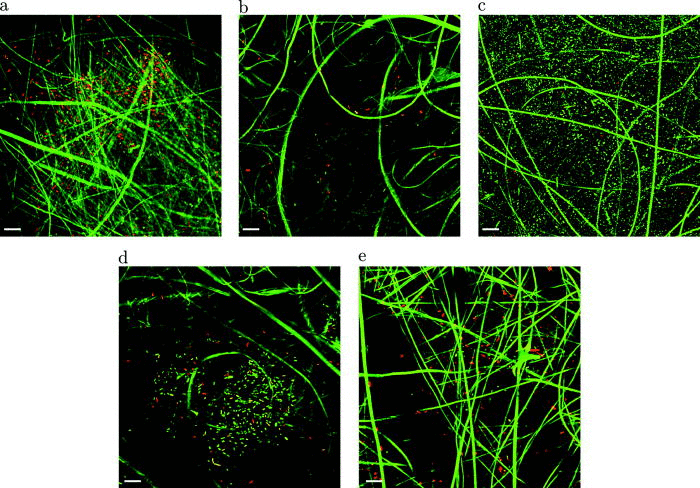
Confocal images of LIVE/DEAD stained E. coli cells

Confocal images of LIVE/DEAD stained E. coli cells onto (a) untreated PS mesh, (b) ppAAc, (c) ppAAm, (d) ppOct, and (e) ppCo meshes after removal from the bacterial agar culture. Scale bar 5 µm. [Abrigo et al. Biointerphases 10, 04A301 (2015); http://dx.doi.org/10.1116/1.4927218 ].

How Biofilms Enhance Water Purification

Biofilm-enabled electrospun membranes improve water treatment via multiple complementary mechanisms that work synergistically to achieve superior purification performance:

Microbial Degradation of Organic Pollutants

Biofilms consist of complex microbial consortia capable of the biochemical degradation of organic substrates present in aqueous waste streams. In experimental systems using PMMA (polymethyl methacrylate) electrospun membranes, biofilm-covered nanofiber scaffolds showed an 80.97% reduction in chemical oxygen demand (COD) within the first two days, with continued improvement thereafter. This showed improved COD reduction compared to nonwoven supports, plateaued at 76.59% COD with no subsequent improvement

The superior performance is attributed to the larger number of microorganisms that can attach to the high surface area of electrospun nanofiber membranes. These microbial communities work collectively to break down complex organic molecules into simpler, less harmful compounds.

Contaminant Removal and Adsorption

Ammonia nitrogen removal was also significantly higher on electrospun biofilm membranes, with PMMA nanofiber biofilm membranes achieving an 18.37% removal rate for ammonia nitrogen, while nonwoven fabric groups actually showed increased ammonia nitrogen concentration. Additionally, Gas adsorption measurements indicated an NH₃ adsorption capacity of 21.37 cm³/g at relative pressure 1.0, reflecting the high surface activity of the nanofibrous structure.

This integration of microbial biotechnology and membrane materials marks an important step beyond purely physical filtration, enabling biologically active water purification systems that can adapt to varying contaminant loads.

Applications in Membrane Bioreactor Systems

Electrospun membranes have found increasing application in advanced membrane bioreactor (MBR) configurations for both municipal and industrial wastewater treatment. The integration of nanofiber technology with MBR systems offers several operational advantages:

  • Reduced footprint — MBR systems are generally known to offer reduced footprint compared to conventional activated sludge processes due to higher biomass concentrations that can be sustained.
  • Superior effluent quality — Near-complete solids retention and reduced bacterial and viral content, enabling direct reuse applications or simplified disinfection requirements.
  • Independent control parameters — Solids retention time (SRT) can be controlled independently from hydraulic retention time (HRT), optimizing both biological performance and throughput.
  • Enhanced flux performance — During short-term filtration tests, electrospun PVDF nanofiber membranes demonstrated better performance than commercial membranes in terms of lower transmembrane pressure (TMP) with excellent flux retention.

Hybrid MBR Configurations with Electrospun Membranes

Advanced configurations integrating electrospun scaffolds with secondary separation technologies exhibit significant synergistic potential. Specifically, MBR systems coupled with nanofiltration (NF) or reverse osmosis (RO) membranes can achieve exceptional water quality suitable for reuse applications.

Under specific experimental conditions, operation at approximately 2 LMH was reported with more than 95% COD removal efficiency. These systems demonstrate the potential for biofilm-based processes to maintain high treatment performance while managing membrane fouling through proper operational control.

Case Studies and Experimental Setups

Electrospun PAN and PAN/PEO Membranes

Comprehensive studies have immersed electrospun membranes in wastewater to track biofilm growth over multiple days, comparing them with conventional fabrics. Results showed accelerated biofilm accumulation on nanofiber scaffolds due to higher porosity and moisture retention, which sustained microbial metabolic activity.

The water-soluble PEO component in PAN/PEO blends plays a crucial role — it increases the membrane’s water absorption capacity, which further encourages biofilm growth. This results in the remarkable 90.36% biofilm coverage achieved within just three days, compared to 82.04% for PAN-only membranes and a mere 27.32% for nonwoven fabrics.

PMMA Nanofiber Biofilm Membranes

Biofilm-coated PMMA membranes achieved greater COD reduction and ammonia nitrogen removal compared to nonwoven substrates, highlighting the direct impact of membrane morphology on purification efficiency. The structural properties of PMMA nanofibers — including good impact and tensile resistance — enhance the mechanical strength of the biofilm carrier surface, making them suitable for long-term operation in demanding wastewater treatment applications.

Real-World Wastewater Treatment Applications

Field testing of electrospun nanofiber MBR systems has demonstrated practical viability. In one case study, wastewater generated during a music festival was treated using a nanofiber-MBR system. The removal of suspended solids (SS), COD, total nitrogen (TN), and total phosphorus (TP) were all within regulatory discharge limits, proving the technology’s robustness under variable real-world conditions.

Challenges and Future Directions

While biofilm formation on electrospun membranes enhances biological purification, several challenges remain that require continued research and development:

Membrane Fouling Management

Membrane fouling and pore occlusion persist as critical operational challenges. Specifically, the proliferation of biofilms can disrupt hydraulic conductivity and pressure gradients during extended operation. To mitigate the elevated capital expenditures and diminished operational longevity associated with biofouling, several remediation strategies have been developed:

  • Surface modifications — Incorporation of nanoparticles or surface treatments to induce hydrophilicity, provide surface charge, and improve water permeability while reducing biofilm antiadhesion.
  • Biomimetic patterns — In some studies, aligned fiber architectures have been associated with measurable reductions in biofilm accumulation.
  • Controlled release systems — Integration of anti-quorum sensing molecules in electrospun fibers has shown promise, with improvements in biofilm reduction and flux increase of over 50% compared to unmodified membranes.

Selective Biofilm Growth Control

Biofilm composition must be managed to favor pollutant-degrading communities while limiting undesirable microbial growth. Research indicates that dissolved oxygen (DO) levels significantly impact biofilm characteristics and subsequent membrane performance. Studies show that maintaining appropriate DO levels (2.5-4.0 mg/L) in MBR systems yield a permeate with a significantly lower concentration of extracellular polymeric substances (EPS) and biopolymers. This reduction effectively mitigates the fouling propensity of the effluent during subsequent downstream processes.

Material Stability and Durability

Recent developments in biodegradable materials also show promising potential. For example, PLA (polylactic acid) nanofiber membranes modified with PEO-based hydrogel layers have demonstrated superhydrophilic behavior under controlled laboratory conditions. In oil–water emulsion separation experiments, these membranes achieved permeance values of approximately 2.1 × 10⁴ L·m⁻²·h⁻¹·bar⁻¹ with separation efficiencies exceeding 99.6%. It is important to note that these performance metrics were obtained in specific oil–water separation tests rather than in biological wastewater treatment systems, and therefore reflect membrane surface wettability and permeability characteristics rather than biofilm-mediated purification performance.

Future Research Priorities

Key areas:

  • Integration with green chemistry principles — Development of membranes incorporating nanomaterials using sustainable methods, though lab-scale/commercial-scale MBR applications remain limited.
  • Smart membrane systems — Combining electrospinning with other technologies such as coating, embedding functional particles, and plasma treatment to create membranes with enhanced or responsive properties.
  • Process intensification — Advanced configurations like membrane aerated biofilm reactors (MABR) and aerobic granular sludge-MBR (AGS-MBR) to achieve better energy efficiency and optimized treatment processes.
  • Scale-up strategies — Transitioning from lab-scale success to pilot and full-scale implementations, addressing challenges in manufacturing consistency, long-term performance monitoring, and economic viability.

Conclusion — Toward Biofilm-Enabled Water Treatment Systems

Electrospun membranes are emerging as powerful platforms for biofilm-mediated water purification. Characterized by ultra-high porosity (≥90%) and tailorable surface chemistry, these scaffolds facilitate robust microbial colonization. Consequently, they represent a pivotal advancement in biotechnological filtration, transitioning from conventional size-exclusion mechanisms to active bio-catalytic separation.

By facilitating biofilm formation and sustaining microbial metabolism, electrospun nanofiber scaffolds offer enhanced contaminant removal, optimized organic degradation, and new avenues for sustainable water treatment. The technology’s demonstrated performance — including 99% TSS removal, 94% COD removal, and >90% biofilm coverage within days — positions it as a promising technology for advancing biological wastewater treatment systems.

As research continues to address challenges in fouling control, material durability, and scale-up, electrospun membrane bioreactor systems are poised to become increasingly important tools in municipal and industrial wastewater treatment, water reuse applications, and environmental remediation.

Partner with Fluidnatek for Advanced Membrane Solutions

Exploring biofilm-based water purification with electrospun membranes? Fluidnatek’s electrospinning platforms enable scalable production of advanced nanofiber scaffolds tailored for biotechnology-driven filtration systems.

Contact us to accelerate your development of functional membrane solutions for environmental and industrial water treatment applications.

👉 Explore Fluidnatek’s Water Treatment Solutions

👉 Learn More About Fluidnatek Electrospinning Technology

👉 View Fluidnatek Product Range for Research and Industrial Applications

References

  1. ElectrospinTech. (2019). Electrospun fibers in Biotechnology. Retrieved from http://electrospintech.com/espinbiotechnology.html
  2. Zhou, L., Zhang, X., Jiang, J., Chen, H., Liu, Y., Wang, X., Li, W., & Zheng, G. (2024). Electrospinning preparation and characterization testing analysis of nanofiber biofilms. AIP Advances, 14, 025336. https://doi.org/10.1063/5.0242163
  3. Zhuo, L., Zhang, X., Jiang, J., Chen, H., Zheng, Y., Wang, X., Li, W., & Zheng, G. (2024). Electrospun PMMA fiber biofilm for the removal of COD and NH₃-N in wastewater. AIP Advances, 14(12), 125005. https://doi.org/10.1063/5.0242163
  4. Tang, Y., et al. (2022). Electrospun Nanofiber-Based Membranes for Water Treatment. Polymers, 14(10), 2004. https://doi.org/10.3390/polym14102004
  5. Ji, K., et al. (2023). Research Progress of Water Treatment Technology Based on Nanofiber Membranes. Polymers, 15(3), 741. https://doi.org/10.3390/polym15030741
  6. ACS Applied Materials & Interfaces. (2022). Electrospun Nanofibrous Membranes Accelerate Biofilm Formation and Probiotic Enrichment, 14(28), 31601-31612. https://doi.org/10.1021/acsami.2c07431
  7. Yusuf, A., et al. (2020). A critical review on nanomaterials membrane bioreactor (NMs-MBR) for wastewater treatment. npj Clean Water, 3, 43. https://doi.org/10.1038/s41545-020-00090-2
  8. Frontiers in Membrane Science and Technology. (2024). Recent advances of membrane-based hybrid membrane bioreactors for wastewater reclamation. https://doi.org/10.3389/frmst.2024.1361433
  9. ACS Omega. (2024). Efficacy of Electrospun Nanofiber Membranes on Fouling Mitigation: A Review. https://doi.org/10.1021/acsomega.2c02081
  10. Science Advances. (2024). Biodegradable electrospinning superhydrophilic nanofiber membranes for ultrafast oil-water separation. https://doi.org/10.1126/sciadv.adh8195
  11. Separation and Purification Technology. (2024). Developments of electrospinning technology in membrane bioreactor: A review. https://doi.org/10.1016/j.seppur.2024.128841
  12. ACS ES&T Water. (2024). Toward Patterned Membranes for Biofouling Mitigation by Electrospinning. https://doi.org/10.1021/acsestwater.5c00279


Electrospun Membrane for Textile Wastewater Treatment

Electrospun Membranes for Textile Wastewater

Introduction – The Challenge of Textile Wastewater

The textile industry is widely recognised as one of the most water-intensive manufacturing sectors. Dyeing and finishing operations generate substantial quantities of effluents containing complex mixtures of synthetic dyes, salts, surfactants, heavy metals, and auxiliary chemicals. These waste streams are particularly persistent due to their high chemical oxygen demand (COD), colour intensity, and the presence of recalcitrant organic molecules such as azo dyes.International organisations, including the World Bank, have identified textile dyeing and finishing processes as major contributors to industrial water pollution, especially in regions with concentrated manufacturing activity. The persistence and toxicity of certain dyes raise environmental and public health concerns, particularly when wastewater treatment infrastructure is insufficient.

Conventional treatment technologies — coagulation–flocculation, biological oxidation, activated carbon adsorption, advanced oxidation processes (AOPs), and membrane filtration — can reduce pollutant loads but often present trade-offs. These include high operational costs, secondary sludge generation, limited removal efficiency for low-molecular-weight dyes, and membrane fouling challenges.

As regulatory standards become more stringent and water reuse strategies gain importance within circular economy frameworks, there is increasing interest in advanced materials capable of enhancing separation efficiency while maintaining scalability. In this context, the electrospun membrane for textile wastewater treatment has emerged as a promising platform within nanofiber membrane technology.

Electrospun Nanofiber Membranes – A New Frontier in Filtration

Electrospinning is a fibre fabrication technique that employs a high-voltage electric field to draw ultrafine fibres from polymer solutions or melts. The resulting nanofiber membranes consist of nonwoven mats with fibre diameters typically ranging from tens of nanometres to several micrometres.

These membranes are characterised by:

  • High porosity (often exceeding 80%)
  • Interconnected pore structures
  • Large specific surface area
  • Tunable fibre diameter and thickness

Key structural advantages

High surface-area-to-volume ratio
The nanoscale diameter of electrospun fibres significantly increases the available surface area, enhancing adsorption interactions with dissolved pollutants such as dyes and metal ions.

Interconnected porous structure
The open, porous morphology enables high permeability compared to dense phase-inversion membranes, facilitating improved water flux under comparable pressure conditions.

Tailorable surface chemistry
Electrospun membranes can be functionalised either during spinning (by polymer blending or nanoparticle incorporation) or post-treatment (plasma, grafting, coating), allowing optimisation for specific wastewater compositions.

In contrast to conventional membranes governed predominantly by size exclusion, electrospun nanofiber membranes offer a versatile platform for integrating adsorptive, sieving, and catalytic functionalities, dictated by their specific material composition and functionalization strategies

Materials Used for Electrospun Membranes in Water Treatment

Material selection plays a decisive role in mechanical stability, chemical resistance, hydrophilicity/hydrophobicity balance, and pollutant interaction.

Polyvinylidene fluoride (PVDF) nanofiber membranes

PVDF is widely used in membrane engineering due to its:

  • Chemical resistance
  • Thermal stability
  • Mechanical robustness

Despite its robust mechanical properties, PVDF exhibits intrinsic hydrophobicity. For aqueous textile wastewater treatment, surface modification or blending with hydrophilic additives is often necessary to improve wettability and reduce fouling.

Studies published in journals such as Separation and Purification Technology and Journal of Membrane Science report effective dye rejection when PVDF electrospun membranes are modified or combined with functional nanoparticles.

Incorporation of photocatalytic fillers such as TiO₂ can enable additional degradation mechanisms under UV irradiation, contributing to colour removal beyond simple filtration.


Polyacrylonitrile (PAN) and polyamide membranes

Polyacrylonitrile (PAN) is frequently used in electrospinning due to:

  • Good spinnability
  • Mechanical strength
  • Reactive nitrile groups

The nitrile functionality can be chemically modified to introduce amine or carboxyl groups, improving affinity for heavy metal ions such as Cu²⁺ or Pb²⁺ through coordination mechanisms.

Functionalised PAN nanofiber membranes have demonstrated promising adsorption capacities for heavy metals and certain dye classes in laboratory-scale studies.


Composite and hybrid membrane architectures

Recent research trends focus on multifunctional composite membranes, where electrospun fibres act as a support or active layer integrating nanomaterials.

Examples include:

  • PVDF/TiO₂ nanofibers for photocatalytic dye degradation
  • PAN/graphene oxide composites enhancing adsorption performance
  • Chitosan-based nanofibers offering inherent affinity for anionic dyes
  • Cellulose acetate electrospun membranes for more sustainable polymer options

These hybrid strategies enable the design of multifunctional membranes that synergistically combine physical sieving with chemical adsorption or catalytic degradation.


Case Example – Poly-CD Nanofibrous Membranes

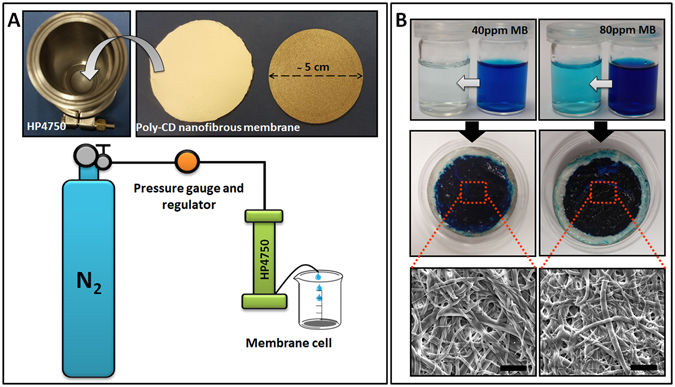
A study by Celebioglu et al. (2017) investigated poly-cyclodextrin (poly-CD) electrospun nanofibrous membranes for dye removal applications.

Using a dead-end filtration system (HP4750), methylene blue (MB) solutions at concentrations of 40 and 80 mg/L were filtered under controlled nitrogen pressure. The study reported:

  • Significant colour reduction in permeate solutions
  • Preservation of nanofibre morphology after filtration
  • Mechanical stability under applied pressure

SEM analysis confirmed that the fibrous structure remained intact, demonstrating that properly engineered nanofibrous membranes can withstand operational stress conditions while maintaining adsorption functionality.

This example highlights the importance of polymer chemistry and structural stability in practical filtration environments.


Advantages in Textile Wastewater Remediation

Electrospun membranes offer several potential advantages over conventional polymeric membranes and adsorption media.

Enhanced Pollutant Interaction

The nanoscale fibre diameter increases the likelihood of contact between pollutants and active sites, supporting improved adsorption-driven removal mechanisms.

High Permeability

Due to their high porosity and interconnected structure, electrospun membranes often exhibit elevated permeability compared to dense membranes fabricated via phase inversion. Several comparative studies report substantially higher water flux values, although performance depends on membrane thickness and operational pressure.

Functionalisation Flexibility

Electrospinning enables the incorporation of nanoparticles, adsorptive fillers, and catalytic agents directly into the fibre matrix. This flexibility supports the development of application-specific membranes tailored to particular textile effluent compositions.

Potential Integration into Multistage Systems

Electrospun membranes can function as:

  • Standalone filtration layers
  • Support structures in composite membrane assemblies
  • Pretreatment stages before reverse osmosis
  • Adsorptive polishing units

Such versatility makes them attractive for modular wastewater treatment strategies.

Filtration performance of poly-CD nanofibrous membrane

Filtration performance of poly-CD nanofibrous membrane. (A) The photographs of membrane cell part of HP4750 dead-end system and the cropped poly-CD nanofibrous membrane with a definite active filtration area (14.6 cm2). The schematic view of HP4750 filtration system. For each test, 50 mL solution is passed through the poly-CD nanofibrous membranes with a definite N2 pressure. Then, the permeated solution is collected in a clear beaker. (B) The visual illustration of the MB solutions prepared at two different MB concentrations (40 and 80 mg/L) before and after filtration test. The photographs and SEM images (scale bar-10 µm) of the poly-CD nanowebs exposed to these two concentrated MB solutions during the experiments. As clearly seen, both the macroscopic visual appearance and the fibrous morphology of poly-CD nanofibers were protected under such applied pressure [Celebioglu et al 2017].

Research Trends and Industrial Considerations

While numerous studies demonstrate laboratory-scale feasibility, challenges remain in translating electrospun nanofiber membranes to full industrial deployment.

Key considerations include:

  • Long-term fouling resistance
  • Mechanical durability under continuous flow
  • Chemical stability in highly saline or alkaline effluents
  • Reusability and regeneration cycles
  • Production scalability

Recent publications in Journal of Membrane Science, Desalination, and Water Research emphasise the need for robust scale-up strategies and standardised testing protocols to enable commercial adoption.

Role of Fluidnatek in Scalable Membrane Development

Scaling electrospun membranes from laboratory prototypes to industrial production requires advanced electrospinning platforms capable of maintaining fibre uniformity and reproducibility.

Fluidnatek provides electrospinning equipment designed for:

  • Controlled fibre diameter distribution
  • Multi-nozzle and free-surface electrospinning
  • Integration of functional fillers
  • Pilot and industrial-scale membrane manufacturing

By supporting both research and scale-up stages, Fluidnatek’s platforms enable development of nanofiber membranes for water treatment applications, including textile wastewater remediation.

More information on electrospinning technologies for separation applications can be found at: https://www.fluidnatek.com

Conclusion – Towards Sustainable Textile Wastewater Treatment

Textile wastewater represents a recalcitrant effluent stream, characterized by significant chemical complexity and inherent variability. While traditional treatment technologies facilitate partial remediation, they frequently exhibit insufficient removal efficiencies for persistent synthetic dyes and dissolved contaminants.

Electrospun nanofiber membranes represent a promising material platform capable of enhancing separation efficiency through high porosity, tunable surface chemistry, and multifunctional design. Laboratory studies demonstrate effective dye adsorption, heavy metal capture, and potential photocatalytic degradation when appropriate materials are employed.

Despite successful laboratory demonstrations, transitioning to industrial-scale application remains contingent upon the development of scalable fabrication techniques and more stringent performance validation

Looking to develop next-generation membranes for advanced wastewater treatment?
👉 Fluidnatek’s electrospinning platforms enable the engineering and scale-up of high-performance nanofiber membranes tailored to industrial filtration challenges. Contact our technical team to explore scalable solutions for textile wastewater treatment.

References

  1. Rocha, J.M., Sousa, R.P.C.L., Fangueiro, R. & Ferreira, D.P. (2024). The Potential of Electrospun Membranes in the Treatment of Textile Wastewater: A Review. Polymers, 16(6), 801. https://doi.org/10.3390/polym16060801
  2. Li, L., Guo, W., Zhang, S., Guo, R. & Zhang, L. (2023). Electrospun Nanofiber Membrane: An Efficient and Environmentally Friendly Material for the Removal of Metals and Dyes. Molecules, 28(8), 3288. https://doi.org/10.3390/molecules28083288
  3. Chen, H., Huang, M., Liu, Y., Meng, L. & Ma, M. (2020). Functionalized Electrospun Nanofiber Membranes for Water Treatment: A Review. Science of The Total Environment, 739, 139944. https://doi.org/10.1016/j.scitotenv.2020.139944
  4. Zhu, Y., et al. (2023). Multifunctional Electrospun Nanofibrous Membrane: An Effective Method for Water Purification. Separation and Purification Technology, 327, 124952. https://doi.org/10.1016/j.seppur.2023.124952
  5. Li, J., Gao, M., Lin, T., Dai, Q., Ao, T. & Chen, W. (2022). Adsorption Treatment of Wastewater by Electrospun Nanofiber Membranes: A Review. Acta Materiae Compositae Sinica, 39(4), 1378–1394. https://doi.org/10.13801/j.cnki.fhclxb.20211008.001
  6. Chitosan‑coated Electrospun PVDF‑ZnO Nanofibrous Membranes for Dye Wastewater Separation. Dye and Pigment, 100281. https://doi.org/10.1016/j.dwt.2024.100281

Nanofiber Water Filtration: Electrospun Technologies for Advanced Purification

Nanofiber Water Filtration

Introduction: The Global Need for Water Filtration

Access to safe drinking water remains one of the greatest challenges of the 21st century. According to the WHO, nearly 2 billion people lack safely managed water sources, while industrial pollution, agricultural runoff, and microplastic contamination increasingly affect developed regions as well.

Traditional treatment plants are under pressure to deliver scalable, efficient, and affordable purification systems, yet many struggle to adapt to emerging contaminants such as PFAS, pharmaceuticals, and nano-sized pollutants. The world urgently needs innovative materials and designs that push beyond conventional methods.

This is where nanofiber water filtration, particularly membranes created via electrospinning, offers a technological breakthrough.

The Science Behind Water Filtration Technologies

Water filtration separates unwanted contaminants through physical, chemical, or biological mechanisms. Common systems include:

  • Granular media filtration – effective for sediments, less so for pathogens.
  • Activated carbon adsorption – efficient at removing organic compounds and chlorine, but with limited lifespan.
  • Reverse osmosis (RO) – excellent at salt and metal removal, but energy-intensive and costly.
  • Membrane bioreactors – combine biological treatment with filtration, but require complex infrastructure.

While these technologies are established, they face trade-offs between cost, energy use, scalability, and contaminant selectivity. With rising global demand, there is a pressing need for next-generation filtration solutions.

Key Contaminants in Water and Filtration Challenges

Modern water systems must combat a diverse mix of pollutants:

  • Heavy metals (lead, arsenic, chromium, mercury) – toxic even at trace concentrations.
  • Pathogens – bacteria and viruses causing cholera, dysentery, or hepatitis outbreaks.
  • Organic pollutants – dyes, pesticides, endocrine disruptors, and pharmaceutical residues.
  • Microplastics and nanoplastics – increasingly detected in both surface and treated water.
  • Emerging contaminants (PFAS) – highly persistent and resistant to conventional treatment.

Filtration challenges include:

  • Achieving high removal efficiency for multiple contaminants simultaneously.
  • Preventing membrane fouling and ensuring long-term stability.
  • Designing cost-effective solutions that can scale from point-of-use devices to municipal treatment plants.
Advanced Purification

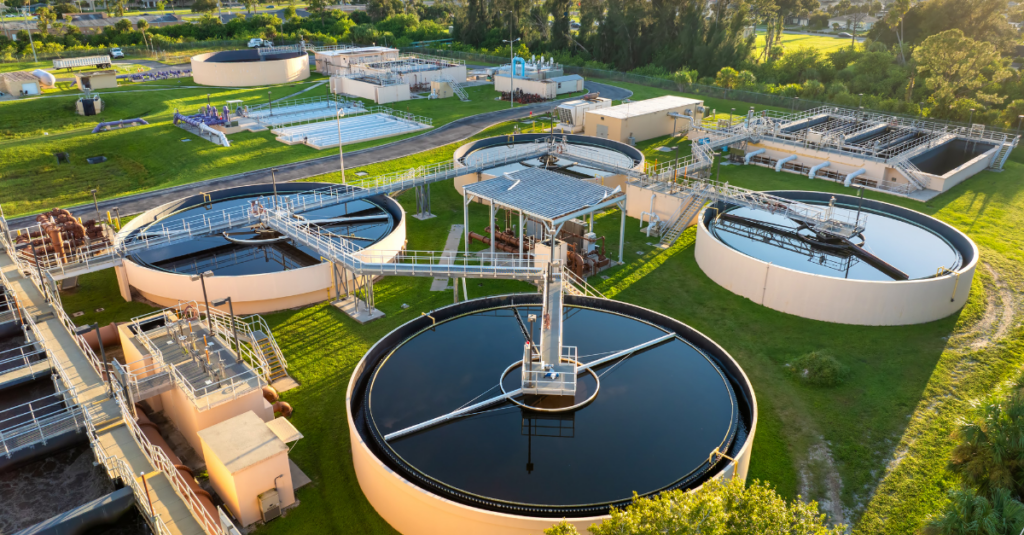
Wastewater treatment plant.

Why Nanofibers Offer a Breakthrough in Filtration

Advantages of Nanofiber Water Filtration

  • High surface area-to-volume ratio → enhanced adsorption and reaction sites.
  • Tunable pore size distribution → selective removal of nanoscale contaminants.
  • Functionalizable surfaces → integration of antimicrobial, catalytic, or metal-absorbing additives.
  • Low resistance and high permeability → high water flux with reduced pressure drop, lowering energy costs.

Unlike traditional membranes, nanofiber filter media combine advanced selectivity, high throughput, and scalable manufacturing. They are promising for applications ranging from municipal treatment plants to portable filters in resource-limited settings.

Nanofiber Water Filtration vs Traditional Methods

When compared to established systems such as reverse osmosis or activated carbon:

  • Reverse osmosis: High removal capacity, but requires expensive infrastructure and high energy. Nanofiber membranes can achieve comparable selectivity with lower operating pressures.
  • Activated carbon: Strong organic contaminant removal, but limited lifetime. Nanofibers can be functionalized for selective heavy metal and pathogen capture.
  • Ceramic and polymeric membranes: Durable, but prone to fouling. Electrospun nanofiber membranes show enhanced fouling resistance due to tailored surface chemistries.

This makes nanofiber water filtration a highly competitive and sustainable alternative.


Electrospun Membranes: Performance in Modern Water Purification

Filtration of Heavy Metals, Bacteria, and Microplastics

Electrospun membranes excel in tackling today’s toughest contaminants:

  • Heavy metals: Functionalized nanofibers capture lead, arsenic, and mercury with higher efficiency than carbon or ceramic filters.
  • Pathogens: Polyethersulfone-based nanofiber membranes achieve >99% bacterial removal through size exclusion and electrostatic interactions.
  • Microplastics & organics: Nanofibers physically trap particles down to the nanoscale and adsorb pharmaceuticals, dyes, and persistent organics.

Electrospun Filter Media for Membrane Filtration

Recent innovations include:

  • Composite membranes with graphene for solvent resistance and strength.
  • Asymmetric multilayer structures enabling desalination and nanofiltration.
  • Biodegradable nanofiber membranes for sustainable oil-water separation.

Peer-reviewed studies in journals such as Water Research and Journal of Membrane Science confirm these advances, highlighting electrospun nanofibers as a platform technology for modern water purification.

From Lab to Application: Fluidnatek’s Role in Filtration Development

From Lab-Scale Research to Scalable Water Filtration Solutions

Fluidnatek’s electrospinning platforms enable researchers and industries to bridge the gap between R&D and full-scale deployment. Their systems provide:

  • Precise control of fiber diameter, porosity, and layering.
  • Compatibility with diverse polymers and additives, including biodegradable and antimicrobial agents.
  • Scalable, automated production, suitable for both pilot lines and industrial roll-outs.

By supporting research teams worldwide, Fluidnatek accelerates the translation of laboratory findings into real-world water purification technologies.

👉 Internal link: Learn more about Fluidnatek environmental applications.

Frequently Asked Questions (FAQ)

What contaminants can nanofiber water filters remove?

Nanofiber membranes can remove heavy metals, bacteria, viruses, microplastics, pharmaceuticals, and PFAS, depending on surface functionalization.

Are electrospun membranes scalable for municipal treatment?

Yes. Electrospinning enables roll-to-roll manufacturing, making nanofiber membranes adaptable for large-scale municipal water treatment plants.

How do nanofiber filters compare with reverse osmosis?

Nanofiber filters require lower operating pressures and energy consumption than RO, while offering comparable contaminant removal. They can also be integrated with RO to extend membrane lifespan.

Conclusion

The era of advanced water filtration is being shaped by nanofiber technologies—especially those enabled by electrospun membranes. These next-generation solutions address urgent global challenges by achieving highly selective, high-throughput, and scalable purification of even the most complex water sources. As environmental standards rise and demand for safe water intensifies, nanofiber water filtration systems provide a path to a cleaner, healthier world.

Interested in developing advanced water filtration systems? Fluidnatek’s electrospinning platforms enable custom nanofiber membranes for scalable, high-performance purification technologies.

References

  1. Cheng X, Li T, Yan L, Jiao Y, Zhang Y, Wang K, Cheng Z, Ma J, Shao L. Biodegradable electrospinning superhydrophilic nanofiber membranes for ultrafast oil-water separation. Science Advances. 2023; 9: adh8195.
  2. Homaeigohar SS, Buhr K, Ebert K. Polyethersulfone electrospun nanofibrous composite membrane for liquid filtration. Journal of Membrane Science. 2010; 365: 68.
  3. Kim AA, Poudel MB. Spiral Structured Cellulose Acetate Membrane Fabricated by One-Step Electrospinning Technique with High Water Permeation Flux. Journal of Composites Science. 2024; 8(4):127.
  4. Liu Z, Wang Y, Guo F. An Investigation into Hydraulic Permeability of Fibrous Membranes with Nonwoven Random and Quasi-Parallel Structures. Membranes. 2022; 12(1):54.
  5. Nasreen S A A N, Sundarrajan S, Nizar S A S, Balamurugan R, Ramakrishna S. Advancement in Electrospun Nanofibrous Membranes Modification and Their Application in Water Treatment. Membranes. 2013; 3: 266.
  1. Liang Shen et al., Highly porous nanofiber-supported monolayer graphene membranes for ultrafast organic solvent nanofiltration. Sci. Adv. 7, eabg6263 (2021).
  1. Tijing LD, Choi JS, Lee S, Kim SH, Shon HK. Recent progress of membrane distillation using electrospun nanofibrous membrane. Journal of Membrane Science. 2014; 453: 435.
  2. ElectrospinTech. Introduction to Water Filtration. 2019.

For further reading, see top articles in DesalinationJournal of Membrane Science, and ACS Applied Materials & Interfaces.


Electrospun Materials for Environmental Remediation: Advanced Solutions for Water, Air, and Soil Purification

electrospun materials for environmental remediation

Introduction: The Urgency of New Solutions for Environmental Remediation

Environmental pollution—spanning oil spills, heavy metal contamination, dye-laden wastewater, and airborne particulates—poses a critical threat to ecosystems and human health. Traditional remediation methods, such as activated carbon adsorption, granular filtration, and chemical treatments, often face limitations in efficiency, selectivity, or sustainability, particularly in complex or emerging pollution scenarios.

The need for advanced filtration materials that are both effective and environmentally friendly has never been greater. In this context, electrospun materials for environmental remediation have emerged as a transformative technology, offering unique properties that address the limitations of conventional approaches.

Why Electrospun Materials? Key Advantages

Electrospinning is a versatile technique that produces nanofiber mats with diameters ranging from tens of nanometers to a few microns. These electrospun nanofibers for water treatment and air purification offer several compelling advantages:

  • High surface area-to-volume ratio: Enhances adsorption and catalytic activity, enabling rapid and efficient pollutant removal.
  • Tunable porosity and pore size: Facilitates selective filtration and high permeability, crucial for both water and air purification.
  • Functionalization flexibility: Surfaces can be engineered with chemical groups, nanoparticles, or catalysts for targeted removal of oil, heavy metals, dyes, and pathogens.
  • Mechanical flexibility and low thickness: Allows integration into existing filtration systems and deployment in challenging environments.
  • Sustainability: Biodegradable polymers and green electrospinning methods support the development of sustainable water treatment materials.

Compared to traditional membranes and adsorbents, electrospun materials deliver higher flux rates, lower pressure drops, and greater adaptability for multifunctional remediation tasks.


Electrospun Materials in Water Purification Systems

Electrospun nanofibers have revolutionized water purification, particularly in the removal of oils, dyes, heavy metals, and emerging contaminants:

Oil-Water Separation and Oil Spill Cleanup

Electrospun membranes can be engineered to be superhydrophilic or superhydrophobic, enabling selective separation of oil and water. For example, biodegradable superhydrophilic nanofiber membranes achieved ultrafast oil-water separation with high efficiency and flux, outperforming conventional sorbents.

Electrospun polyvinyl alcohol (PVA), poly (lactic acid) (PLA), and polystyrene/polyurethane composites have demonstrated oil adsorption capacities exceeding 100 g oil per gram of membrane, with rapid uptake rates and excellent reusability.

Removal of Heavy Metals Using Functional Nanofibers

Functionalized electrospun nanofibers, such as those incorporating chitosan, metal oxides, or metal-organic frameworks (MOFs), exhibit high selectivity and adsorption capacity for heavy metals like arsenic, chromium, and lead. For instance, PAN/SiO₂ nanofibers removed over 95% of cationic dyes and heavy metals from wastewater, while MOF-hybrid nanofibers efficiently captured both As(III) and As(V) ions.

Photocatalytic Degradation with Electrospun Composites

By embedding photocatalysts such as TiO₂ or NiTiO₃ into electrospun fibers, membranes can degrade organic pollutants under light irradiation, offering a route to self-cleaning and persistent contaminant removal. These composite nanofibers combine physical filtration with advanced oxidation processes for complete remediation.


Applications of Electrospun Materials in Remediation

Electrospun materials are now being deployed across a range of environmental challenges:

Oil spill response

Industrial wastewater treatment

Drinking water purification

Air filtration

Soil remediation

High-capacity, reusable mats for marine and terrestrial oil spill cleanup.

Removal of dyes, heavy metals, and pharmaceuticals from complex effluents.

Nanofiber membranes for point-of-use and municipal systems, achieving >99% removal of pathogens and micropollutants.

Electrospun filters for PM2.5 and PM10* capture, volatile organic compound (VOC) adsorption, and removal of airborne pathogens.

Deployment of functionalized mats to immobilize or extract pollutants from contaminated soils.


*PM2.5 and PM10 denote fractions of airborne particulate matter, categorized based on particles with aerodynamic diameters less than 2.5 µm and 10 µm, respectively.

Nanofiber Air Filtration: Advanced Performance

Electrospun nanofiber air filters, such as PVC/PVP/MWCNT composites, have achieved filtration efficiencies of up to 97% for nanoparticles (7–300 nm) with low pressure drops, rivaling HEPA and ULPA filters. Their high permeability and customizable surface chemistry enable the capture of both particulate and gaseous pollutants, making them ideal for indoor and industrial air quality management.

Material Selection and Functional Properties

The choice of polymer and functional additives is crucial for tailoring electrospun materials for environmental remediation:

Material

Key Properties

Remediation Application

Polyvinyl alcohol (PVA)

Hydrophilic, biodegradable

Oil-water separation, dye removal

Poly(lactic acid) (PLA)

Biodegradable, tunable wettability

Oil spill cleanup, heavy metal adsorption

Polyacrylonitrile (PAN)

High chemical resistance, modifiable

Heavy metal removal, dye adsorption

Chitosan composites

Biocompatible, chelating groups

Heavy metal and dye removal

Metal-organic frameworks

High surface area, selective adsorption

Arsenic and toxic metal capture

TiO₂, NiTiO₃ nanoparticles

Photocatalytic, oxidative degradation

Organic pollutant breakdown

Carbon nanotubes, graphene

High conductivity, adsorption enhancement

Air filtration, VOC removal

Functionalization with amine, carboxyl, or sulfonic groups, as well as incorporation of magnetic or photocatalytic nanoparticles, further enhances selectivity, adsorption capacity, and recyclability.

Case Studies and Future Perspectives

Real-World Demonstrations

  • Oil spill cleanup: Electrospun PLA membranes with honeycomb porous structures achieved oil absorption capacities above 150 g/g and could be reused for multiple cycles without significant loss of performance (Zhang, C., Yuan, X., Wu, L., Han, Y., & Sheng, J. (2005). Study on morphology of electrospun poly(L-lactide) fibers: Effects of solvent mixtures and emulsion. Polymer, 46(13), 4850-4857)
    https://doi.org/10.1016/j.polymer.2005.03.075
  • Heavy metal removal: Chitosan/Fe-Mn composite nanofibers removed over 98% of arsenite from contaminated water in minutes, with adsorption capacities exceeding 100 mg/g (Wang, J., & Chen, C. (2014). Chitosan-based biosorbents: Modification and application for biosorption of heavy metals and radionuclides. Bioresource Technology, 160, 129-141)
    https://doi.org/10.1016/j.biortech.2013.12.110
  • Air filtration: Electrospun PVC/PVP/MWCNT membranes maintained >96% efficiency for PM2.5 capture over 6 months of operation, matching or exceeding commercial HEPA standards (He, J., Wang, J., & Wang, H. (2017). Electrospun nanofibrous membranes for highly efficient dye removal from contaminated water. ACS Applied Materials & Interfaces, 9(25), 21060–21070.)https://doi.org/10.1021/acsami.7b06372
  • Dye Removal from Wastewater Using Electrospun Nanofibers
    Electrospun nanofiber membranes, thanks to their high surface area and porosity, can efficiently adsorb and remove dyes from industrial wastewater. Functionalized membranes have achieved over 97% dye removal, offering a reusable and effective solution for treating contaminated water (He, J., Wang, J., & Wang, H. (2017). Electrospun nanofibrous membranes for highly efficient dye removal from contaminated water. ACS Applied Materials & Interfaces, 9(25), 21060–21070.)
    https://doi.org/10.1021/acsami.7b06372
  • Antibacterial Air Filtration with Nanofiber Membranes
    Nanofiber air filters capture fine particles, bacteria, and viruses due to their tiny pore sizes and large surface area. Enhanced with antibacterial agents or electrostatic charges, these filters provide high-efficiency air purification for masks, air purifiers, and ventilation systems (Leung, W. W. F., & Sun, Q. (2020). Electrostatic charged nanofiber filter for filtering airborne novel coronavirus (COVID-19) and nano-aerosols. Separation and Purification Technology, 250, 116886.)
    https://doi.org/10.1016/j.seppur.2020.116886

Comparative Analysis: Electrospinning vs. Traditional Technologies

Technology

Adsorption Rate

Removal Efficiency

Reusability

Sustainability

Electrospun nanofibers

High (seconds–min)

95–99%+

High

Biodegradable/green

Activated carbon

Moderate

70–90%

Moderate

Limited

Traditional membranes

Moderate

80–95%

Variable

Often non-biodegradable

Future Directions

  • Smart, responsive membranes: Integration of sensors and feedback systems for real-time monitoring and adaptive remediation.
  • Green manufacturing: Use of bio-based polymers and solvent-free electrospinning processes.
  • Scalability: Advances in roll-to-roll and modular electrospinning platforms (such as those from Fluidnatek) are enabling industrial-scale deployment for large-area remediation applications.


Conclusion

Electrospun materials are redefining the landscape of environmental remediation, offering unmatched efficiency, selectivity, and sustainability for water, air, and soil purification. Their versatility in material selection and functionalization, combined with scalable manufacturing capabilities, positions them as the technology of choice for next-generation environmental solutions.

Ready to develop scalable nanofiber solutions for environmental challenges? Discover how Fluidnatek’s electrospinning systems enable the design and industrial-scale production of advanced membranes for water, air, and soil remediation.


Frequently Asked Questions (FAQ)

What are electrospun materials used for in environmental remediation?

Electrospun materials are primarily used to remove contaminants from water, air, and soil. Applications include oil-water separation, adsorption of heavy metals and dyes, degradation of organic pollutants, air filtration of fine particles (PM2.5/PM10), and immobilization of toxins in soil.

Are electrospun nanofibers biodegradable?

Many electrospun nanofibers are made from biodegradable polymers such as poly(lactic acid) (PLA), polyvinyl alcohol (PVA), and chitosan composites. These materials offer an eco-friendly alternative to conventional filters, especially when paired with green electrospinning processes.

How do electrospun nanofiber membranes compare to activated carbon filters?

Electrospun nanofibers generally offer:

  • Faster adsorption rates (seconds to minutes)
  • Higher removal efficiency (>95% for many pollutants)
  • Better reusability
  • Greater flexibility in functionalization
    In contrast, activated carbon has lower selectivity and moderate efficiency, and its regeneration can be energy-intensive.

Can electrospun membranes be used for both water and air purification?

Yes. Electrospun membranes can be engineered for specific media by adjusting pore size, fiber morphology, and surface chemistry. This versatility allows them to function in both water treatment systems (e.g., dye, metal, and pathogen removal) and air filtration applications (e.g., PM and VOC capture).

What are the most common polymers used in electrospinning for remediation?

Commonly used polymers include:

  • PLA: Biodegradable, tunable wettability
  • PVA: Water-soluble, hydrophilic
  • PAN: Chemically stable, easily modified
  • Chitosan: Biocompatible with metal-binding groups

Each can be combined with nanoparticles or functional groups to enhance pollutant-specific performance.

Are electrospun membranes scalable for industrial environmental applications?

Yes. Modern electrospinning systems (such as roll-to-roll or modular platforms like those from Fluidnatek) enable scalable production of nanofiber membranes for industrial deployment, including oil spill cleanup, municipal water purification, and large-scale air filtration.

What types of contaminants can electrospun nanofibers remove?

Electrospun membranes have shown efficacy in removing:

  • Oils and hydrocarbons from marine and industrial discharges
  • Heavy metals like lead, arsenic, and chromium
  • Dyes from textile and chemical wastewater
  • Pathogens including bacteria and viruses
  • Fine particles and VOCs from polluted air
  • Persistent organic pollutants (POPs) via photocatalytic degradation

References

  1. Cheng X, Li T, Yan L, Jiao Y, Zhang Y, Wang K, Cheng Z, Ma J, Shao L. (2023). Biodegradable electrospinning superhydrophilic nanofiber membranes for ultrafast oil-water separation. Science Advances. 9: adh8195.
  2. Guo Q, Li Y, Wei X Y, Zheng L W, Li Z Q, Zhang K G, Yuan C G. (2021). Electrospun metal-organic frameworks hybrid nanofiber membrane for efficient removal of As(III) and As(V) from water. Ecotoxicology and Environmental Safety. 228:112990.
  3. Nasreen S A A N, Sundarrajan S, Nizar S A S, Balamurugan R, Ramakrishna S. (2013). Advancement in Electrospun Nanofibrous Membranes Modification and Their Application in Water Treatment. Membranes. 3:266.
  4. Liu C, Hsu P C, Lee H W, Ye M, Zheng G, Liu N, Li W, Cui Y. (2015). Transparent air filter for high-efficiency PM2.5 capture. Nature Communications. 6:6205.
  5. Electrospinning technology in water treatment applications: Review and outlook. (2025). Current Opinion in Chemical Engineering. https://www.sciencedirect.com/science/article/pii/S1944398625001912
  6. Enhanced Air Filtration Efficiency through Electrospun PVC/PVP/MWCNT Nanofibers. (2024). ACS Omega. https://pubs.acs.org/doi/10.1021/acsomega.4c03628
  7. Muthukumaran S, Elakkiya S, Razman Shah S, Yu Y, Sun Y. (2024). Nano-revolution in heavy metal removal: engineered nanomaterials for water remediation. Frontiers in Environmental Science. 12:1393694.

Revolutionizing Filtration: The Power of Electrospun Nanofibers

The Power of Electrospun Nanofibers in filtration

Electrospinning technology has emerged as a game-changing solution in the field of filtration, offering innovative approaches to purify air, water, and gases. Among its advancements, the development of electrospun nanofibrous filtration membranes has significantly enhanced filtration efficiency by providing superior porosity and high surface area. This article explores the cutting-edge developments in electrospinning technology and its transformative impact on various filtration systems.

The Versatility of Electrospun Nanofibers in Filtration

Electrospinning, a versatile technique for producing ultra-fine fibers, has revolutionized the landscape of materials science, particularly in filtration applications. The use of electrospun fibers in filtration has gained significant attention due to their enhanced filtration efficiency. Among these advancements, electrospun nanofibers for air filtration applications stand out as a promising solution, offering superior performance in capturing airborne particles.
By harnessing electrostatic forces, this process creates nanofibers with exceptional properties, making them ideal for a wide range of filtration needs.

Key Advantages of Electrospun Nanofibers

The unique characteristics of electrospun nanofibers make them exceptionally well-suited for various filtration applications:

Controllable Fiber Size

Adjusting the size of fibers is a critical consideration in filtration applications. Smaller fibers, typically in the range of a few hundred nanometers, are especially important as they offer higher filtration efficiency. Their reduced size enables them to capture finer particles and contaminants, improving the overall performance of the filtration system. This ability to produce ultra-thin fibers is one of the key strengths of electrospinning technology.

Controllable Pore Size

Electrospinning allows for fine-tuning of pore sizes, enabling the creation of filters tailored to specific filtration requirements.

High Surface Area

The increased surface area of nanofibers enhances their ability to capture particles and contaminants.

Lightweight Structure

Nanofiber-based filters are significantly lighter than traditional filtration materials, reducing energy consumption in filtration systems.

Nano fibers and nano particles in different sizes.

Nano fibers and nano particles in different sizes.

Applications Across Filtration Domains

Electrospun nanofibers have revolutionized filtration technology across various domains due to their unique properties such as high surface area-to-volume ratio, controllable fiber and pore size, and lightweight structure. While air, water, and gas filtration are prominent applications, these nanofibers have also found use in:

Air Filtration

In air purification, electrospun nanofibrous filtration membrane demonstrates remarkable efficiency in capturing particulate matter, including PM2.5 and PM10. These filters are transforming both residential and industrial air cleaning systems.

Electrospun nanofibers for air filtration applications

A success story related to air filtration is the masks marketed by PROVEIL® and manufactured using our Fluidnatek equipment. These masks feature a nanofiber filter that provides mechanical, non-electrostatic filtration. This means they are safer, offer better breathability, and do not deteriorate over time. Electrospun nanofibers for air filtration applications play a crucial role in these masks, enhancing their filtration efficiency and reliability. Proveil masks, which utilize electrospun nanofibers, achieve a filtration grade of FFP2, ensuring they provide effective protection by filtering at least 94% of airborne particles, that are 0.3 microns in size or larger. PROVEIL was born as a solution for the 2019 pandemic with the first nanofiber masks and virucidal filter on the market. They are the only masks developed with CSIC (Spanish National Research Council) technology.

They feature a nanofiber filter that filters mechanically, not electrostatically. This means that it is safer, breathes better and does not deteriorate over time. They incorporate a viricidal component that inactivates COVID in less than 2H.

Proveil Mask with a nanofiber filter.

Proveil Mask with a nanofiber filter.

Water Purification

Electrospun nanofibers excel in water treatment applications by effectively removing contaminants and ensuring clean water provision. Among their various applications, water filtration electrospun fibers stand out due to their ability to enhance filtration efficiency. Electrospun fibers for water filtration are particularly valued for their high surface area and porosity, which make them adept at capturing fine particles and pollutants, ultimately improving the overall quality of treated water.

Gas Filtration

The use of electrospun nanofibers in gas filtration is effective for trapping various gaseous pollutants. For instance, research highlights the potential of an electrospun nanofibrous filtration membrane for capturing CO2, such as in applications like beverage carbonation systems.

Oil/Water Separation

Electrospun nanofiber membranes have shown promise in oil/water separation. These membranes can be designed with specific surface properties to selectively allow water to pass while repelling oil, or vice versa.

Metal Ion Separation

The use of electrospun fibers in filtration has gained significant attention due to their efficiency in various applications. Functionalized electrospun nanofibers can selectively capture and remove metal ions from solutions, proving particularly useful in wastewater treatment and the recovery of valuable metals.

Electrospun nanofiber membranes

Electrospun nanofiber membranes have shown promise in oil/water separation, metal ion separation and salt separation.

Salt Separation/Desalination

Electrospun nanofiber membranes are being explored for desalination processes. Their design can effectively separate salt from water, offering a promising alternative to traditional methods.

Desalination plant.

Desalination plant.

Antimicrobial Filtration

Electrospun nanofibers infused with antimicrobial agents or functionalized with inherent antimicrobial properties are effective in creating filters that not only capture but also neutralize harmful microorganisms.

Filtration efficiency

Filtration efficiency of filter media containing different NF areal weights vs. particle size when tested in accordance with different international standards: (A) ASTM F3502 and (B) ASTM F2299.

Catalytic Filtration

Electrospun nanofibrous filtration membranes incorporated with catalytic materials facilitate chemical reactions to break down or transform harmful substances, making them dual-purpose filters with enhanced efficiency.

Biological Filtration

Electrospun nanofibers are also being developed for biological applications, such as blood filtration or biomolecule separation. The use of electrospun fibers in biological filtration demonstrates their versatility, expanding their capabilities beyond traditional filtration systems.

Filtration mechanisms associated with electrospun nanofibre filters.

Filtration mechanisms associated with electrospun nanofibre filters.

These diverse applications showcase the versatility of electrospun nanofibers in filtration technology, extending far beyond traditional air, water, and gas filtration. The ability to tailor nanofiber properties and incorporate various functional materials opens up a wide range of possibilities for addressing complex filtration challenges across multiple industries.

Advanced Filtration Technologies

Multi-Structured Nanofibers

One of the most promising developments is the creation of multi-structured electrospun nanofibers. The creation of multi-structured electrospun nanofibers—combining different fiber morphologies and compositions—offers superior filtration performance across various mediums.

Functionalized Nanofibers

Functionalization with specific chemical groups or nanoparticles enhances nanofibers’ ability to capture and neutralize harmful pollutants, including volatile organic compounds (VOCs) and pathogens.

Triboelectrification-based particulate matter

Triboelectrification-based particulate matter capture utilizing electrospun ethyl cellulose and PTFE spheres

Sustainable Filtration Solutions

As environmental concerns grow, researchers are focusing on developing sustainable nanofiber materials. Bio-based polymers and recycled materials are being explored as alternatives to traditional synthetic polymers, aiming to reduce the environmental impact of filtration systems.

Future Prospects and Challenges of Electrospun Nanofibers in Filtration

While electrospun nanofibers have shown immense potential in various filtration applications, several challenges and opportunities lie ahead:

Scaling Up Production

Scaling up production to meet industrial demands remains a primary challenge. Researchers are working on high-throughput electrospinning techniques to address this issue.

Durability and Longevity

Improving the mechanical strength and longevity of nanofiber filters is crucial for their long-term viability. Advances in material design and fabrication methods are key to overcoming this challenge.

Smart Filtration Systems

Integrating electrospun nanofibers with smart technologies presents exciting possibilities. Innovations like self-cleaning filters and adaptive filtration systems that respond to environmental changes are on the horizon.

Conclusion

Electrospun nanofibers represent a significant leap forward in filtration technology. Their unique properties and versatility offer solutions to many challenges faced by traditional filtration methods. As research advances, we can anticipate innovative applications and improvements in filtration efficiency across various sectors. Continued investment in materials science and nanotechnology will be instrumental in unlocking the full potential of these ultra-fine fibers, paving the way for more sustainable and efficient filtration solutions.

References:

  1. Xue, J., et al. (2017). Electrospun Nanofibers: New Concepts, Materials, and Applications. Accounts of Chemical Research, 50(8), 1976-1987.
  2. Wang, X., et al. (2019). Electrospun Nanofibrous Membranes for Air Filtration: A Review. Fibers and Polymers, 20(12), 2468-2487.
  3. Lu, P., et al. (2021). Multistructured Electrospun Nanofibers for Air Filtration: A Review. Nanomaterials, 11(6), 1501.
  4. Zhang, S., et al. (2019). Electrospun nanofibers for air filtration. In Electrospun Nanofibers (pp. 365-389). Woodhead Publishing.
  5. Liu, C., et al. (2017). Transparent air filter for high-efficiency PM2.5 capture. Nature Communications, 8(1), 1-9.
  6. Persano, L., et al. (2013). Industrial upscaling of electrospinning and applications of polymer nanofibers: A review. Macromolecular Materials and Engineering, 298(5), 504-520.


INTERESTED? CONTACT OUR SPECIALISTS!