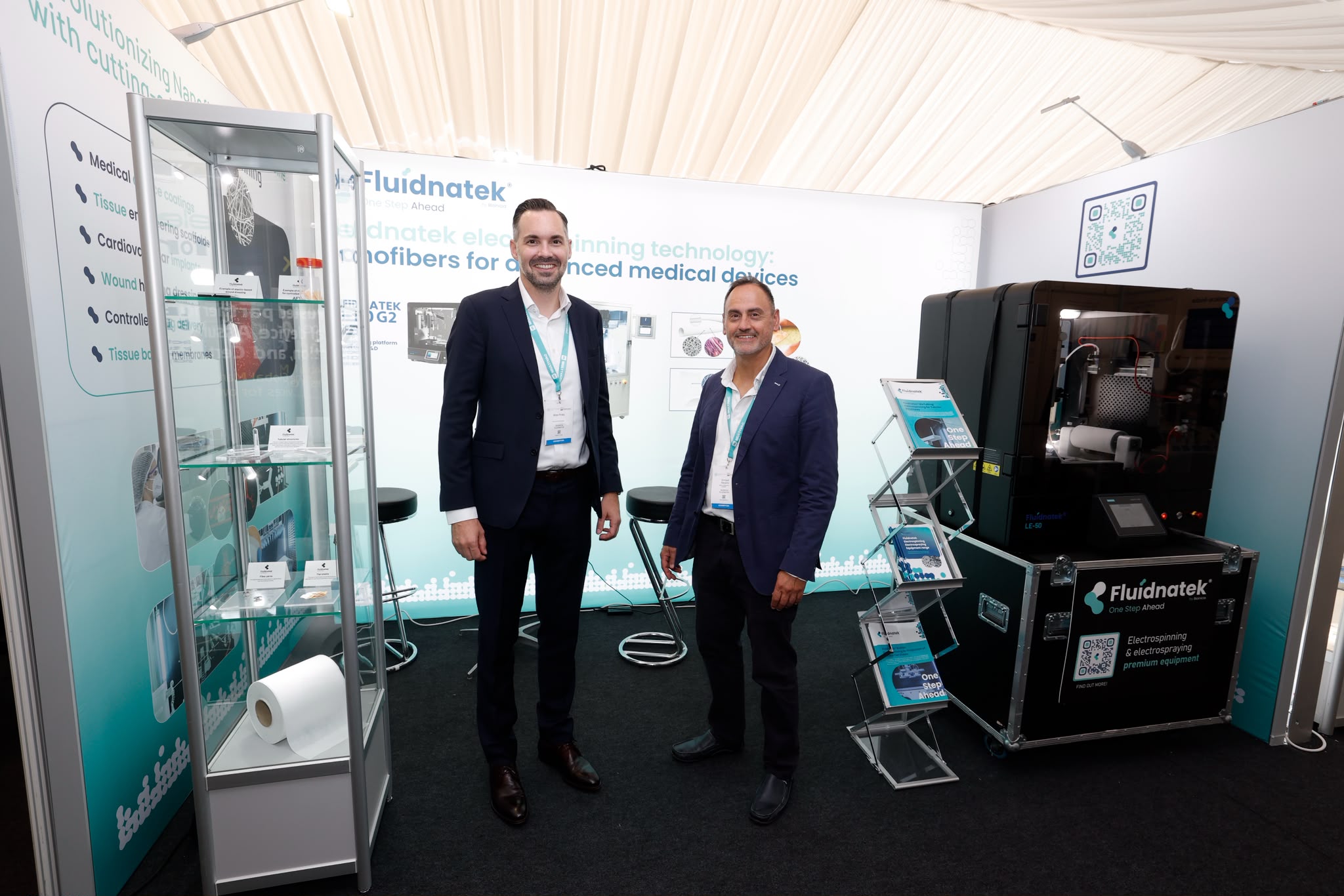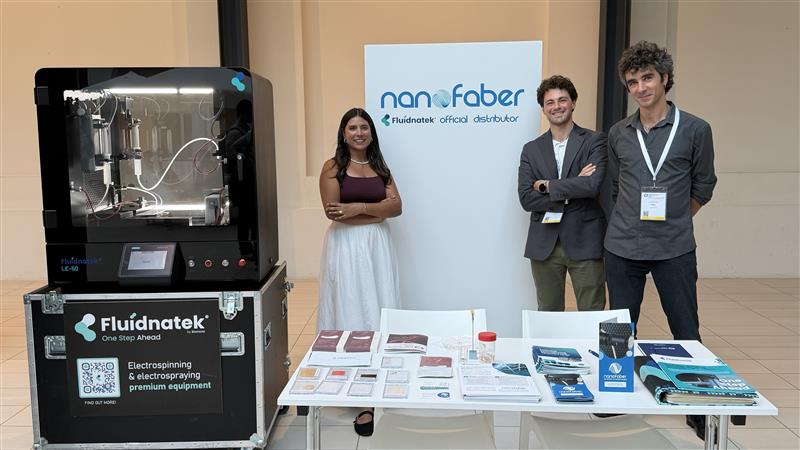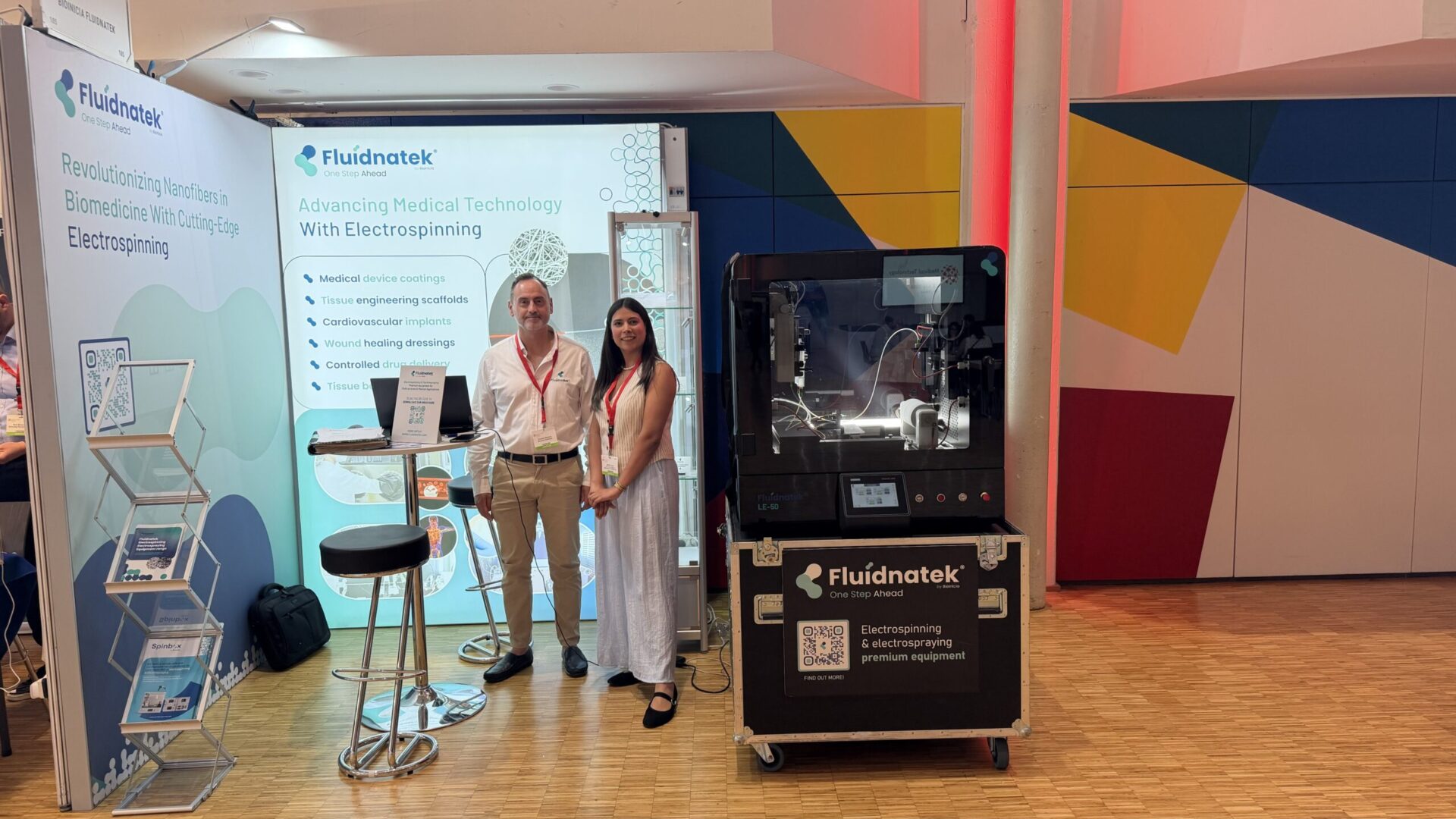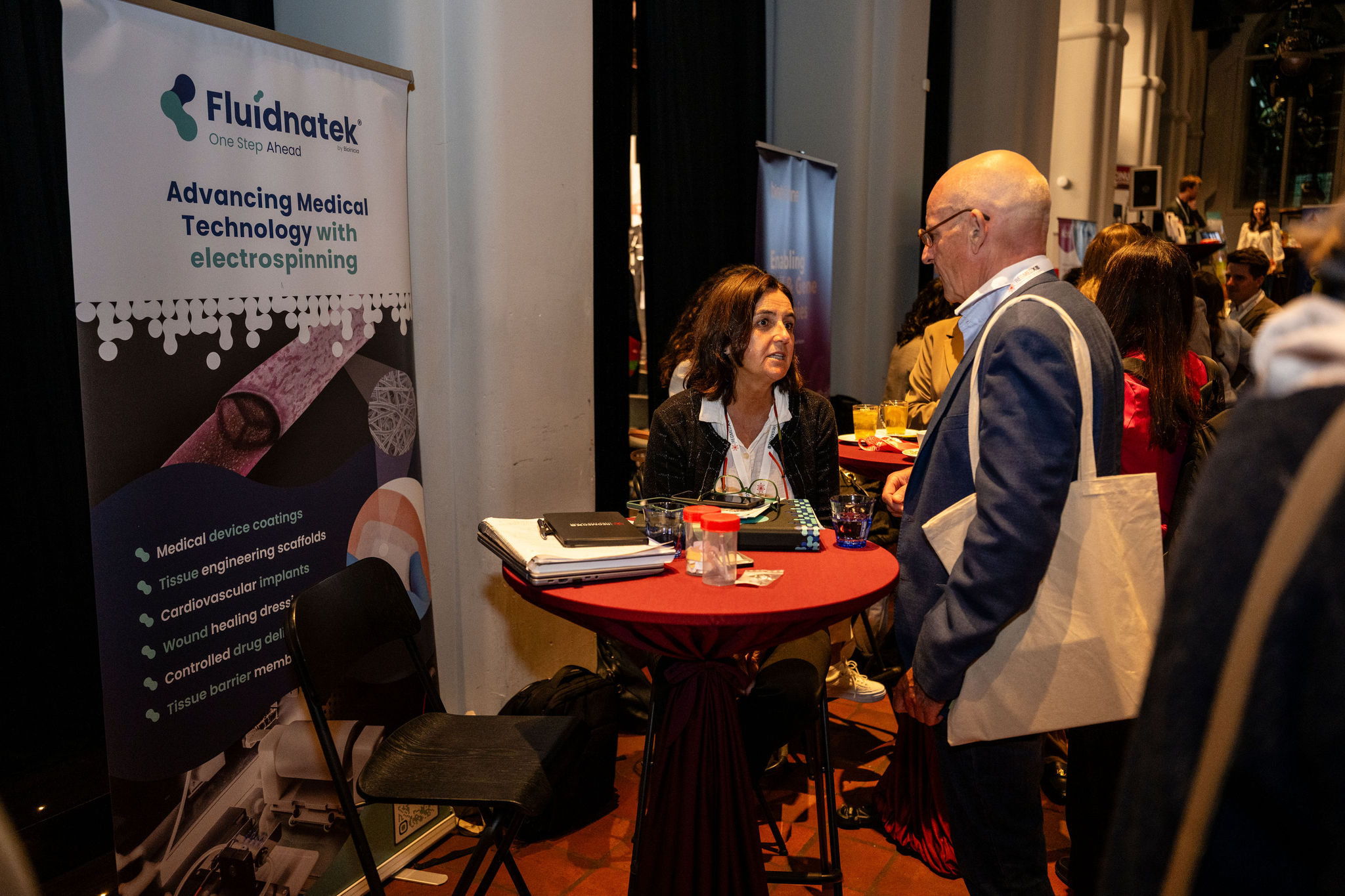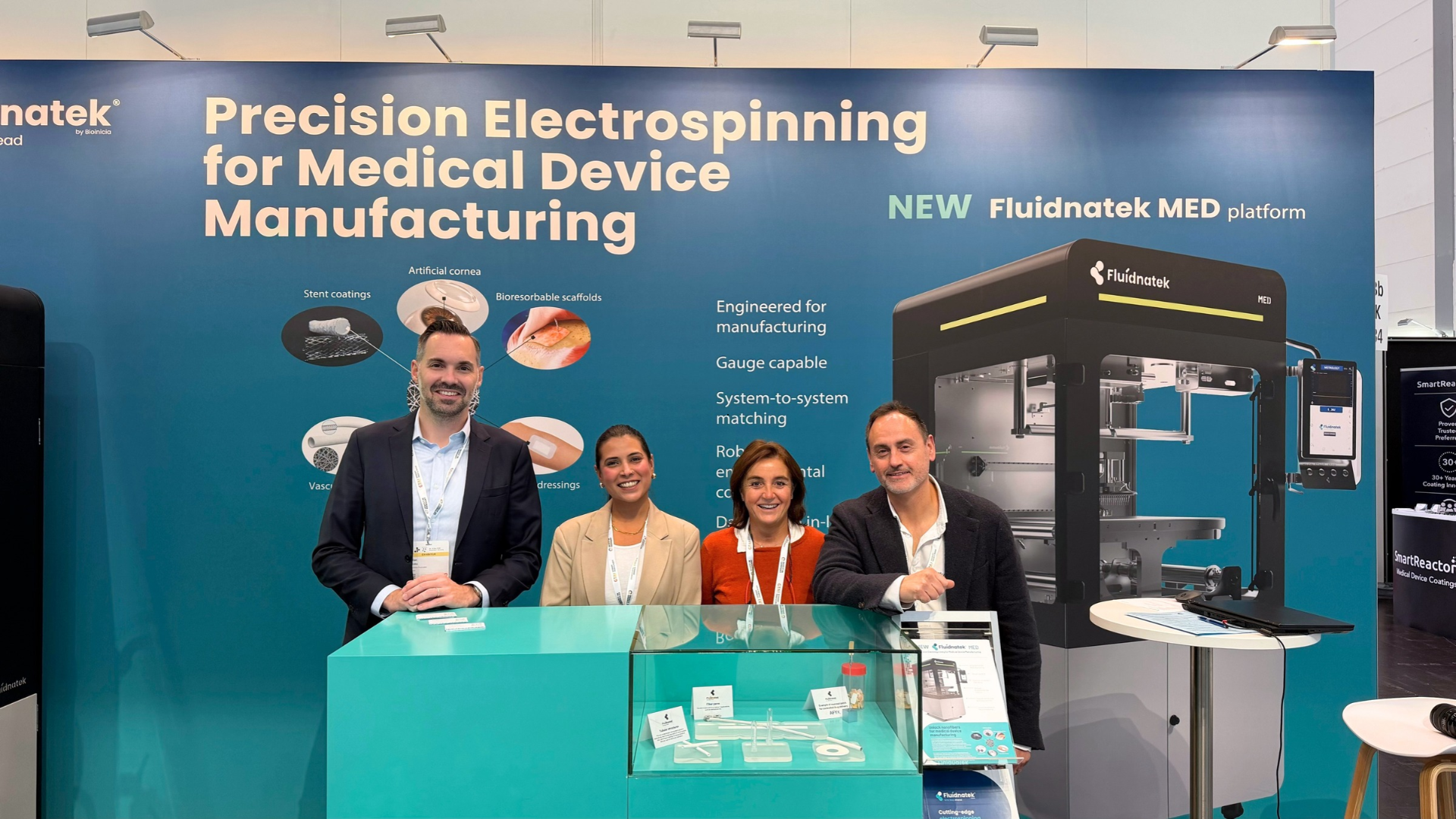
COMPAMED 2026 brought together companies and professionals from across the medical technology supply chain in Düsseldorf, Germany. For Fluidnatek, the event provided an opportunity to discuss the challenges shaping the industry, explore evolving manufacturing requirements and present our latest developments in electrospinning technology.
One message stood out across these discussions: advancing medical devices requires more than innovative materials and designs. It also demands controlled, reproducible manufacturing processes capable of translating material performance into reliable, consistent products.
Turning Material Innovation into Manufacturable Solutions
Advances in materials and device architectures are creating new opportunities in areas such as implantable technologies, tissue regeneration, advanced coatings and drug delivery. Translating these opportunities into viable medical solutions, however, depends on more than material performance alone.
As applications progress from research and development towards manufacturing, process reproducibility, scalability, quality and validation become increasingly important. Achieving batch-to-batch consistency requires control at multiple levels, including system-to-system matching, data-driven process control and robust environmental control.
These elements help ensure that process conditions can be understood, monitored and reproduced, providing a stronger foundation for consistent manufacturing outcomes.
Collaboration across the medical technology ecosystem is equally important. Material innovators, device developers, engineering teams and manufacturing technology providers all have a role to play in bridging the gap between promising concepts and reliable medical products.
Electrospinning’s Role in Medical Technology
Electrospinning enables the development of micro- and nanofibrous structures with properties that can be tailored to specific applications. These materials offer significant opportunities in areas including tissue-engineering scaffolds, implant coatings, membranes and drug-delivery systems.
Realizing this potential requires more than achieving the desired fiber morphology or material properties. A thorough understanding of process parameters, together with reliable control of operating and environmental conditions, is essential to obtaining consistent results.
Data-driven process control and robust environmental management are particularly important in this context. By monitoring and controlling critical process conditions, manufacturers can improve reproducibility, support consistent production and facilitate the transition from laboratory-scale development towards more controlled manufacturing workflows.
Introducing Fluidnatek MED: Supporting Medical Device Development and Manufacturing
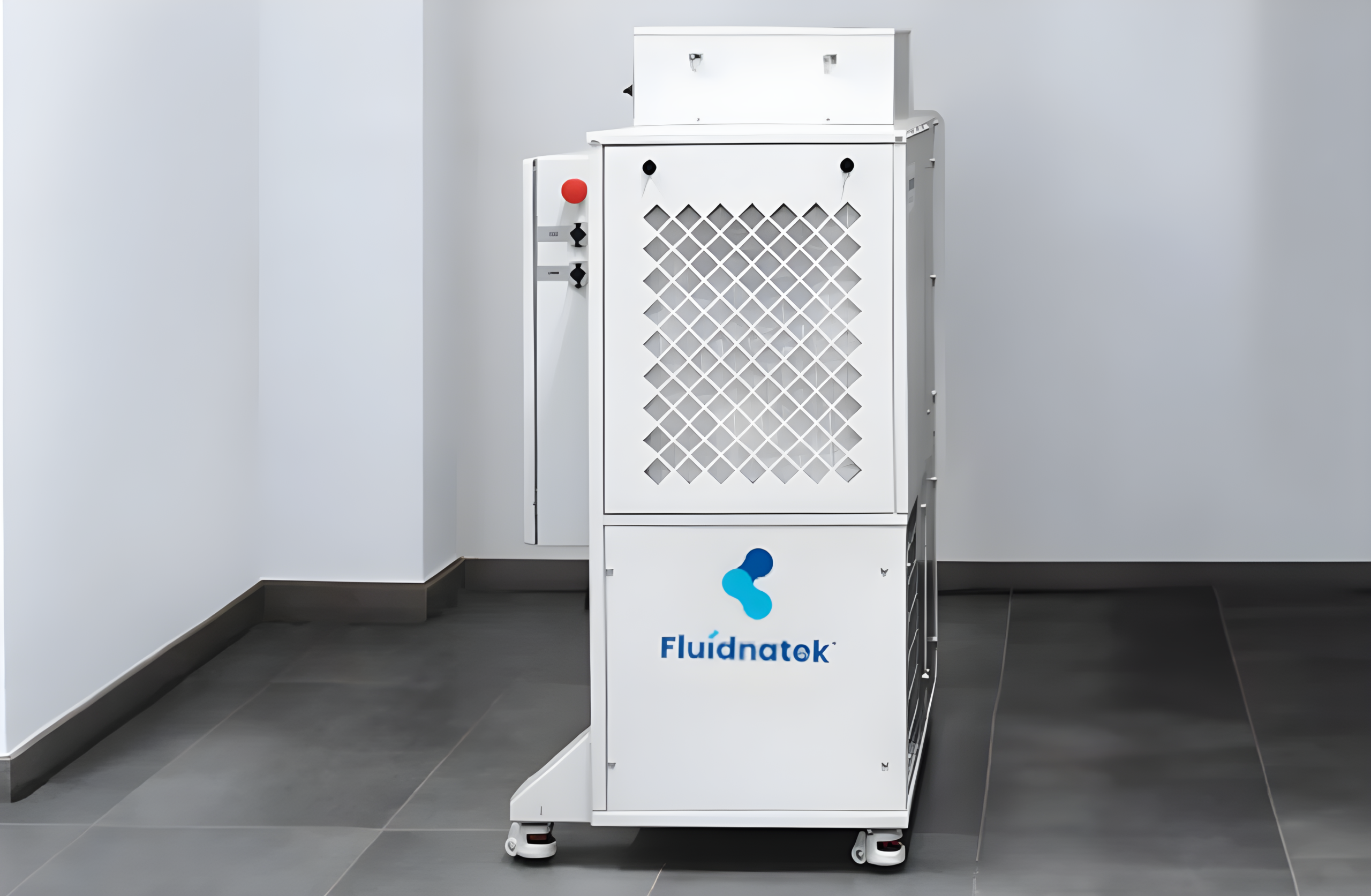
At COMPAMED 2026, Fluidnatek introduced Fluidnatek MED, our new platform dedicated to electrospinning and electrospraying for medical device development and manufacturing.
Designed around different application requirements, Fluidnatek MED brings together specialized configurations for tubular structures and flat medical sheets, alongside a configurable research setup.
The introduction of Fluidnatek MED reflects our commitment to addressing the specific requirements of medical technology, where material innovation must go hand in hand with process understanding, control and reproducibility.
Our approach places particular emphasis on system-to-system matching, data-driven process control and robust environmental control. Together, these principles support greater process consistency and reproducibility, helping researchers and manufacturers work towards reliable batch-to-batch results.
With Fluidnatek MED, we are taking another step towards supporting the development of advanced electrospun medical technologies and the manufacturing processes needed to bring them closer to application.
Looking Ahead
COMPAMED 2026 provided an opportunity to connect with professionals across the medical technology ecosystem, exchange technical insights and gain a clearer understanding of the challenges shaping the industry’s future.
The discussions in Düsseldorf reinforced an important principle: progress in medical technology depends not only on developing new materials and device concepts, but also on establishing the process control and manufacturing capabilities needed to translate them into reliable solutions.
We would like to thank everyone who met with the Fluidnatek team during COMPAMED 2026. We look forward to continuing these conversations and contributing to the development of the next generation of medical technologies.