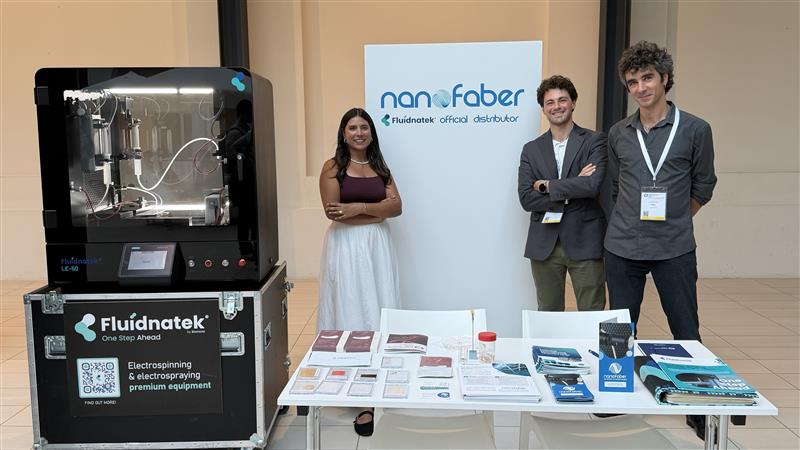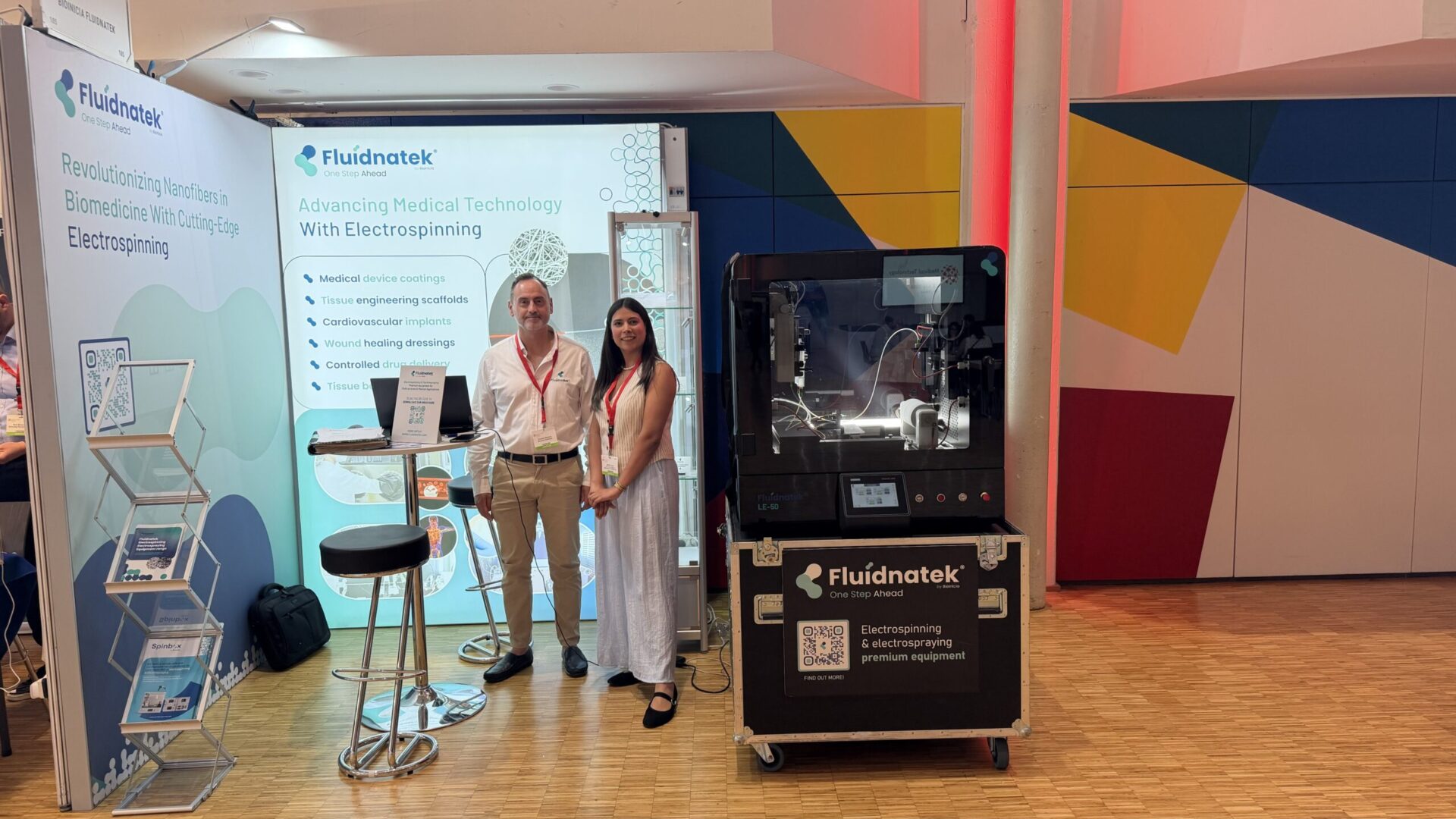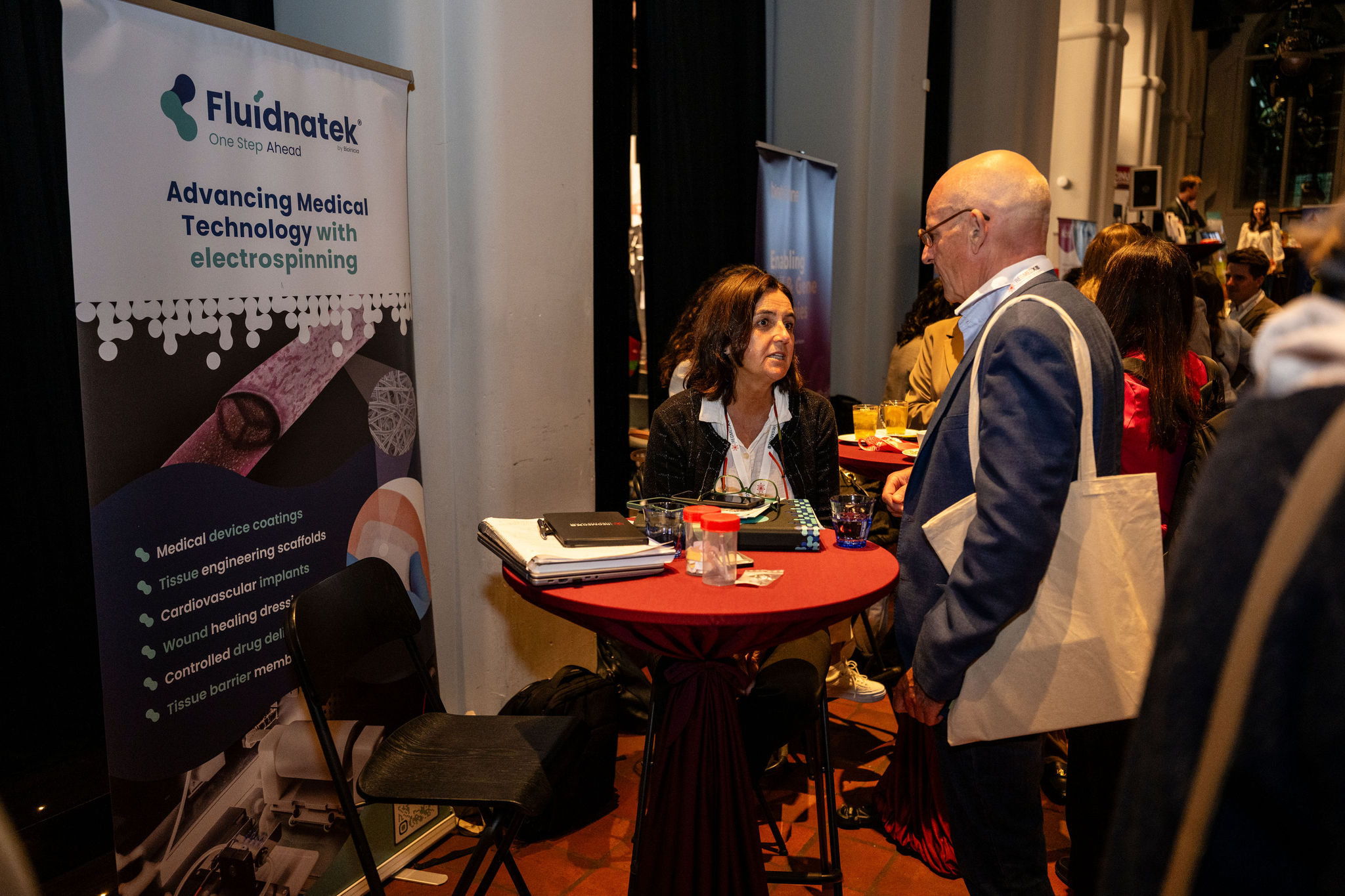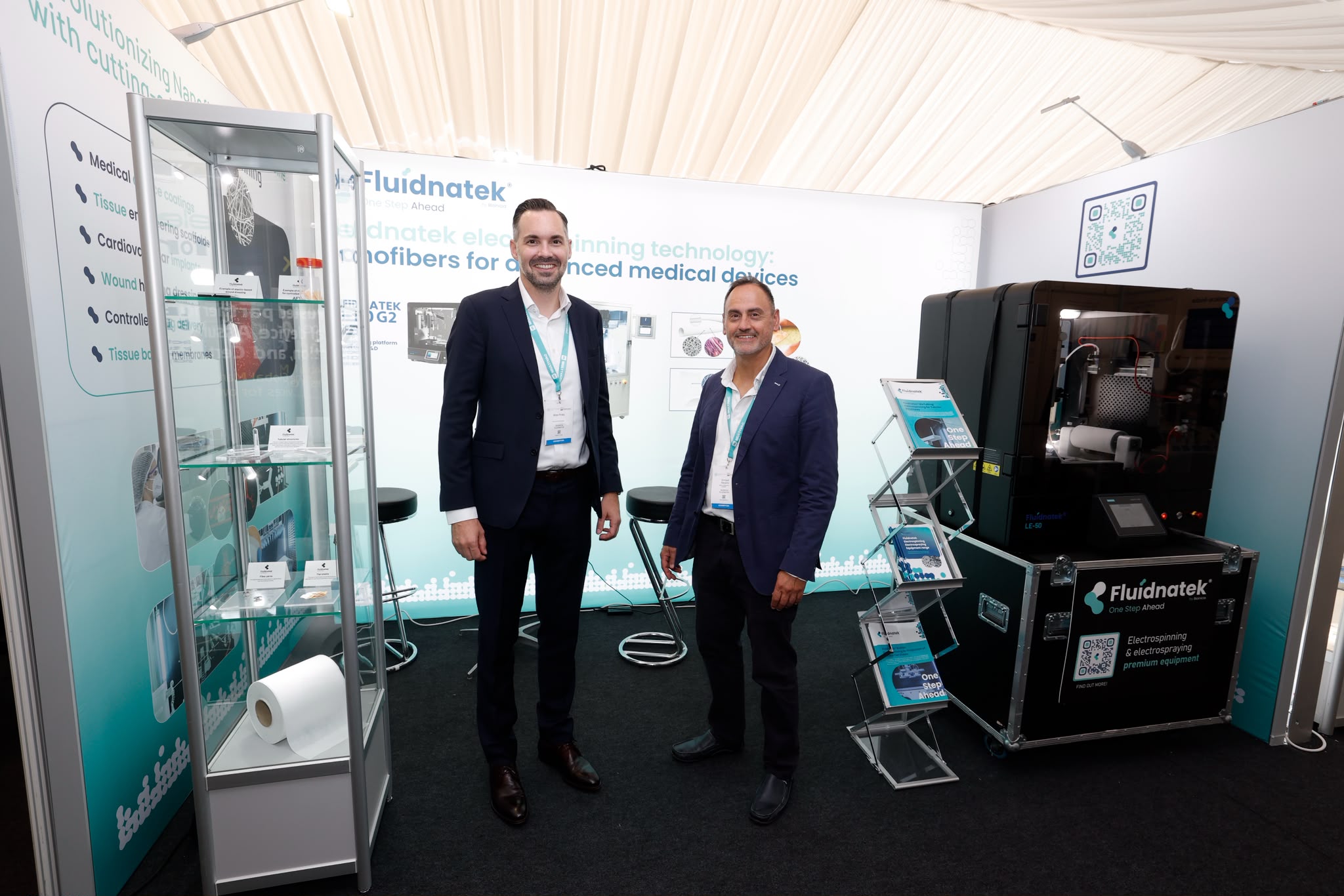
Medical Technology Ireland 2026 has come to a close, bringing together medical-device manufacturers, R&D teams, engineers, quality specialists and technology suppliers at Galway Racecourse.
For Fluidnatek, the event provided an opportunity not only to present our electrospinning technology, but also to exchange ideas with professionals involved in different stages of medical-device development. These conversations highlighted an important point: the successful development of a medical device increasingly depends on connecting material development with process understanding, manufacturing and quality requirements from the early stages.
Reproducibility Starts During Development
For electrospun materials, achieving the desired fiber morphology or structure is an important milestone, but it is not the end of the development process.
The properties of an electrospun material depend on multiple process variables, including solution characteristics, flow rate, applied voltage, collector configuration and environmental conditions. Understanding how these parameters influence the process is therefore essential when moving beyond an initial proof of concept.
This is particularly relevant for medical applications, where development teams need to establish processes that can be consistently understood, documented and reproduced.
Connecting R&D with Manufacturing
Another recurring theme from our conversations at Medical Technology Ireland was the importance of considering the next stage of development before it is reached.
A process that works at laboratory scale may require further optimization before it can be transferred to a larger system or manufacturing environment. Establishing appropriate process parameters, collecting development data and documenting operating conditions can provide a stronger basis for technology transfer and scale-up.
For electrospinning, this means that process development and material development should evolve together.
Environmental control can also become important as projects progress. Temperature and relative humidity can influence solvent evaporation, jet stability and fiber morphology, making controlled conditions valuable when reproducibility is a key requirement.
A More Integrated Approach to Medical-Device Development
The discussions at Medical Technology Ireland reinforced the importance of bringing different perspectives together throughout the development process.
Material scientists may focus on fiber structure and material performance. Engineers may be concerned with process control and equipment configuration. Quality teams need consistent and traceable processes, while manufacturing teams need solutions that can ultimately be transferred and scaled.
For electrospun medical materials, these requirements are closely connected.
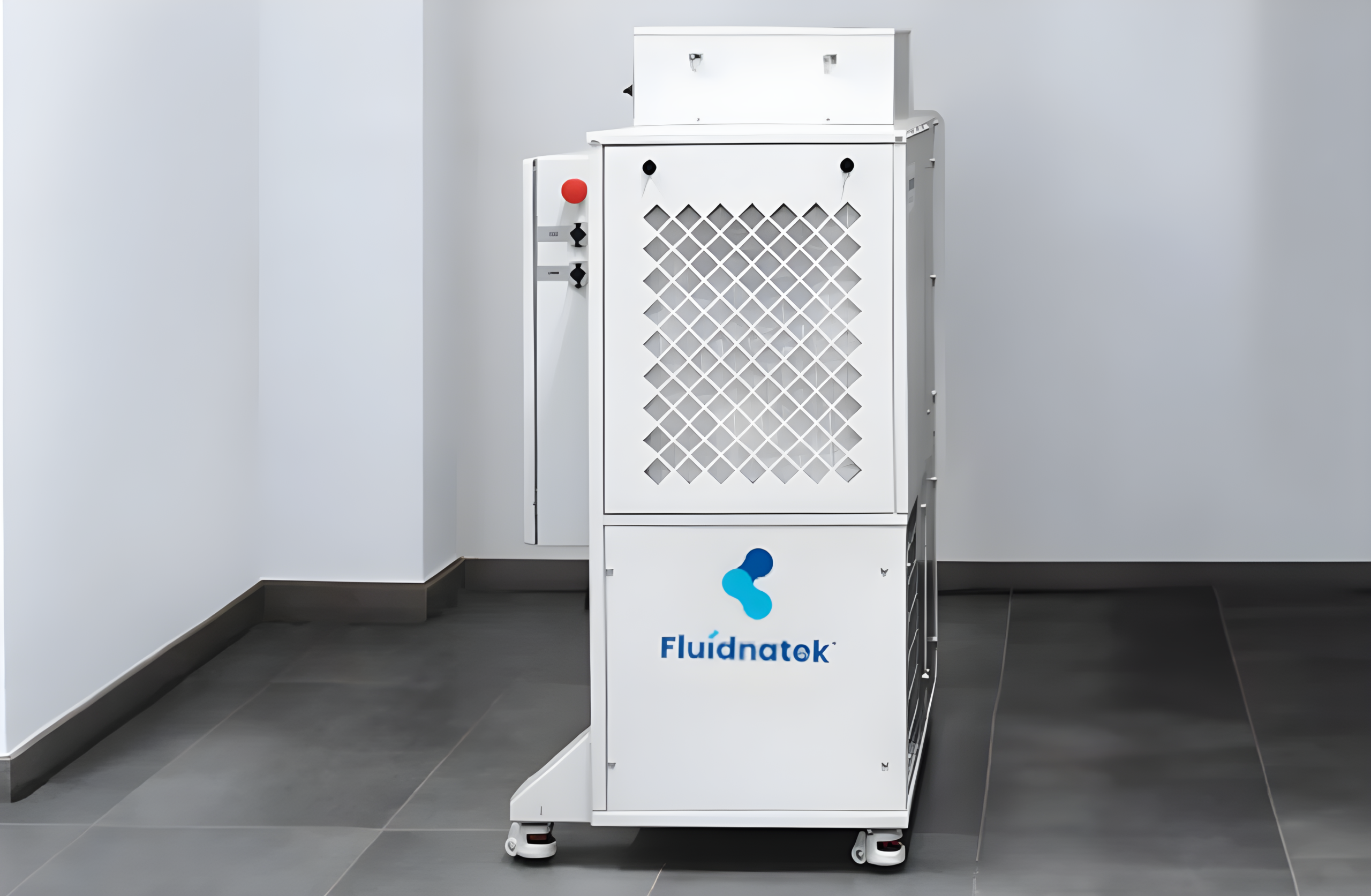
Fluidnatek develops electrospinning and electrospraying platforms designed to support this progression, from early R&D and proof-of-concept work through process development and scale-up. The Fluidnatek LE-50 G2, for example, combines configurable electrospinning and electrospraying technologies with options for environmental control, process monitoring, data collection and programmable recipes.
Looking Ahead
Medical Technology Ireland reinforced a principle that is increasingly relevant to advanced medical-device development: a successful material is only part of the solution. The process used to produce it must also be understood, controlled and developed with future manufacturing requirements in mind.
We would like to thank the Medical Technology Ireland organizers and everyone who visited the Fluidnatek team at Booth L126 for the valuable conversations and technical discussions.
As medical-device developers continue to explore electrospun scaffolds, coatings, membranes, wound-care materials and drug-delivery systems, the challenge is not simply to achieve the desired material properties, but to develop processes that can support reliable and reproducible outcomes as projects move forward.