


Global deficits in freshwater resources, coupled with the increasing complexity of wastewater streams, represent critical environmental challenges at our time. Traditional membrane filtration is widely used but suffers from limitations related to fouling, low microbial activity support, and reduced operational lifetime. Recent studies demonstrate that biofilm on electrospun membrane scaffolds can significantly improve water purification by harnessing microbial consortia to degrade organic pollutants and remove contaminants.
This article examines how electrospun membranes provide effective scaffolds for biofilm formation and explores their role in microbial water purification, supported by academic research and real experimental evidence.
Introduction — Electrospinning Meets Biotechnology
Electrospinning produces nanofibrous membranes with distinctive features — including extremely high surface area, interconnected porosity, and tunable fiber morphology — that differentiate them from conventional fabrics or nonwoven substrates. These characteristics make electrospun membranes particularly valuable as biological scaffolds for microorganisms to attach, proliferate, and form biofilms that actively contribute to contaminant removal in water treatment systems.
Biofilms are structured communities of microbial cells adhering to surfaces within an extracellular matrix. When established on a membrane, these biofilms can metabolize and transform organic pollutants in wastewater, leading to enhanced purification performance. Recent research indicates that integrating electrospun scaffolds into membrane bioreactor (MBR) systems may enhance biological performance and effluent quality compared to conventional membrane supports.
Electrospun Membranes as Biofilm Scaffolds
Electrospun membranes facilitate rapid and robust biofilm growth compared to traditional nonwoven fabrics. In controlled wastewater immersion experiments, electrospun PAN (polyacrylonitrile) and PAN/PEO (polyethylene oxide) nanofiber membranes exhibited significantly higher biofilm formation than nonwoven materials — with PAN/PEO membranes achieving over 90% surface coverage by day 3, compared to just ~27% for the nonwoven reference.
Studies have demonstrated that electrospun membranes used in submerged membrane bioreactor systems achieved exceptional removal rates: 99% turbidity removal, 99% total suspended solids (TSS) removal, 94% chemical oxygen demand (COD) removal, and 93% ammonium removal. These results significantly outperform the nonwoven membrane supports evaluated in the same study.
Why Electrospun Nanofibers Encourage Biofilm Formation
Several factors contribute to the superior biofilm formation on electrospun membranes:
- High porosity and surface area provide abundant attachment sites for microbial cells. The nanofibrous architecture creates significantly more surface area compared to conventional membranes — Electrospun membranes can achieve very high porosity levels, often exceeding 80–90% depending on processing parameters.
- Enhanced water absorption promotes nutrient availability and microbial adhesion. The hydrophilic nature of materials like PEO increases water retention, sustaining microbial metabolic activity.
- Fine fiber morphology creates microenvironments conducive to biofilm matrix development. Studies show that fiber diameter and pore size directly influence biofilm architecture — smaller diameter fibers yield more uniform biofilm layers, whereas larger pores result in clustered attachment.
Fiber Characteristics and Biofilm Architecture
Recent research has demonstrated that biofilm formation is highly sensitive to membrane fiber diameter and pore size. With smaller diameter fibers (300-500 nm), bacteria form uniform biofilm layers on the membrane surface. However, with larger fiber diameters (>900 nm), bacteria tend to form smaller clusters inside the membrane rather than on the surface.
This phenomenon is driven by the physical constraints of microbial cell sizes relative to the membrane pore structure. In the referenced experiments, fiber diameters between approximately 400–800 nm showed balanced surface attachment and porosity. However, optimal values may vary depending on microbial species and reactor configuration.
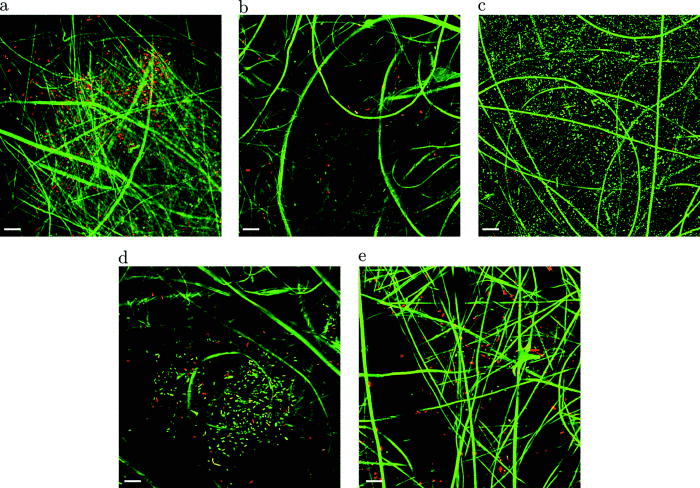
Confocal images of LIVE/DEAD stained E. coli cells onto (a) untreated PS mesh, (b) ppAAc, (c) ppAAm, (d) ppOct, and (e) ppCo meshes after removal from the bacterial agar culture. Scale bar 5 µm. [Abrigo et al. Biointerphases 10, 04A301 (2015); http://dx.doi.org/10.1116/1.4927218 ].
How Biofilms Enhance Water Purification
Biofilm-enabled electrospun membranes improve water treatment via multiple complementary mechanisms that work synergistically to achieve superior purification performance:
Microbial Degradation of Organic Pollutants
Biofilms consist of complex microbial consortia capable of the biochemical degradation of organic substrates present in aqueous waste streams. In experimental systems using PMMA (polymethyl methacrylate) electrospun membranes, biofilm-covered nanofiber scaffolds showed an 80.97% reduction in chemical oxygen demand (COD) within the first two days, with continued improvement thereafter. This showed improved COD reduction compared to nonwoven supports, plateaued at 76.59% COD with no subsequent improvement
The superior performance is attributed to the larger number of microorganisms that can attach to the high surface area of electrospun nanofiber membranes. These microbial communities work collectively to break down complex organic molecules into simpler, less harmful compounds.
Contaminant Removal and Adsorption
Ammonia nitrogen removal was also significantly higher on electrospun biofilm membranes, with PMMA nanofiber biofilm membranes achieving an 18.37% removal rate for ammonia nitrogen, while nonwoven fabric groups actually showed increased ammonia nitrogen concentration. Additionally, Gas adsorption measurements indicated an NH₃ adsorption capacity of 21.37 cm³/g at relative pressure 1.0, reflecting the high surface activity of the nanofibrous structure.
This integration of microbial biotechnology and membrane materials marks an important step beyond purely physical filtration, enabling biologically active water purification systems that can adapt to varying contaminant loads.
Applications in Membrane Bioreactor Systems
Electrospun membranes have found increasing application in advanced membrane bioreactor (MBR) configurations for both municipal and industrial wastewater treatment. The integration of nanofiber technology with MBR systems offers several operational advantages:
- Reduced footprint — MBR systems are generally known to offer reduced footprint compared to conventional activated sludge processes due to higher biomass concentrations that can be sustained.
- Superior effluent quality — Near-complete solids retention and reduced bacterial and viral content, enabling direct reuse applications or simplified disinfection requirements.
- Independent control parameters — Solids retention time (SRT) can be controlled independently from hydraulic retention time (HRT), optimizing both biological performance and throughput.
- Enhanced flux performance — During short-term filtration tests, electrospun PVDF nanofiber membranes demonstrated better performance than commercial membranes in terms of lower transmembrane pressure (TMP) with excellent flux retention.
Hybrid MBR Configurations with Electrospun Membranes
Advanced configurations integrating electrospun scaffolds with secondary separation technologies exhibit significant synergistic potential. Specifically, MBR systems coupled with nanofiltration (NF) or reverse osmosis (RO) membranes can achieve exceptional water quality suitable for reuse applications.
Under specific experimental conditions, operation at approximately 2 LMH was reported with more than 95% COD removal efficiency. These systems demonstrate the potential for biofilm-based processes to maintain high treatment performance while managing membrane fouling through proper operational control.
Case Studies and Experimental Setups
Electrospun PAN and PAN/PEO Membranes
Comprehensive studies have immersed electrospun membranes in wastewater to track biofilm growth over multiple days, comparing them with conventional fabrics. Results showed accelerated biofilm accumulation on nanofiber scaffolds due to higher porosity and moisture retention, which sustained microbial metabolic activity.
The water-soluble PEO component in PAN/PEO blends plays a crucial role — it increases the membrane’s water absorption capacity, which further encourages biofilm growth. This results in the remarkable 90.36% biofilm coverage achieved within just three days, compared to 82.04% for PAN-only membranes and a mere 27.32% for nonwoven fabrics.
PMMA Nanofiber Biofilm Membranes
Biofilm-coated PMMA membranes achieved greater COD reduction and ammonia nitrogen removal compared to nonwoven substrates, highlighting the direct impact of membrane morphology on purification efficiency. The structural properties of PMMA nanofibers — including good impact and tensile resistance — enhance the mechanical strength of the biofilm carrier surface, making them suitable for long-term operation in demanding wastewater treatment applications.
Real-World Wastewater Treatment Applications
Field testing of electrospun nanofiber MBR systems has demonstrated practical viability. In one case study, wastewater generated during a music festival was treated using a nanofiber-MBR system. The removal of suspended solids (SS), COD, total nitrogen (TN), and total phosphorus (TP) were all within regulatory discharge limits, proving the technology’s robustness under variable real-world conditions.
Challenges and Future Directions
While biofilm formation on electrospun membranes enhances biological purification, several challenges remain that require continued research and development:
Membrane Fouling Management
Membrane fouling and pore occlusion persist as critical operational challenges. Specifically, the proliferation of biofilms can disrupt hydraulic conductivity and pressure gradients during extended operation. To mitigate the elevated capital expenditures and diminished operational longevity associated with biofouling, several remediation strategies have been developed:
- Surface modifications — Incorporation of nanoparticles or surface treatments to induce hydrophilicity, provide surface charge, and improve water permeability while reducing biofilm antiadhesion.
- Biomimetic patterns — In some studies, aligned fiber architectures have been associated with measurable reductions in biofilm accumulation.
- Controlled release systems — Integration of anti-quorum sensing molecules in electrospun fibers has shown promise, with improvements in biofilm reduction and flux increase of over 50% compared to unmodified membranes.
Selective Biofilm Growth Control
Biofilm composition must be managed to favor pollutant-degrading communities while limiting undesirable microbial growth. Research indicates that dissolved oxygen (DO) levels significantly impact biofilm characteristics and subsequent membrane performance. Studies show that maintaining appropriate DO levels (2.5-4.0 mg/L) in MBR systems yield a permeate with a significantly lower concentration of extracellular polymeric substances (EPS) and biopolymers. This reduction effectively mitigates the fouling propensity of the effluent during subsequent downstream processes.
Material Stability and Durability
Recent developments in biodegradable materials also show promising potential. For example, PLA (polylactic acid) nanofiber membranes modified with PEO-based hydrogel layers have demonstrated superhydrophilic behavior under controlled laboratory conditions. In oil–water emulsion separation experiments, these membranes achieved permeance values of approximately 2.1 × 10⁴ L·m⁻²·h⁻¹·bar⁻¹ with separation efficiencies exceeding 99.6%. It is important to note that these performance metrics were obtained in specific oil–water separation tests rather than in biological wastewater treatment systems, and therefore reflect membrane surface wettability and permeability characteristics rather than biofilm-mediated purification performance.
Future Research Priorities
Key areas:
- Integration with green chemistry principles — Development of membranes incorporating nanomaterials using sustainable methods, though lab-scale/commercial-scale MBR applications remain limited.
- Smart membrane systems — Combining electrospinning with other technologies such as coating, embedding functional particles, and plasma treatment to create membranes with enhanced or responsive properties.
- Process intensification — Advanced configurations like membrane aerated biofilm reactors (MABR) and aerobic granular sludge-MBR (AGS-MBR) to achieve better energy efficiency and optimized treatment processes.
- Scale-up strategies — Transitioning from lab-scale success to pilot and full-scale implementations, addressing challenges in manufacturing consistency, long-term performance monitoring, and economic viability.
Conclusion — Toward Biofilm-Enabled Water Treatment Systems
Electrospun membranes are emerging as powerful platforms for biofilm-mediated water purification. Characterized by ultra-high porosity (≥90%) and tailorable surface chemistry, these scaffolds facilitate robust microbial colonization. Consequently, they represent a pivotal advancement in biotechnological filtration, transitioning from conventional size-exclusion mechanisms to active bio-catalytic separation.
By facilitating biofilm formation and sustaining microbial metabolism, electrospun nanofiber scaffolds offer enhanced contaminant removal, optimized organic degradation, and new avenues for sustainable water treatment. The technology’s demonstrated performance — including 99% TSS removal, 94% COD removal, and >90% biofilm coverage within days — positions it as a promising technology for advancing biological wastewater treatment systems.
As research continues to address challenges in fouling control, material durability, and scale-up, electrospun membrane bioreactor systems are poised to become increasingly important tools in municipal and industrial wastewater treatment, water reuse applications, and environmental remediation.
Partner with Fluidnatek for Advanced Membrane Solutions
Exploring biofilm-based water purification with electrospun membranes? Fluidnatek’s electrospinning platforms enable scalable production of advanced nanofiber scaffolds tailored for biotechnology-driven filtration systems.
Contact us to accelerate your development of functional membrane solutions for environmental and industrial water treatment applications.
👉 Explore Fluidnatek’s Water Treatment Solutions
👉 Learn More About Fluidnatek Electrospinning Technology
👉 View Fluidnatek Product Range for Research and Industrial Applications
References
- ElectrospinTech. (2019). Electrospun fibers in Biotechnology. Retrieved from http://electrospintech.com/espinbiotechnology.html
- Zhou, L., Zhang, X., Jiang, J., Chen, H., Liu, Y., Wang, X., Li, W., & Zheng, G. (2024). Electrospinning preparation and characterization testing analysis of nanofiber biofilms. AIP Advances, 14, 025336. https://doi.org/10.1063/5.0242163
- Zhuo, L., Zhang, X., Jiang, J., Chen, H., Zheng, Y., Wang, X., Li, W., & Zheng, G. (2024). Electrospun PMMA fiber biofilm for the removal of COD and NH₃-N in wastewater. AIP Advances, 14(12), 125005. https://doi.org/10.1063/5.0242163
- Tang, Y., et al. (2022). Electrospun Nanofiber-Based Membranes for Water Treatment. Polymers, 14(10), 2004. https://doi.org/10.3390/polym14102004
- Ji, K., et al. (2023). Research Progress of Water Treatment Technology Based on Nanofiber Membranes. Polymers, 15(3), 741. https://doi.org/10.3390/polym15030741
- ACS Applied Materials & Interfaces. (2022). Electrospun Nanofibrous Membranes Accelerate Biofilm Formation and Probiotic Enrichment, 14(28), 31601-31612. https://doi.org/10.1021/acsami.2c07431
- Yusuf, A., et al. (2020). A critical review on nanomaterials membrane bioreactor (NMs-MBR) for wastewater treatment. npj Clean Water, 3, 43. https://doi.org/10.1038/s41545-020-00090-2
- Frontiers in Membrane Science and Technology. (2024). Recent advances of membrane-based hybrid membrane bioreactors for wastewater reclamation. https://doi.org/10.3389/frmst.2024.1361433
- ACS Omega. (2024). Efficacy of Electrospun Nanofiber Membranes on Fouling Mitigation: A Review. https://doi.org/10.1021/acsomega.2c02081
- Science Advances. (2024). Biodegradable electrospinning superhydrophilic nanofiber membranes for ultrafast oil-water separation. https://doi.org/10.1126/sciadv.adh8195
- Separation and Purification Technology. (2024). Developments of electrospinning technology in membrane bioreactor: A review. https://doi.org/10.1016/j.seppur.2024.128841
- ACS ES&T Water. (2024). Toward Patterned Membranes for Biofouling Mitigation by Electrospinning. https://doi.org/10.1021/acsestwater.5c00279


 ESP
ESP